Genesis 1-4 (Page 5)
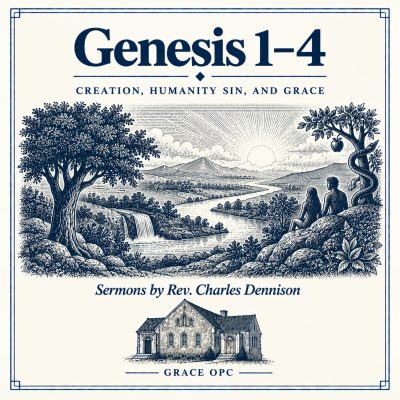
Against secular readings of Genesis 1, three examples show how the visible and invisible worlds relate to one another. God renews the formless void, doing the impossible by his Word and, ultimately, by his Son.
The greater and lesser lights ruling creation are themselves testimony to the hidden light that is Christ. Only God resolves the formlessness of the beginning, which is exactly why worshiping the stars themselves, as Jeremiah warns, is such futility.
The second day of creation gets neglected, a gap corrected here by contrasting it with Babylonian mythology’s own account. Creation itself is temple and tabernacle: the laver anticipates baptism, the curtain the veil, and Christ paves the way through both to heaven.
The lights created on the first day are distinguished from those of the fourth, finding in that distinction two kingdoms already established: good and evil, day and night. The point is to get us past the merely physical to what these lights spiritually signify.
God’s omnipotence over the formlessness of Genesis 1:2 becomes concrete in God transforming creation by transforming himself, above all in Christ’s resurrection. Our own faith rests entirely on that transformed righteousness, not on anything we bring.
Genesis 1 refutes both primitive and sophisticated worldviews alike, leaning on Van Til’s apologetic method to make the case. Both Romantic and Classical approaches to Christianity fail for the same basic reason: neither starts where Genesis does.
Light, like God himself, has a pervasive presence throughout creation, and only God’s own transcendent light can truly illuminate us. That light binds the darkness even now, hidden until the risen Christ is revealed to his saints.
Only God can bring order out of chaos, a point repeated here while tracing the Holy Spirit as the downpayment of our inheritance in Romans 8. The transforming power already at work in Genesis 1:2 is nothing less than the coming of the age of the Spirit.
The formlessness of Genesis 1:2 reads as a kind of wilderness, drawing out echoes in Psalm 63 and Jeremiah’s own picture of chaos. Only God can bring order from that chaos, and the same sovereignty at work in creation is at work in his sovereignty over election itself.
Opening the series, God is shown submitting himself to his own creation, sharing our experience of time and earth. The formlessness of Genesis 1:2 is remedied by the Holy Spirit himself, given as a downpayment to the church in Christ.