
"Moses" Tagged Sermons
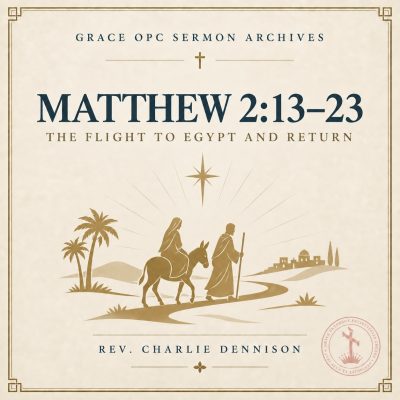
Every passage in the Bible is finally about Christ, this review insists, and Matthew’s Herod is deliberately read as a new Pharaoh, opposing a new Moses. The deliverances of Moses and of Christ are set side by side here as a single, continuous act of God rather than as two loosely related events. Galatians 4 supplies Paul’s own theological reading of exactly this pattern.
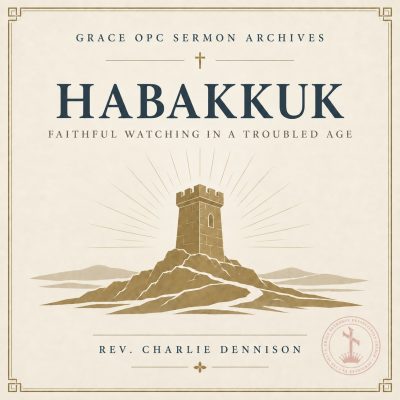
Prophets function as God’s own covenantal prosecutors, bringing formal charges against a covenant-breaking people, and Habakkuk is no exception. His office runs parallel to Moses’ in real, traceable ways, even as real differences remain. Old and new covenant share more structure in common than is often assumed.
Preachers who corrupt the Word for effect are described here as salesmen, trading on Moses’ earthly, practical ministry while rejecting the faith Paul’s ministry actually requires. The contrast between the two is not about which ministry is more spiritual but about which one a corrupted church finds easier to sell. 2 Corinthians 2-4 sets the terms for telling the difference.
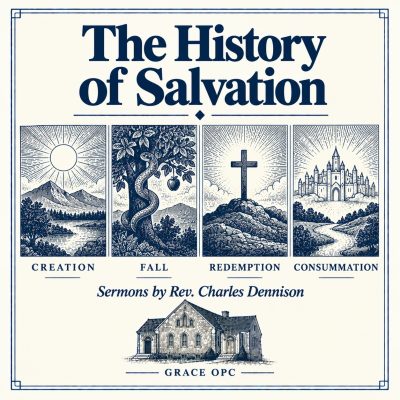
The natural divisions of Genesis 1-11 under Moses’ own authorship get worked through, showing two distinct ways this primeval history instructed Israel as it entered the land of Canaan. Behind it all stands God’s sovereign election, already moving toward Christ.
Elijah’s flight traces Israel’s own geography and history at once, moving east, west, and south in a single journey. His encounter at Horeb echoes Moses’ own theophany there, still small voice against wind, earthquake, and fire. Paul’s confidence in 2 Corinthians 3, that we behold God’s glory with unveiled face, rests on the same hope Elijah receives at that mountain.
The six contrasts of Matthew 5:21-48, each framed in legal terms, are read together as one sustained argument about the difference between human and divine authority. Moses himself, John 5 warns, becomes merely human tradition the moment he is read apart from Christ. Getting lost inside the details of each individual contrast, the sermon cautions, means missing that larger argument.
Moses meets God at the burning bush only after decades in the wilderness, not from any dramatic religious experience being the qualification for leading God’s people. Church officers today are called to follow God the same way, through perseverance rather than a singular spiritual encounter. The wilderness years turn out to be the real preparation, not an obstacle to it.