"marriage" Tagged Sermons
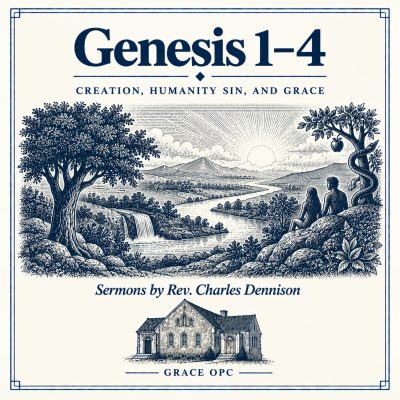
Common grace is already at work in Genesis 4:17’s account of marriage, even among Cain’s own line, and its sanctity. Children remain a real blessing even to an unbelieving world, and life itself begins at conception, plainly assumed in this text.
Four distinct lessons turn up in God’s delay before creating Eve, picturing her as a true bride for Adam. Adam’s own pursuit of independence is exactly what causes his failure to love her as he should.
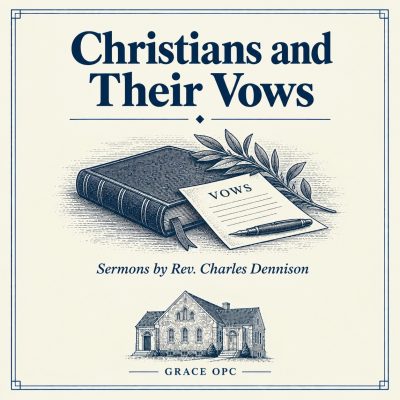
Recovering the seriousness with which the Puritans approached oath-taking, the doctrinal significance built into the OPC’s own marriage ceremony gets examined. Against today’s unhealthy state of marriage, marriages are held to be made strong only through Christ.
The value of the human body gets grounded in the example of Christ’s own risen body before turning to what the Bible actually says about sexuality and marriage. The result is a careful accounting of what marriage is, and just as importantly, what it is not.
Looking back to marriage before the law was given at Sinai, marriage itself is traced as reshaped by God’s coming in Christ, including its call to monogamy. The seventh commandment cannot be understood apart from that coming.
Closing the series, the theme of sight across Genesis 5-6 and John 3 connects to marriage: believers must marry other believers, though the church itself is not in the marrying business. Drawing on 1 Corinthians 7 and Matthew 22, singleness and marriage alike close things out, set against the resurrection state to come.
The creation of man and woman is read as fundamentally covenantal, working closely through the nakedness and no shame of Genesis 2:25. Drawing on Matthew 19’s picture of Christ and his bride, marriage carries an eternal intention, with the church itself as the most basic family unit.