"creation" Tagged Sermons
The focus of these verses is not primarily on the material universe but on it’s function in an ordered system
read Genesis 1:14-19
1. The meaning of God’s creation of the heavens and the earth (v. 1).
2. The unbounded chaos of earth’s original condition of being “without form and void” (v. 2).
3. Understand the Spirit of God as God’s creative power which brings order out of chaos (v. 2b).
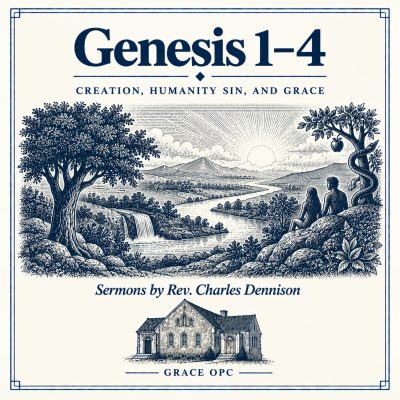
The careful chiastic structure of Genesis 3 shows how God’s order of authority actually works. Feminists are right to protest real abuses of that order, but wrong to protest the order itself, an order Christ comes to restore, not abolish.
Where the Synoptic Gospels treat creation implicitly, John makes it explicit from his very first verse. Creation joined to Christ becomes new creation, and John 1:1-18 traces a life found only in, with, and through him.
The priorities built into the created order itself get laid out: God first, then time, place, corporate mankind, and the relation of male and female. Man cannot discover that true order by introspection, only by looking outside himself to God’s own testimony.
Against secular readings of Genesis 1, three examples show how the visible and invisible worlds relate to one another. God renews the formless void, doing the impossible by his Word and, ultimately, by his Son.
The second day of creation gets neglected, a gap corrected here by contrasting it with Babylonian mythology’s own account. Creation itself is temple and tabernacle: the laver anticipates baptism, the curtain the veil, and Christ paves the way through both to heaven.