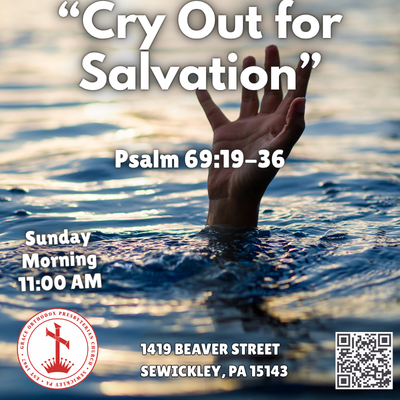
Sermon Book: Psalms

  • Cry Out for Salvation

    Cry Out for Salvation

    About this sermon

    In Psalm 69 David suffers reproach and betrayal, and the Gospels show the psalm fulfilled in Christ, who was given vinegar to drink on the cross. Christ prayed for his enemies’ forgiveness, and the psalm also asks God to judge the unrepentant, as the martyrs under the altar do in Revelation. God’s people may pray both ways, because both glorify his justice and mercy. Even in suffering Christ looked ahead to the salvation of his people, and believers cry to God confident that he will save them.

    More sermons from Psalms · Browse all sermons

    Sermon transcript

    Let us pray upon the reading and the preaching of His word. Heavenly Father, we thank You, O Lord, for the blessing and for the blessing that is to come, for the privilege of coming before You, for worshiping You, and for learning from You. We pray, O Lord, that as we hear Your word, You would work in us, that the Holy Spirit would work in all our hearts, causing us to love You more, and uniting us with one heart in Jesus Christ, so that we may worship and praise You with all our heart, mind, body, and soul. We pray, O Lord, that as we learn from Your word, You would help us to love our neighbors more and more. And we pray, O Lord, that as we read Your word, You would enlighten our minds, that we may learn more about You, and that You would draw us closer to Yourself. I pray, O Lord, that You would work in each one of us, and we pray all of this in Your Son’s name. Amen. You may be seated.

    There is one question that has always intrigued me: Can a person truly be thankful and joyful in the hardest moments of life? Without considering our own struggles, if we reflect for a moment on the circumstances of those in the world who suffer far more—those who were trafficked at a young age and held against their will, those who lived their entire lives in slavery, those who are persecuted daily for their faith even today, and who, with joy, give up their lives for the crime of not denying Christ—can these people truly be thankful for the life they are living? Can they truly have joy despite their terrible circumstances?

    It is easy in our modern society to believe that difficult situations we face are unfair or somehow abnormal. Yet if we look at the history of humanity and of the church, we see that the average difficulties experienced by a modern American person are quite small in comparison to the hardships faced by the average man or woman in the church.

    The stench of death had surrounded believers for hundreds of years. War and disease, when neither of these were killing you, brought birth complications and famine, which were certain to cause the death of loved ones around you. The point of this is to highlight the difficulties in our day and age. There are many circumstances in our time that are similar to those in the past.

    Yet it is important to recognize that Christians have faced truly painful lives, marked by almost unbearable suffering, and still they have been able to praise God in the midst of that suffering. In our psalm this morning, we see one such example of suffering. King David, as we read, was suffering persecution from those around him, even from those he considered his friends. We are not told exactly what he faced, but it is clear that David was enduring immense pain and stress. What we also know from the New Testament is that this psalm is not only a psalm of David, but a psalm that is ultimately fulfilled in Jesus Christ. Repeatedly, as you read the Gospels, Psalm 69 is quoted by Jesus in connection with his suffering, most notably referenced at the cross in passages such as Matthew 26, where it is applied to the suffering he endured.

    Thus, in our passage this morning, we not only have the prayers that Christ prayed during his time of suffering. We are given great insight into the inner thoughts of our Lord as he prayed during his time of suffering and persecution. I would like to go through the entire psalm this morning, but due to time constraints, I will focus on verse 19 and the following verses.

    In the first half of the psalm, David expresses his heart and soul in great detail, revealing the pain and suffering he has endured at the hands of others. This prayer of David, which Christ also prayed, teaches us that in our faithfulness, we should cry out to the Lord for justice and for salvation. Let us consider our passage this morning by examining three aspects of this prayer. First, the suffering of the servant of God, as seen in verses 19–21. Second, the judgment against the enemies of God. Third, the hope of salvation from evildoers. In verses 19–21, we see a glimpse of David’s and Christ’s loneliness and suffering. This provides the context for the message we will focus on this morning. Let us read verses 19–21 again.

    Verse 19: You know my reproach and my shame and my dishonor. My foes are all known to you. Reproaches have broken my heart, so that I am in despair. I have looked for pity, but there was none, and for comforters, but I found none. They gave me poison for food, and for my thirst, they gave sour wine to drink.

    The God of the universe, by whom all things were created and through whom all things were created, was put on a cross. The creatures he had created scorned him and mocked him. They whipped him and placed him on a tree. As recorded in the gospel accounts, all his disciples had fled from him, fearing for their lives. As Jesus had predicted, Peter denied him three times. Undoubtedly, this was a moment of shame and reproach. There was no one to comfort our Lord and Savior on the cross. The second person of the Trinity, the God-man, was alone on the cross.

    And man, whom he had created, put him there. He faced our Lord Jesus, our Savior, the ultimate trial, when his own Heavenly Father would pour out the cup of wrath upon him. Here on the cross, he would take the ultimate pain, the ultimate shame, and the judgment that you and I deserved, so that we could have life in him. The author of Hebrews writes this: Fixing our eyes on Jesus, the author and perfecter of our faith, who for the joy set before him endured the cross and despised the shame. Jesus took on human flesh and truly suffered in our place. Jesus was the only perfect man to ever live, the only man who kept the law of God perfectly, and yet this man was hated by his own people. He was scorned by his kinsmen. He was abandoned by his friends, and even betrayed by his very disciple, who handed him over to the Romans to die. And most devastatingly of all, Jesus would willingly, for the joy set before him, go to the cross and endure the punishment and the wrath that the Father would pour on him, for you and for me. These words in verse 19, the one that we just read, speak of the eyes of the heart of Jesus, which he had come to accomplish. After expressing this deep pain to his Father, Christ then turned against his enemies. Let us read once again verses 22 through 28.

    At their own table before them become a snare, and when they are at peace, let it become a trap. Let their eyes be darkened so that they cannot see, and make their loins tremble continually. Pour out your indignation upon them, and let your burning anger overtake them. May their camp be a desolation. Let no one dwell. For they persecute him whom you have struck down, and they recount the pain of those whom you have wounded. Add to them punishment upon punishment. May they have no acquittal from you. Let them be blotted out of the Book of the Living. Let them not be counted.

    The Psalms are often quoted by Christians because they contain words of comfort. But the Psalms also include passages known as imprecatory psalms. An imprecatory psalm is a psalm in which the psalmist calls for God to judge his enemies, and these passages often contain harsh language that makes them difficult to read aloud. Our psalm for this morning is both messianic and imprecatory in nature. It foretells the coming of Christ and his suffering, while also calling for judgment against the enemies of God. While Christians universally agree that the imprecatory psalms are the inspired word of God, they often disagree on how to understand them. C.S. Lewis, in his book Reflections on the Psalms, writes about the psalms of imprecation:

    He writes, we must not either try to explain them away or yield for one moment to the idea that because they are in the Bible, all this vindictive hatred must somehow be good and pious. We must face both facts squarely. The hatred is present, raw and unhidden. And also, if we should be wicked, and if we have condoned or approved it, or will still do so, we must recognize that this is not the way of God. Lewis wrote many insightful paragraphs in his lifetime and has been a blessing to many believers, even bringing some to faith. But this paragraph is not one of those.

    The imprecations in Psalm 61 are not the words of a hateful David. These are the very words and prayers that Jesus spoke during his time of suffering. As you read these verses from 22 to 28, you may find them somewhat confusing. You might wonder how Christ, who said, “Father, forgive them, for they know not what they do,” could also pray for judgment. These two ideas may seem contradictory. After all, Paul writes in Ephesians 6:12, “For our struggle is not against flesh and blood, but against the rulers, against the authorities, against the powers of this dark world and against the spiritual forces of evil in the heavenly realms.” Surely Jesus could not be praying for judgment against anyone. How do we reconcile the fact that Jesus prayed for forgiveness while also praying for judgment?

    I believe the answer is not as difficult as it first appears. We must remember why Christ died on the cross in the first place. The first reason is that God is just. God upholds his justice and holiness, and he does not allow any sin or blemish to go unpunished. Our God is not like the Islamic God, who forgives arbitrarily without satisfying justice. God must judge sin. Yet our God is also a merciful and loving Father, which is the second reason why Christ died.

    The Father chose some to save them from their sin and from the judgment due to that sin. God commands all people to repent. Therefore, while Christ desired the repentance and forgiveness of all who wronged him, he also desired that those who refused to repent would face the just consequences of their actions. Christ desired the salvation of those whom the Father had given him, while also praying that the wrath of God would rightly be poured out on those who opposed him.

    Notice that this judgment is not rooted in his own selfish desire for retribution. It parallels the covenant curses described in Deuteronomy chapter 28. In verse 22, he prays for the reversal of what was promised—peace and prosperity—so that these blessings would be taken away. In verse 24 of our psalm, he prays that they would not receive the blessings associated with the covenant, but that the wrath of God, which was promised if they disobeyed, would be brought upon them. In verse 25, he prays that they would be cut off from the land completely. In verses 27 and 28, he offers devastating prayers, asking that there would be no mercy, and that their names would be blotted out of the Book of Life.

    In other words, this judgment would not only mean temporarily losing the benefits of being part of God’s covenant people, but it would also mean losing eternal salvation and being eternally cut off from God’s people. We see that Jesus uses passages to the Jews who reject the Messiah, such as Luke chapter 13. The Jews rejected the Messiah, and therefore they would lose the covenant. They would lose the covenant promises of blessing, of land, of people, and the Almighty God from their lives. But unlike in the Old Testament, when God brought them back from exile, there would be no return from this separation from God. There would be no return if they persisted in their stubbornness.

    Their names would be blotted out of the Book of Life. Unless we think that these imprecatory prayers are limited to the Old Testament, let us remember the prayers of the martyred saints in Revelation chapter 6. Let us now turn to Revelation chapter 6. We will read verses 9 through 11. Revelation chapter 6, verses 9 through 11.

    And when he had opened his eyes to the world, I saw under the altar the souls of those who had been slain for the Word of God and for the testimony they had borne. They cried out with a loud voice, “O Lord, holy and true, how long before you will judge and avenge our blood on those who dwell on the earth?” Then each was given a white robe and told to rest a little longer until the number of their fellow servants and brothers who were to be killed as they had been was complete. In Revelation, the martyred saints are pleading with the Lord to bring justice against those who had persecuted them, to punish those who opposed the saints and to remove peace from the people of God. To pray for those who persecute us while also praying for the justice of God to be carried out is not mutually exclusive. Both are glorifying to God and are commanded in the scriptures. So what does this mean for you and for me? How do you and I sing these Psalms and pray these prayers? You do so with confidence, knowing that these are the very words of Christ. You do so because, as a believer, you love God’s justice and you hate when His holiness is despised.

    While Christ teaches us to pray for those who persecute us and to love our enemies, which is certainly the example He sets, you should also be magnifying God’s name and His justice. We should, of course, not seek our own personal retribution or be consumed with anger toward those who wrong us. We pray for God’s justice. We sing these psalms not to be motivated by hatred or personal hurt, but by a deep love and a desire for God’s holiness to reign and for His righteous justice to be established. We should pray for those who persecute to repent and to come to know Jesus. You must love them and show them love in word and deed. But at the same time, we must pray that God’s ultimate justice be brought to fulfillment in the end. In the end, there will be those who reject Jesus. And God’s justice being carried out against those who do not bow the knee is good and desirable. Therefore, we must cry out to the Lord for justice.

    The psalmist does not fall into despair over his enemies. He turns to the hope he has in God. He cries out to the Lord for the hope of salvation. Let us read verses 29 through 36 again. But I am afflicted and in pain. Let Your salvation, O God, set me on high. I will praise the name of God with a song. I will magnify Him with thanksgiving. This will please the Lord more than an ox or a bull with horns and hoofs. When the humble see it, they will be glad. You who seek God, let your hearts revive. For the Lord hears the needy and does not despise His own people who are prisoners. Let heaven and earth praise Him, the seas and everything that moves in them. For God will save Zion and build up the cities of Judah, and the people shall dwell in it and possess it. The offspring of His servants shall inherit it, and those who love His name shall dwell in it. In these verses, from 29 through 36, we see where the heart of the psalmist was, the heart of our Savior was. His heart was full of trust and hope in the God who saves.

    In the midst of persecution, in the midst of great pain and suffering, his response is not to complain about God or about how God has allowed this situation. His response is not to complain about God or about how God has allowed this situation. His response is not to complain about God or about how God has allowed this situation.

    His response is not to complain about God or about how God has allowed this situation. His response is not to complain about God or about how God has allowed this situation. His response is not to complain about God or about how God has allowed this situation. His response is not to complain about God or about how God has allowed this situation. His response is not to complain about God or about how God has allowed this situation. His response is not to complain about God or about how God has allowed this situation. His response is not to complain about God or about how God has allowed this situation. His response is not to complain about God or about how God has allowed this situation. His response is not to complain about God. By this, he meant that people use religion to deceive themselves into ignoring difficult times in their lives.

    It is like taking a drug that helps a person cope with suffering. This is not what the Scriptures teach about faithful suffering. David does not ignore or dismiss his pain. He does not deny his suffering and then offer thanksgiving. No. He acknowledges that he is truly afflicted and in pain. Then he turns to the Lord with confidence and calls for God to save him. Even during this pain and suffering, we see that David praises God. David was able to give praise to God and to give Him glory even in this time of suffering. Why did our Savior, knowing that the cup of wrath was going to be poured out upon Him, give praise to the Father?

    What do they know that we do not? It is because they both saw the coming redemption of God’s people. They believed that the suffering was temporary and that the wonderful riches they would gain would be everlasting. David continues in verses 31 through 33. He writes, “This will please the Lord more than an ox or a bull with horns and hoofs. When the humble see it, they will be glad. You who seek God, let your hearts revive, for the Lord hears the needy, and he does not despise his own people who are prisoners.” Here we see where the psalmist puts his trust.

    David did not put his trust in his own good works or in his many sacrifices. He did not point to his faithfulness before the Lord as the basis of his salvation. He did not even point to his persecution that he was facing. No, David’s trust was in the Lord with a humble heart. He trusted in the covenant promises of God, because as he said, the Lord hears the needy. We are prisoners. And this is what God has shown them repeatedly throughout their history, and what he has shown indeed to you and to me in our lives. Therefore, David confidently cries out for God to save him with full faith and confidence. David ends the psalm with a confident declaration of the coming salvation in verses 34 through 36. Please look at verses 34 through 36. Notice that he does not end with a request for salvation. It is not an “if” for David, but a confident proclamation of what will happen. David says that God will save Zion. People will dwell there and possess it. The servant will inherit the land, and those who love his name will dwell in it. For the psalmist, the matter was not a matter of blind hope, but of complete and total confidence in what God had promised them.

    So where does your heart rest when you are being persecuted for being faithful to your Lord? There will come a day, if it has not already come, when you will face consequences for believing in and professing Jesus Christ. Jesus does not say, “If they persecute you for my name.” He says, “They will persecute you for my name.”

    In John 15, Jesus says, “If the world hates you, keep in mind that it hated me first. It would love you as its own. As it is, you do not love the world, but I have chosen you out of the world, and that is why the world hates you. Remember what I told you: a servant is not greater than his master. If they persecuted me, they will persecute you. If they obeyed my teaching, they will obey yours also. They will treat you this way because of my name, for they do not know the one who sent me.”

    Suffering for your faith is not a matter of if, but of when. Even in our country, where freedom of religion exists, when it comes, where will your faith stand? Will your faith waver, worrying about what could happen? Will it stand still in fear, gripped by the overwhelming sense that you are not in control? Where will your eyes go? Will they turn inward and seek answers to real problems? You must remember the psalmist, who confessed his weaknesses to the Lord and looked to Him.

    Our salvation from this present evil age is not a mere wish. Faith is not wishful thinking. Your salvation is certain if you trust in the promises of God and rest in them. When you pray about your own struggles in life, it is right and good to ask for deliverance from them. But also remember that even if there is no immediate deliverance, God’s salvation is certain in the end.

    He will one day deliver all of us, and therefore we will receive the reward of salvation and rest in Him. It is truly an opportunity to reflect on what Christ was thinking about before His death, during His suffering. The end of the psalm is all about the salvation of God’s people.

    His mind was looking forward to the gathering of His portion and His inheritance. When He was suffering, His mind was focused on being united with you and me. His prayer did not end in despair or loneliness. It ended with Him looking forward to accomplishing the purpose for which He had come—the purpose that the author of Hebrews speaks about.

    What a Savior we have. When faced with the eternal wrath that you and I should have received, when He faced His own Father, who would pour out that wrath on Him for our sake, His mind was set on the joy that was set before Him—namely, saving you and me.

    Therefore, come to Christ boldly, knowing that He will save you. Pain and suffering are temporary, but the glory we will receive with Christ Jesus in eternity far surpasses this temporary suffering. So cry out to the Lord with confidence. Pray to Christ with humility. And when you are persecuted for your faithfulness, cry out to the Lord for justice and for salvation, because He will surely accomplish all His good pleasure. Let us pray.

    Heavenly Father, we thank You, O Lord, for the relative peace and prosperity You have given Your church in America. O Lord, for many years You have blessed the church with freedom to worship You, freedom to spread the gospel in this land, and O Lord, we praise You and we worship You for this.

    And yet, O Lord, in our private lives, in our daily lives, when we interact with the world, you have promised us that we will face persecution for remaining faithful to you. And, O Lord, we trust that in those moments you will give us grace and strength to remain faithful to you. And, O Lord, when we are in the midst of suffering and pain, we pray that you would strengthen us and give us grace to confess you with our words and with our actions. And, O Lord, even in that suffering, help us to remember the joy that was set before Christ, the joy that David saw. O Lord, the joy of eternal life with you. O Lord, they can kill our bodies, but O Lord, we still have life in you. They cannot destroy our souls. Help us, O Lord, to be strong in the faith. Help us, O Lord, that as we go from this place this week and this day, you would help us to bring this good news of Jesus Christ: that if we put our faith in you, you are sure to save us from our sin and from this state of sin and misery. We pray, O Lord, that you would bless the remainder of our service, and we pray all this in your Son’s name. Amen. With hymn 475, please stand as we close our worship.

    The sermon text provided above is derived from the sermon audio recording making use of generative tools. It has not been manually edited. While transcription tools have a high degree of accuracy, the output may include generative textual, punctuation, and/or formatting errors.


  • Delighting in the Word

    Delighting in the Word

    About this sermon

    Psalm 119 shows the marks of a teachable spirit. The psalmist breaks out in praise, “Blessed are you, O Lord,” and asks, “Teach me your statutes,” declaring with his lips all the rules of God’s mouth. He delights in the way of God’s testimonies as much as in all riches. He resolves to meditate on God’s precepts, to chew on them and work them through instead of glossing over them, to fix his eyes on God’s ways, to delight in his statutes, and not to forget his word.

    More sermons from Psalms · Browse all sermons

    Sermon transcript

    Psalm 119 beginning at verse 9. How can a young man keep his way pure? By guarding it according to your word. With my whole heart I seek you. Let me not wander from your commandments. I have stored up your word in my heart that I might not sin against you. Blessed are you, O Lord, teach me your statutes. With my lips I declare all the rules of your mouth. In the way of your testimonies I delight as much as in all riches. I will meditate on your precepts and fix my eyes on your ways. I will delight in your statutes. I will not forget your word. The grass withers and the flower fades, but the word of our God endures forever. Let’s pray for the Lord to bless the proclamation of his word this evening.

    Jesus, Lord God, Heavenly Father, we thank you for giving us your word. We thank you that you have given us clear direction, that you have given us light and hope in the Holy Scriptures. And so we pray that by your Holy Spirit, that Spirit by which you breathed out the word, we pray that by that same Spirit you would cause your word to find a lodging place in our souls this evening. We ask, O Lord, that you would illuminate, enlighten, and teach us with your Spirit as we consider this portion of Holy Scripture. And we ask, Lord, that you would grant me the grace to declare and speak forth your word with clarity and power and with the assistance and grace of your Spirit for the honor of your name, for the salvation of the lost, and for the edification and building up of your saints.

    We pray these things through Christ our Lord and all of God’s people said, Amen. You may be seated. If you or your children like to keep track of key words, there’s four key words to listen for in my sermon this evening. And I always appreciate if the young people keep track of the number of times that I say these words. I’m curious to know how many times I say these words. The words are godliness, way, word, and grace. Godliness, way, word, and grace. Well, my dear brothers and sisters in Christ, the word of God is powerful. It is especially powerful in its revelation of the gospel of our Lord and Savior, Jesus Christ. As the apostle Paul reminds us in Romans 1, verses 16 and 17, he writes there, for I am not ashamed of the gospel, for it is the power of God for salvation to everyone who believes.

    To the Jew first and also to the Greek, for in it the righteousness of God is revealed from faith for faith as it is written, the righteous shall live by faith. And friends, as the same Holy Spirit who inspired or breathed out the word of God applies that word with saving power to the hearts of God’s elect, spiritually dead sinners are raised to newness of life and come to place their personal trust in Christ and Christ alone for their salvation from sin. As we’re told in Romans 10, verse 9, so faith comes from hearing and hearing through the word of Christ. The word of Christ, that’s the gospel. The Holy Spirit uses the gospel as it is read, but especially as it is proclaimed to bring elect sinners to personal faith in the Lord Jesus Christ.

    When blessed by the Spirit of God, the gospel word of Christ as it is proclaimed creates a living saving faith within the hearts of God’s elect in their effectual calling. But friends, not only is the word of God powerful in converting us and in bringing us to a justifying faith in the Lord Jesus Christ, God’s word not only justifies those who believe. When blessed by the sovereign Spirit of God, the word of God also carries with it a sanctifying power, a power that supernaturally over time conforms us believers more and more into the ethical image of the Lord Jesus Christ, enabling us more and more to die unto sin and live unto righteousness, enabling us more and more to grow in the knowledge and in the love of our Lord and Savior, Jesus Christ. We saw that on the last Lord’s Day evening as we considered from verses 9 through 11 of our passage the sanctifying power of God’s word.

    That’s what we focused on mostly on the last Lord’s Day. And so, for example, we learned in verse 9 that God’s word enables the young man, which is another way of speaking of the disciple or the student of God’s word, to keep his way pure as he guards his way according to that word. Again, as verse 9 says, it starts off with a question, how can a young man keep his way pure? The answer is by guarding it according to your word. We also saw from verse 10 that the psalmist was devoted to the word of God because he was devoted to the God of the word. If you are devoted to the God of the word, then you will also be devoted to the word of God. When it came to the psalmist’s faith commitment, the psalmist was all in, wholeheartedly committed to following the Lord.

    And yet, at the same time, this statement of wholehearted commitment is not to be understood as a proud boast on the psalmist’s part, as if he’s saying, well, I’m seeking the Lord, I’m so righteous, I’m so worthy, no, no. As the psalmist goes on to acknowledge his own remaining weakness and proneness to wander from God’s commandments, again, as it says in verse 10, with my whole heart, I seek you. It might sound like that’s boastful, but not really because then you notice in the next line, let me not wander from your commandments. His intention is to seek the Lord with his whole heart. That’s his heart’s desire, and yet he recognizes his proneness to wander from God’s commandments and so he petitions the Lord to guard him from that wandering heart. This humble petition is itself a fruit of sanctification, for the more we grow in our faith, the more we grow in progressive sanctification, the more weak and sinful we realize that we are.

    And finally, in verse 11, we saw that the psalmist seeks to store up or hide or treasure God’s word in his heart. He loves the word of God. He says in verse 11, I have stored up your word in my heart, and why has he done that? That I might not sin against you. He stores up God’s word in his heart so that he might be preserved from sinning against the Lord. And this emphasis on storing up God’s word in our hearts is an emphasis that we find frequently throughout the scriptures. A couple passages we looked at on the last Lord’s Day that I again want to quickly look at right now is, let’s go to Deuteronomy 6, 4-9, Deuteronomy chapter 6, verses 4-9, Moses preparing the children of Israel to enter into the promised land.

    He says this beginning in Deuteronomy 6, verse 4, he says, Here, O Israel, the Lord our God, the Lord is one. You shall love the Lord your God with all your heart and with all your soul and with all your might. And these words that I command you today shall be on your hearts. You shall teach them how? You shall teach them diligently to your children and shall talk of them when you sit in your house and when you walk by the way and when you lie down and when you rise. The word of God is to be part of your daily conversation. You shall bind them as a sign on your hand and they shall be as frontlets between your eyes. You shall write them on the doorposts of your house and on your gates.

    The word, the Torah, the covenant instruction of the Lord is to be prominent and kept before the eyes and the consciousness of God’s people and their children at all times. But this is not just an Old Testament emphasis. Again as we saw in the last Lord’s Day, this is also a New Testament emphasis as well. We see that for example in Colossians 3.16 where the Apostle Paul writing to the Colossian believers is urging them to put on compassionate hearts, meekness, humility and so forth. And then he says to this church, these believers in Colossians 3.16, let the word of Christ dwell in you richly, teaching and admonishing one another in all wisdom, singing psalms and hymns and spiritual songs with thankfulness in your hearts to God. Let the word of Christ dwell in you richly.

    What’s the word of Christ? That’s the gospel. The gospel message, the good news about Jesus Christ is to saturate our personal lives and it’s to saturate our church lives. We are to be centered on the word of Christ, the message of the gospel. That is to be the heart and center of our lives as believers and as a church of Jesus Christ. So here again from verse 11 of our passage for this evening, we saw the sanctifying power of God’s word to preserve us from sin even as we saw the psalmist honestly acknowledging that he is still prone to wander into sin. Thus the importance of storing up God’s word in our hearts that we might not sin against him. And from the psalmist’s example as recorded in verses 9 through 11, we considered that it is dangerous to just dabble in biblical Christianity.

    You see friends, when it comes to the Lord Jesus Christ, when it comes to his claims and to his gospel, we need to be all in or perhaps we aren’t really in at all. So we’ve seen the sanctifying power of God’s word and we also, as we move on in our text and consider verses 12 and 13, we also notice the godliness of a teachable spirit. The godliness of a teachable spirit. It says in verse 12, blessed are you, O Lord, teach me your statutes. With my lips I declare all the rules of your mouth. Now think about that term godliness. How often do you hear that term in your ordinary day-to-day conversation? That’s a term that we throw around occasionally in church but even in the church world, even among Christians, the term godly and godliness is not a very common term.

    But we need to kind of recapture the importance of godliness. Not just the concept but the reality of it. But what exactly is godliness and how does this passage reflect godliness? I think one of the ways to define godliness is to define first of all its opposite. What’s the opposite of godliness? What is the opposite of to be godly? The opposite of godliness is godlessness. And think about that term godless. It’s a composite word. What are the two parts of the word godless? God and less. So reverse those words. The godless want less God, if you will, in their lives. The godly, on the other hand, are not godly by their own worthiness or merits. We’re only godly by the grace of God as we’ve been transformed by the gospel and through the spirit. But godliness essentially indicates being centered on God.

    Having a life that is centered on the true and living God. It is living life in a God-ward direction rather than living life in a self-ward direction or being focused on God rather than being focused on self or focused on idols. And here we see the psalmist breathing out, if you will, a spirit of godliness in his petition to the Lord, his praise to the Lord. In verse 12, we see here that the psalmist breaks out in praise. And who does he praise? He says, blessed are you, O Lord. Again, notice that the word Lord is in all capital letters indicating to the English reader that this is a translation of the Hebrew name for God, Yahweh, which is the covenantal name for God. It has in view the Lord as the gracious covenant-making, covenant-keeping redeemer God.

    So the psalmist is saying, blessed are you, O Lord, you’re my savior, you’re my redeemer. Blessed are you. He praises the Lord. And then what does he do in the next breath? He offers a petition, teach me your statutes. He loves the Lord, he praises the Lord, and he petitions the Lord to teach him his statutes. He has a teachable heart. This is the attitude of a godly man, one who by sovereign grace has been made godly. And notice, by the way, and I want to point this out, this is something that you will find throughout Psalm 119, this very lengthy psalm. I want you to notice even in this section of Psalm 119, the different words that are used for God’s word. In verse 12, God’s word is described as statutes, but let’s go back.

    Let’s go back to verse 9. How can a young man keep his way pure by guarding it according to your what? Your word. So one word for word is word. But then the next verse, let me not wander from your what? From your commandments. Again verse 11 is a reference to the word word. But then in verse 12, the word of God is described as the statutes of the Lord. In verse 13, it’s described as the rules of your mouth. Verse 14, your testimonies. Verse 15, your precepts. Verse 15, your word, your statutes. All of these different words for God’s word, they all have different nuances to them. They view the scriptures, the God’s word, from slightly different perspectives. But all of these words that the psalmist uses and piles up to describe the word of God bring out the richness and the fullness of the word of God, which is why he delights in the word.

    He delights in the word because it’s rich, it’s full, and it gives life to those who receive it by faith. In verse 13, he says, with my lips I declare all the rules of your mouth. He’s not ashamed of God’s word, he declares God’s word. The psalmist is not ashamed of God’s word and its truths, but he openly and unashamedly declares all the rules of your mouth. Likewise, this reminds us of our calling as disciples of Jesus. As disciples of Jesus, we give open, unashamed testimony to Christ and to his gospel. We don’t bottle the gospel up. We are willing to own the gospel when called upon to do so. I’m reminded of what our Lord Jesus says in Matthew 10, 32 and 33. Matthew chapter 10, verses 32 and 33, the Lord Jesus says this, and he’s saying this in the context of speaking about the persecution that his followers may face.

    He says, so everyone who acknowledges me before men, I also will acknowledge before my Father who is in heaven, but whoever denies me before men, I also will deny before my Father who is in heaven. Many things we can learn from this section of Psalm 119, but I just want to bring out a few points of application at this point. First of all, friends, when we are born again by the Holy Spirit and effectually called to a saving faith in the Lord Jesus Christ, the Lord in his sovereign grace implants within our souls a humble, teachable spirit, a spirit that desires to live in grateful obedience to the loving heavenly Father who sent his Son to redeem us, to die on the cross for our sins. Now that does not mean that Christians never struggle with the sin of pride.

    Of course we do. We struggle with all of the sins of the flesh because we still have the sin nature, and the Christian life is a battle against not only the world and the devil, but against our own fallen nature, our sinful flesh. But nevertheless, a true believer at heart has a basic desire to follow the Lord, to learn of him. You want to know what God wants you to know. You want to know his word. You want to know the way in which you are to follow because the Lord has changed your heart. He’s given you that heart desire. Let us earnestly pray and strive for a heart that is always humble, teachable, and malleable. May we not harden our hearts, but instead may we always seek to manifest a teachable, humble spirit that seeks to live according to the way of the Lord out of gratitude for God’s gift of salvation to us in Jesus.

    We also learn here that when the spirit through the word works within our hearts, a true and saving faith in the Lord Jesus Christ, that faith will not indefinitely stay bottled up within us. You see, a saving faith is a confessing faith, a faith that is willing to openly bear testimony to Christ as Savior and Lord when called upon to do so. The Apostle Peter makes this clear, for example, in 1 Peter 3.15. And in this passage, he’s addressing believers again who face the potential for persecution, and he might have, in this passage, he might have in view believers being hauled before the civil authorities and being asked to give an account of why they are Christians. And it says in verse 15, well, let me back up to verse 14 of 1 Peter 3, but even if you should suffer for righteousness sake, you will be blessed.

    Have no fear of them, nor be troubled, but in your hearts honor Christ the Lord as holy, being prepared to make a defense and apology to this talking about apologetics, defending the faith, make a defense to anyone who asks you for a reason for the hope that is in you, yet do it with gentleness and respect. We are reminded in passages like Romans 10, verses eight through 13, that the faith by which we are justified is a faith that confesses Christ, as it says in Romans 10, beginning at verse eight. But what does it say? The word is near you, in your mouth and in your heart, that is the word of faith that we proclaim, because if you confess with your mouth that Jesus is Lord and believe in your heart that God raised him from the dead, you will be saved.

    For with the heart one believes and is justified, and with the mouth one confesses and is saved. For the scripture says, everyone who believes in him will not be put to shame, for there’s no distinction between Jew and Greek, for the same Lord is Lord of all, bestowing his riches on all who call on him, for everyone who calls on the name of the Lord will be saved. May God grant us the grace to be those who boldly and confidently confess Christ to others when we have opportunity to do so. And by the way, one of the ways that we confess Christ is by worshiping him together. It’s a rare thing these days in our increasingly secular culture to actually observe the Lord’s day, to actually come to worship services. When your neighbors see you coming to church, that in itself is a witness for Christ.

    And so let us be bold, let us openly confess Christ as we have opportunity. Just as the psalmist says, with my lips I declare all the rules of your mouth. And finally, beloved, we see in this passage, the psalmist delighting in the way of the word, and thus we are to delight in the way of the word. Let’s look at verses 14 through 16. It says in verse 14, in the way of your testimonies, I delight as much as in all riches. Does the psalmist view religion, the true religion revealed in scripture as a drudgery? Does he view it as a burden? Is it something that weighs him down and depresses him? No. In the way of your testimonies, I delight as much as in all riches. He treasures the testimonies of the Lord. God’s testimonies and the lifestyle that they inspire are the psalmist’s delight.

    And so friends, a godly life, a life that is lived according to the word is the psalmist’s highest treasure. May it be our highest treasure as well. And then in verse 15, he says, I will meditate on your precepts and fix my eyes on your ways. This language, there’s an intensity about this language, isn’t there? He’s not just, you know, going to do a quick devotional, just kind of in and out of the scriptures, just kind of gloss over it. He’s going to meditate. He says, I will meditate on your precepts. I’m going to dig into it. I’m going to chew on it. I’m going to work it through in my brain. I will meditate on your precepts and fix my eyes on your ways. The psalmist is determined that his study and observance of God’s word will not be merely a superficial surface level thing.

    Instead, he is determined to study the word deeply, persistently, intentionally with intense attention. Sadly, friends, so many Christians today seem content with merely a Sunday school surface level understanding of scripture. We all have to start somewhere, but don’t be content with just the basics. Don’t be content with just the surface level truths of scripture. So many sadly are. So many are content today to spiritually jet ski on the surface of scripture. You ever been jet skiing? I had the opportunity, Sharon and I had the opportunity once to do that. It was a family reunion and we rented a jet ski and it was pretty cool, but you didn’t get very deep in the water. You were skimming over the surface. And that’s how many Christians, it seems, approach the study of scripture. They skim the surface.

    But the psalmist intends to put on his spiritual scuba gear and to do a persistent deep dive into the vast ocean of the word, all in the spirit of Psalm one, one and two, the very first Psalm, the gateway to the Psalter. How does the Psalm one begin? Well, it begins with a description of the blessed man. Blessed is the man who walks not in the counsel of the wicked nor stands in the way of sinners nor sits in the seat of scoffers. But his what? Verse two, his delight is in the law of the Lord. And on his law, he does what? He meditates day and night. He thinks about it. He reflects upon it. He choose on it. He seeks to make it part of the core of his being. And so this Psalm, this section of Psalm 119 ends with the words of verse 16.

    I will delight in your statutes. I will not forget your word. By God’s grace, the psalmist chooses to delight in God’s statutes lest he forget God’s word. In closing, beloved, for those of us who have tasted the goodness of God’s grace in the gospel of Jesus Christ, it is truly a delight and a joy to walk in the way of the Lord. If you’re finding your Christian life to be a drudgery or to be a burden, then there’s something dysfunctional there. Perhaps you don’t realize just how much God loves you, just how much Jesus has done for you. Maybe you believe it intellectually, but it hasn’t sunk into the very core of your soul and you have not been gripped with the fact that Jesus loves you. You’re going to be confronted with that, brother, sister, tonight in the Lord’s Supper.

    In this Holy Supper, Jesus, by His Spirit, is going to be saying to you and to me, I love you. My body was broken for you. My blood was shed for you. Take, receive, receive and rest. True biblical Christianity, when it is understood and appropriated and received, leads to true joy. We are to be a joyful people and the joy of the Lord will be our strength. And one of the ways that we show our determination to rejoice in the Lord and thus not to forget the Lord and His ways is by doing what you folks are doing this evening, by attending corporate worship every Lord’s Day, ideally twice on the Lord’s Day, if possible. That’s why we’re here. It’s not because we’re trying to be super spiritual by meeting twice on the Lord’s Day.

    It’s because we want to meet with Jesus again and again and we want to receive the good gifts He has for us. And oh, those gifts are so good. The gospel is so good. The blessings we have in Christ are so wonderful. Let us delight ourselves in the Lord and in His Word. Amen. Let us pray. Heavenly Father, we thank You and praise You, Lord God. And with the joy that we have in knowing that through Christ our sins are forgiven, they’ve been nailed to the cross, buried in His tomb, cast into a sea of forgetfulness, removed from us as far as the East is from the West. May this gospel, this good news, truly be good news to us. May we understand it and embrace it not only at an intellectual level, but with our whole being.

    And we ask, O Lord, that this gospel would strengthen us to live as faithful disciples of Jesus, to seek You, O Lord, with our entire being and to seek to glorify You in our day-to-day lives. We ask all these things, Heavenly Father, in Jesus’ name and all of God’s people said, amen. As we prepare to

    The sermon text provided above is derived from the sermon audio recording making use of generative tools. It has not been manually edited. While transcription tools have a high degree of accuracy, the output may include generative textual, punctuation, and/or formatting errors.

  • Storing Up God’s Word in our Hearts

    Storing Up God’s Word in our Hearts

    About this sermon

    “How can a young man keep his way pure? By guarding it according to your word.” Psalm 119 teaches that God’s word, blessed by the Spirit, has power to sanctify and to guard believers against sin. The psalmist stores it up in his heart and prays, “Let me not wander from your commandments,” because even forgiven hearts are prone to wander. He asks God to teach him his statutes, declares them with his lips, and delights in God’s testimonies as in all riches. James likewise calls believers to be doers of the word, not hearers only.

    More sermons from Psalms · Browse all sermons

    Sermon transcript

    Amen. Please remain standing for the reading of God’s Word. This evening we take a little break from our consideration of Isaiah to look at a passage and explore a passage from Psalm 119, the longest chapter in the Bible. I believe it covers six pages in your few Bibles, but we’re going to consider the second section of Psalm 119, that is to say verses 9 through 16, the title of my sermon this evening, storing up God’s Word in our hearts. Psalm 119 verses 9 through 16, you’ll find that beginning on page 606 in your few Bibles. This is the Word of God. Hear it with reverence and awe. How can a young man keep his way pure? By guarding it according to your Word. With my whole heart I seek you, let me not wander from your commandments.

    I have stored up your Word in my heart that I might not sin against you. Blessed are you, O Lord, teach me your statutes. With my lips I declare all the rules of your mouth. In the way of your testimonies I delight as much as in all riches. I will meditate on your precepts and fix my eyes on your ways. I will delight in your statutes. I will not forget your Word. Dear friends, the grass withers and the flower fades, but the Word of our God endures forever. Please join me in your hearts as we pray for the Lord’s blessing upon the preaching of his Word. Gracious and holy and sovereign God, you are glorious and you are awesome, infinite in your majesty, and yet you stoop to speak to us. And you speak to us in Christ, this Word of grace known as the Gospel.

    We thank you, Lord, that you have made your way clear to us, that you have given us your Word as a lamp to our feet and a light into our path. We ask, O Lord, as we consider this portion of your God-breathed, inerrant, infallible, that your Spirit would open our minds and our hearts to behold wondrous things from your Word. Humble us, make us teachable, Lord God, make us malleable. We would ask, O Lord, that the seed of your Word would find a reception in hearts that are made good soil by your sovereign Spirit so that it might bear much spiritual fruit in our lives unto sanctification. We pray, Lord, that you would set a guard over my lips, that I, your unworthy servant, might only speak that which is faithful in your sight and edifying to your people, and most important of all, glorifying to the name of Jesus our Lord, for it is in his name that we pray, and all of God’s people said, Amen.

    You may be seated. Again, the title of my sermon this evening is Storing Up God’s Word in Our Hearts, and have a lot of material from this section of Psalm 119. So if you have your sermon outline, I may or may not get through all of the points this evening. I’ll keep my eye on the clock in the back, but this evening we consider this important section of Psalm 119. It’s all important, of course, because it’s all the Word of God. Well, dear friends, the Protestant Reformation was an incredible thing. The Protestant Reformation was an amazing and great historical work of Almighty God. It wasn’t just a revival. You know, revivals come and go. They are often brief and they don’t last often, but the Reformation, we still feel its ripple effects today, and it’s because of the Protestant Reformation, brothers and sisters, in God’s providence that we are gathered here this evening at Grace Orthodox Presbyterian Church.

    With the coming of the Protestant Reformation and its aftermath came a renewed emphasis on Christian education and catechesis of all of God’s people, and especially the Christian youth, all of which led to an explosion of new Protestant confessions of faith and catechisms. The Reformers and their followers recognized the importance of grounding the people of God in the Word of God, and grounding the people of God, therefore, in the doctrinal gospel truths that are revealed in the Word of God. The Reformers recognized that this was vitally important, not only for the general spiritual welfare of the Christian population, though that certainly was the case, but also in that polemical environment. It seems that the Reformers also saw such grounding in the faith as necessary in helping their fellow Protestant believers to unlearn the errors and heresies of the Roman church, which had held sway over the people for so, so long, and also to inoculate the Protestant faithful against the papal church’s efforts to win them back to Rome.

    And this is why they labored to provide the church with translations of the Bible into the common language of the people, thus making the Word of God accessible not only to the educated clergy, but even to the so-called ordinary, uneducated believer, the lay people. And this is also why the Reformers and their followers sought to produce biblically sound catechisms, especially for the instruction of baptized Christian youth and new converts to the faith, many of whom were often expected to memorize these catechisms word for word. In this way, the Reformers and their followers sought to encourage God’s people to hide or to store up God’s Word in their hearts, that they might be preserved from sin, from heresy, from unbelief. All of this serves as a backdrop to the historical practice of the Orthodox Presbyterian Church and other confessionally reformed and Presbyterian churches of strongly encouraging their members and especially their covenant youth to memorize the church’s authorized catechism.

    In our case, of course, in the OPC, that has historically been the shorter catechism, and we’ve encouraged our covenant youth to memorize the shorter catechism. Well, my friends, as you may be aware, sadly, the practice of encouraging the memorization of Holy Scripture and the shorter catechism seems to have fallen on hard times, even within the only perfect church or the overly persnickety church, depending on your perspective. In other words, the Orthodox Presbyterian Church. How could that be? Well, truth be told, friends, even many candidates for gospel ministry in the OPC, indeed, even many ministers of the Word have only memorized portions of the shorter catechism and not the catechism in its entirety. And I say this from personal experience, for to my shame, I admit this is true in my own case, although I am seeking to remedy this deficiency, but I’ve only memorized about a third of the catechism.

    I’m very familiar with the contents of it. I’ve been through it many, many times, but I haven’t memorized it word for word. And so a covenant youth in the 1800s from a Presbyterian Church would run circles around me when it comes to knowing the catechism. Now maybe you’re thinking to yourself, come on, pastor, I mean, it’s not a big deal. It’s just it’s just a catechism. It’s a human document, and that’s true. It is a human document. It’s not the Word of God. It’s not on the same level with the Holy Scriptures, but it is a faithful summary of the Word of God, the teachings of the Word of God. And speaking of catechism, brothers and sisters, whether you and I realize it or not, we are all being catechized each and every day. Say, well, how is that?

    We are being catechized. We are being given messages by our culture. We are being given given messages. We are being presented with a worldview that we are to believe and to embrace and to adopt for ourselves. We are being catechized, for example, every day by our media, by our decadent secular culture, by our secular educational institutions, by our musical and entertainment industries, by our governmental agencies, and the list could go on and on. But sadly, very often the contents and the worldview of this cultural catechesis with which we are being daily bombarded from so many fronts is often in direct contradiction to the Word of God and to the biblical truths that are summarized in our catechism. And so I would suggest to you that this is all the more reason, brothers and sisters, to recommit ourselves to storing up God’s Word and its truths in our hearts.

    And I think a wonderful resource to encourage us in doing so is our passage for this Lord’s Day evening. And so let’s turn our attention to our text for this Lord’s Day evening and as we focus on the opening three verses of this section of Psalm 119, I want us to consider first of all the sanctifying power of God’s Word, the sanctifying power of God’s Word. The psalmist asks in this opening verse, verse 9, how can a young man keep his way pure? By guarding it according to your word. With my whole heart I seek you. Let me not wander from your commandments. I have stored up your word in my heart that I might not sin against you. Now let’s take a step back for a moment and consider Psalm 119 as a whole.

    We always need to locate the texts of Scripture that we consider within their broader context. And in terms of the broader context of Psalm 119 in the words of one commentator, this is an elaborate, ingenious, and passionate meditation upon the law of the Lord. But let me pause there. When you hear the term law, what often comes to your mind? In our contemporary context, our contemporary Christian context, when we hear about the law of the Lord, we tend to think of legalism. We might even think of Phariseeism. But as this commentator goes on to explain, law in the Old Testament should not be confused with Pharisaic legalism. The Hebrew word is Torah, meaning teaching. It could also be translated as covenant instruction. It stands for the will of God revealed to Israel. It is the loving instruction of a parent.

    The Torah, the law of God, is not legalism like earn your salvation, merit God’s grace. It is the loving instruction of a parent, and the psalmist points us, rightly so, to a passage in the Proverbs. Let’s turn to Proverbs 4 and look at verses 1 and 2, Proverbs 4, verses 1 and 2. And here Solomon, again, writing in the genre of wisdom literature, he says this, Hear, O sons, a father’s instruction, and be attentive that you may gain insight. For I gave you good precepts. Do not forsake my teaching. The term teaching there is a translation of the Hebrew term Torah. This is a father’s loving instruction, and that is how we are to receive, as believers, the law and word of God. It is the loving instruction of a loving father. And here our loving Heavenly Father says to us in verse 9, by the Spirit, through the psalmist here, how can a young man keep his way pure?

    Now, some of you might say, I’m not a young man. Maybe you’re a young lady or an old lady or an older man or what have you, and you say, well, this must not apply to me. This is only speaking about those crazy young men. Well, we need to understand that this terminology, young man, this and similar terminology is used in the wisdom literature of the Bible to denote a disciple of the Torah. In other words, by using this terminology, the psalmist is not to be understood as limiting his focus only to young men, although I will say that young men have always faced some unique temptations toward impurity and sin and abusiveness and so forth. But rather, this statement applies to all who would faithfully follow the Lord and would hide his word in their hearts, as Dr.

    Willem van Dameren points out. The psalmist, as a wisdom teacher, asks the rhetorical question, how can a young man keep his way pure? As a teaching device, similar to that found in the Proverbs, the young man is a disciple, also known as my son in Proverbs. And again, just to show, give you some indication when we compare scripture with scripture that this is how this terminology is often used, let’s again turn to the Proverbs, Proverbs two verses one through five. And here again, of course, we recognize Proverbs as part of the Word of God, it’s for all of God’s people, but notice how Solomon, by the Spirit’s inspiration, addresses his readers. He says, my son, if you receive my words and treasure up my commandments with you, making your ear attentive to wisdom and inclining your heart to understanding, yes, if you call out for insight and raise your voice for understanding, if you seek it like silver and search for it as for hidden treasures, then you will understand the fear of the Lord and find the knowledge of God.

    Again, this is an encouragement to all of us, whether we’re men or women, whether we’re young or old, to treasure the covenant instruction, the gracious Word of God and to be attentive to it, to seek wisdom from the Lord’s Word. We also see this emphasis in Ecclesiastes. Let’s turn to Ecclesiastes 11, look at verse nine, and the reason I want to have us look at a couple of these verses from Ecclesiastes is that, again, while this is wisdom terminology that applies to all of God’s people, again, I think there’s a special concern for young men here as well. Ecclesiastes 11 verse nine, rejoice, O young man, in your youth, and let your heart cheer you in the days of your youth, walk in the ways of your heart and in the sight of your eyes, but know that for all these things, God will bring you into judgment.

    This is a warning, and then skip down to chapter 12 verse one of Ecclesiastes. Remember also your creator in the days of your youth before the evil days come and the years drawn near of which you will say, I have no pleasure in them, and so forth. Remember your creator in the days of your youth. The youth today, by the way, as an aside, there is so much hopelessness among the youth of today, especially among young men. We think about our own culture as it’s been influenced so heavily by sort of a toxic feminism, many of our boys and young men are lost, they’re told by our culture that they’re toxic, their masculinity is toxic, that they’re a problem. Certainly sin causes men and women to become toxic. There is such a thing as toxic masculinity, even as there is equally such a thing as toxic femininity.

    Sin ruins masculinity and femininity. But this passage, our passage for today, offers a message of hope for the young boys and the men, young men in our culture who are wanting to know, is there a good way to be masculine? Yes, it’s called gospel masculinity, it’s called godly masculinity, it is the masculinity that is spoken of in this verse. How can a young man keep his way pure? By guarding it according to your word. By guarding it according to your word. What does that mean? What does it mean? To guard our ways according to the word of God. Well the more interpretive translation, the new international version translates it by living according to your word, by living according to your word. We guard our way according to the word of God by seeking to live in faith and obedience to the word of God.

    Brothers and sisters, it’s important for us as disciples of the Lord Jesus Christ to seek to know the word. We seek to know the word by reading it, by studying it, by sitting under the faithful preaching and teaching of the word, by meditating upon it. But we need to understand that knowledge that we gain from studying the word must nourish a living faith that translates into action. It’s not enough just to hear the word. We need to be doers of the word as James reminds us in James 1 verses 21 through 25. I know we’re skipping around a little bit here, but consider again this familiar passage, James 1. We’re going to start at verse 21. He says therefore put away all filthiness and rampant wickedness, in other words repent, turn away from the filthiness and rampant wickedness of sin, and receive with meekness the implanted word.

    Receive the gospel by faith in Christ, which is able to save your souls. But then it goes on to say, but be doers of the word and not hearers only, deceiving yourselves. For if anyone is a hearer of the word and not a doer, he is like a man who looks intently at his natural face in a mirror. For he looks at himself and goes away and at once forgets what he was like. But the one who looks into the perfect law, the law of liberty, and perseveres, being no hearer who forgets, but a doer who acts, he will be blessed in his doing. By the grace of God, let us seek to guard our way according to the word that we may be doers of the word. And as we move on to verse 10, it says, the psalmist says with my whole heart I seek you.

    With my whole heart I seek you. And then he says, let me not wander from your commandment. He makes an assertion or he makes a statement about the state of his heart, but then he also offers a petition to the Lord. We see here in this verse that the psalmist is devoted to God’s word, and he’s devoted to God’s word because he is devoted to the God of the word. He seeks Yahweh, the faithful covenant-making, covenant-keeping, redeemer God, the God who had rescued him, redeemed him. He seeks Yahweh, we are told, with his whole heart. But is this a boast? Is he saying, Lord, I’m so great, I seek you with my whole heart? No. The point of this statement is that when it comes to his faith commitment, the psalmist is all in. But at the same time, this is not a self-righteous boast.

    For the psalmist, in the very next line, recognizes his own weakness, his own proneness to wander. For he humbly petitions the Lord, let me not wander from your commandments. He knows that his heart is prone to wander. Even though he seeks the Lord with his whole heart, his heart is prone to wander. Notice again, by the way, the close connection between seeking the Lord and keeping his commandments. You cannot claim to be seeking the Lord if you despise the Lord’s commandments. A living faith in the living God is always accompanied by a serious-minded commitment to the Lord and to his Word, as well as a humble, repentant, teachable spirit willing to recognize its own ongoing sin and weakness. But then we get to the verse that forms the basis for the title of my sermon this evening, verse 11.

    I have stored up your Word in my heart that I might not sin against you. In a recent sermon, I pointed out the fact that in the Bible, when the Bible uses the term heart, it’s not just talking about the emotions. In our culture today, when we talk about the heart, if we’re speaking of the heart metaphorically, rather than speaking about that physical organ in our chest that pumps blood through our bodies, when we talk about the heart, we tend to mean the emotions. Oh, his heart was not in it, we say. Well, that means he wasn’t emotionally connected to that. But in the Bible, the heart represents the control center of the entire person. The Bible says that it is with the heart that a man thinks. The heart is the source, the control center of our intellect, our emotions, our will, our entire being.

    And so when the psalmist says, I’ve stored up your Word in my heart, that means I’ve sought to, by the grace of God, make it part of my entire life. I’ve received it into the control center of my life. Why? That I might not sin against you. And so we see the psalmist seeks to store up or hide or treasure God’s Word in his heart. Why? In order that his heart and life might be guarded against sin. Dr. Van Gamaren issues an important reminder in his commentary about the significance of this. He says, the act of hiding God’s Word is not to be limited to the memorization of individual texts or even whole passages, but extends to a holistic living in devotion to the Lord. So in other words, it would be wrong and sort of a shallow reading of this passage to say, well, all this means is that we need to memorize scripture, memorize sound doctrine and all of that.

    Well, that’s part of it, but it’s the goal of memorizing and making all of this part of you that your whole life might be under the influence of the Word of God. But at the same time, this holistic living of a fruitful life of discipleship to the This is not possible without encountering the sanctifying power of God’s Word. And such an encounter is not possible without diligent use of the means of grace, such as sitting under the faithful preaching and teaching of God’s Word, as you folks are seeking to do this evening. As you’ve come to church, I hope you’ve come to church not because you think, oh, well, if I go to the evening service in addition to the morning service, I’m really special to God. God’s really pleased with me, right? We’re earning points with God.

    No, no. We come to church, whether we come once or twice, and I’d encourage you to come twice every Lord’s Day as you’re able. As we come to church, we come to hear the Word of God, to sit under the faithful preaching and teaching of God’s Word. We come to worship the Lord. We come to be built up in our faith and strengthened. We come to hide God’s Word in our hearts that we might not sin against the Lord. We come to fellowship with the Lord through His Word and by His Spirit. But encountering the sanctifying power of God’s Word, it does indeed come especially in the corporate assembly and in the public means of grace, but it also comes through private acts of reading, studying, and meditating upon and memorizing the Word of God.

    We are encouraged throughout the Scriptures to do that. And I want to, again, take us to a couple passages in Deuteronomy as well as a passage in Colossians to highlight this. Let’s turn back to Deuteronomy chapter 4 and look at verses 9 through 14. Deuteronomy chapter 4, verses 9 through 14. Moses has, again, exhorting the children of Israel at preparing them to enter and conquer the promised land and he says this, only take care and keep your soul diligently lest you forget the things that your eyes have seen, unless they depart from your heart all the days of your life. Make them known to your children and your children’s children. How on the day that you stood before the Lord your God at Horeb, the Lord said to me, gather the people to me, that I may let them hear my words so that they may learn to fear me all the days that they live on the earth and that they may teach their children so.

    And you came near and stood at the foot of the mountain while the mountain burned with fire to the heart of heaven, wrapped in darkness, cloud, and gloom. And notice that he’s reminding them of the mighty acts of God’s redemption in the Exodus and how the Lord brought them to himself out of their slavery in Egypt. Verse 12, then the Lord spoke to you out of the midst of the fire. You heard the sound of words. He communicated verbally. You heard the sound of words but saw no form. There was only a voice. We have a word-based religion, not an image-based religion. God reveals himself not through images but through the word. Verse 13, and he declared to you his covenant which he commanded you to perform, that is the Ten Commandments, and he wrote them on two tablets of stone.

    And the Lord commanded me at that time to teach you statutes and rules that you might do them in the land that you are going over to possess. Again, we see this emphasis on being diligent to hide God’s word, to remember and recall the word of the Lord and his mighty acts of grace and salvation and judgment. We see this also emphasized in Deuteronomy 6. Let me just read quickly Deuteronomy 6, verses 4 through 9. And Moses says to the children of Israel, he reminds them of their basic confession of faith. The hero Israel, the Lord our God, Yahweh our God, the Lord is one. You shall love the Lord your God with all your heart and with all your soul and with all your might. And these words that I command you today shall be on your heart.

    You shall teach them how? You shall teach them diligently to your children and shall talk of them when you sit in your house and when you walk by the way and when you lie down and when you rise. You shall bind them as a sign on your hand and they shall be as frontlets between your eyes. You shall write them on the doorposts of your house and on your gates. In other words, the word of God will always be before you. You will always keep it in mind in the forefront of your mind. But some might say, well, that’s just Old Testament stuff, Pastor Jeff. You’re quoting to us from the Old Testament. Well, let’s look at one verse in the New Testament, Colossians 3, 15 to 17. The Apostle Paul writes the following as he’s urged the Colossian believers to put on as God’s chosen ones, compassionate hearts, kindness, humility, and so forth.

    He says this beginning in verse 15, And let the peace of Christ rule in your hearts, to which indeed you were called in one name, and in another name, and in another name, and in another name, and in another name, and in another name, and in another name, to which indeed you were called in one body. The peace of Christ is to rule in our hearts that it may rule in the church, and it goes on to say, and be thankful. And then notice verse 16, Let the word of Christ dwell in you richly, teaching and admonishing one another in all wisdom, singing psalms and hymns and spiritual songs with thankfulness in your hearts to God in whatever you do, in word or deed, do everything in the name of the Lord Jesus, giving thanks to God the Father through him.

    Notice verse 16, We are exhorted to let the word of Christ dwell in us richly, not just dwell in us as individual believers, but dwell among us, dwell in us as the church. What is the word of Christ? What is that referring to? That’s referring to the gospel, the good news of salvation through the obedient life, the atoning sacrificial death, and the glorious bodily resurrection and ascension of our Lord and Savior Jesus Christ, the good news of Christ. Let this good news, we are told, dwell in you richly. That’s really what hiding God’s word in our hearts is all about. And why are we to let the word of Christ dwell in us richly so that we might be established in him, so that we might not sin against him, but indeed live lives that by the grace of God are pleasing to the Lord.

    Well, there’s much more that can be said about this passage, and I don’t think I’m going to get to my final points. Sometimes when you begin your sermon research, you think, okay, I can condense this down, but then you realize there’s so much here to consider. As we close our time in the word this Lord’s Day evening, I want to just close with a couple points for your consideration and application. First of all, brothers and sisters, we see in this passage the sanctifying power of God’s word. When the word of God is blessed by the sovereign Holy Spirit who applies that word to the hearts of God’s elect, it is powerful in its sanctifying effect. God’s word is powerful. You can’t sanctify yourself. Sanctification is a work of God’s free grace, we’re told rightly in our catechism.

    It’s a work of God’s free grace. We don’t sanctify ourselves. Certainly, sanctification has effects, and God uses means in our sanctification such as the diligent use of the means of grace, but nevertheless, the Lord is the one who sanctifies you. You don’t contribute anything to your sanctification just as you don’t contribute anything to your justification. It’s all of grace and grace alone. We see again in this passage the sanctifying power of God’s word, for it asks, how can a young man keep his way pure by guarding it according to your word? The word of God has the power, when blessed by the Spirit, to guard us against sin and preserve us in the way of faith and holiness. But of course, this side of glory, our hearts are still so prone to wander, and so that being the case, beloved, with the psalmist, let us petition our Lord in the words that he used in verse 10.

    Let me not wander from your commandments. We all have wandering hearts. Let us pray that the Lord would take these wandering hearts and fix them steadfastly on faithfulness to Jesus, who has been faithful to us in his covenant mercies and grace. Another lesson that we can glean by implication from this passage, beloved, is that it is a dangerous thing to just dabble in Christianity. We see that the psalmist is serious-minded in his pursuit of the Lord. He is serious-minded. He says in verse 10, with my whole heart I seek you, and I have stored up your word in my heart, verse 11, that I might not sin against you. This is a serious-minded believer. He’s not just dabbling in the faith. He’s devoted to the faith because he has received the grace of God who has devoted himself to the psalmist’s salvation.

    When it comes to the Lord Jesus Christ, to his claims, and to his gospel, you and I need to be all in or not in at all, because if you are not all in, then you’re not in at all. I don’t want to veer off into politics, but we’re all aware of the recent assassination of Mr. Charlie Kirk. Whatever you think of his views or politics personally, his theology had some deficiencies as well. There are some things that I would have disagreed with him on, but nevertheless, one of the things that he loved to say to young people, he would give advice. He would say, don’t put off marriage too long. Get married, have kids, and go to church. It’s my understanding that reports are coming in that in the aftermath of his assassination, many folks, many young people are taking his advice and going back to church.

    That’s a good thing at one level. It depends on what church they’re going back to. We want them to go to a church where they’re going to hear the gospel. What I fear, brothers and sisters, is it’s great, it would be wonderful to have people visiting the church because of Mr. Kirk’s, the late Mr. Kirk’s exhortations to go to church. That would be wonderful. We want to welcome all who inquire about the things of the Lord. What I’m concerned about is that we live in a time where there is so much dabbling. You’re scrolling on your phone and you look at something that looks interesting and you click on it. You dabble in it for a while. Maybe it leads you to a podcast or to an interesting site, but then you get bored and you moved on and you move on.

    You can’t do that with the claims of Christ. You can’t do that with biblical, historic Christianity. When it comes to Christ, you can’t just dabble with him because he claims to be Lord and he indeed is Lord, risen from the dead, King of kings, Lord of lords, and he’s the one who says, I am the way, the truth, and the life. No one comes to the Father except through me. What about you, dear listener? Are you all in when it comes to trusting Christ and Christ alone for your salvation or are you only dabbling in Jesus? Don’t dabble, trust. Come to him as he’s offered to you in the gospel. And so in closing, by the grace of God, let us brothers and sisters earnestly seek to store up God’s word in our hearts. How do we do that?

    Well, again, I mentioned earlier, we do that through being here when the word is being opened up and read and proclaimed and taught, being with our brothers and sisters in church, hearing the word of God. We do that also through daily Bible reading. You know, I remember many years ago, this was a different presbytery. This was way back when. I remember one time, I think I was either a young minister or a licensure at the time. I remember there was a licensure exam, I think, no, actually an ordination exam of a young man that I was witnessing on the floor of the presbytery, the presbytery that I was in at the time. And one of the questions that this young man was asked, and this young man was the son of an elder, a ruling elder in the Orthodox Presbyterian Church.

    He was asked, have you read through the Bible in its entirety? And this young man almost looked proud and said, I just got done reading through it. And I remember thinking to myself, you’re here, you’re going to have an ordinate, you’re having your ordination exam, you’re the son of an elder in the church, and you’ve only been through the entire Bible once. Now, again, I’m not trying to be uncharitable. I believe this gentleman did go on to be ordained, and I believe he’s an effective minister of the gospel. But friends, we need to hide God’s word in our hearts, and that means that it’s not just enough to skim over the surface of Scripture. It’s not just enough to read the parts that you enjoy and skip over those other parts that you find less interesting.

    It’s all breathed out by God. It’s all divinely inspired. So I would encourage you and urge you on a regular basis, ideally yearly, but maybe once every two or even three years, read through the Scriptures in their entirety. Follow a Bible reading plan. We actually have a Bible reading plan in the foyer on the literature rack there. We have a couple Bible reading plans. If you don’t want to start with through the Bible in a year, there’s a plan that’ll take you through the Bible in two years. So devote yourself to reading the Scriptures. Read broadly, but also read deeply. Memorize Scripture, and as an aid to memorizing the sound truths of God’s word, devote yourself to memorizing faithful catechisms like the shorter catechism. These are ways that you can hide God’s word in your heart.

    May the Lord grant us the grace to hide his word in our hearts, not only that we may not sin against him, but that we may glorify him in our hearts and in our lives. Amen. Let us pray. Our Lord and Father in heaven, your word is so deep and so rich and so broad. We thank you that Christ is the center of the word. The Old Testament prepares the world for Christ. The New Testament reveals him. We pray that you would grant us the grace to let the word of Christ dwell richly in us and among us, that we might glory in you, and that we might bear faithful witness to the glorious Savior. We pray these things, Heavenly Father, in Jesus’ name and all of God’s people said amen. Let’s rise, and as we close our time tonight, we’ll sing together Psalm 119B, How Shall the Young Direct Their Way?

    Psalm 119B.

    The sermon text provided above is derived from the sermon audio recording making use of generative tools. It has not been manually edited. While transcription tools have a high degree of accuracy, the output may include generative textual, punctuation, and/or formatting errors.

  • The Clarity of Scripture

    The Clarity of Scripture

    About this sermon

    Scripture is essentially clear in its basic message. The psalmist confesses, “Your word is a lamp to my feet and a light to my path,” and “the unfolding of your words gives light.” Because God’s word gives light, it can guide his people in the paths of righteousness. Not every passage is equally plain, but what is necessary for salvation and godly living is clearly set forth, so that ordinary believers can read it and understand it.

    More sermons from Psalms · Browse all sermons

  • An Old Man’s Prayer

    An Old Man’s Prayer

    About this sermon

    Psalm 71 is the prayer of an old man who has trusted the Lord from his youth, leaning on him from before his birth. He asks God to be his rock of refuge and not to forsake him in old age, when his strength is spent and enemies plot against him. He testifies to God’s preserving faithfulness: the Lord who taught him from his youth will revive him again from the depths of the earth. Read in light of the new covenant, that deliverance points to the resurrection. His confidence overflows in praise with harp and lyre.

    More sermons from Psalms · Browse all sermons

    Sermon transcript

    My sermon text this evening, we’re going to focus on a psalm this evening, that is Psalm 71. And you’ll find that beginning on page 572 in your Pew Bibles. Psalm 71. People of God, this is the word of God. Hear it with reverence and awe. In you, O Lord, do I take refuge. Let me never be put to shame. In your righteousness deliver me and rescue me. Incline your ear to me and save me. Be to me a rock of refuge to which I may continually come. You have given the command to save me, for you are my rock and my fortress. Rescue me, O my God, from the hand of the wicked, from the grasp of the unjust and cruel man. For you, O Lord, are my hope, my trust, O Lord, from my youth.

    Upon you I have leaned from before my birth. You are he who took me from my mother’s womb. My praise is continually of you. I have been as important to many, but you are my strong refuge. My mouth is filled with your praise and with your glory all the day. Do not cast me off in the time of old age. Forsake me not when my strength is spent. For my enemies speak concerning me. Those who watch for my life consult together and say, God has forsaken him. Pursue and seize him, for there is none to deliver him. O God, be not far from me. O my God, make haste to help me. May my accusers be put to shame and consumed with scorn and disgrace. May they be covered who seek my hurt. But I will hope continually and will praise you yet more and more.

    My mouth will tell of your righteous acts, of your deeds of salvation all the day, for their number is past my knowledge. With the mighty deeds of the Lord God, I will come. I will remind them of your righteousness, yours alone. O God, from my youth you have taught me and I still proclaim your wondrous deeds. So even to old age and gray hairs, O God, do not forsake me until I proclaim your might to another generation, your power to all those to come. Your righteousness, O God, reaches the high heavens. You who have done great things, O God, who is like you? You who have made me see many troubles and calamities will revive me again. From the depths of the earth you will bring me up again. You will increase my greatness and comfort me again.

    I will also praise you with the harp for your faithfulness, O my God. I will sing praises to you with the lyre, O Holy One of Israel. My lips will shout for joy when I sing praises to you, my soul also, which you have redeemed. And my tongue will talk of your righteous help all the day long, for they have been put to shame and disappointed who sought to do me hurt. The grass withers and the flower fades, but the word of our God endures forever. Let’s pray for the Lord to bless the preaching of his word. O Heavenly Father, once again we come before your word. Lord, you communicate yourself to us through your God-breathed, inerrant, infallible, authoritative word. We would pray, O Lord, that by your spirit you would once again open our minds and our hearts to behold wondrous things from your word as we consider this psalm this evening.

    And we would ask that this would be to our edification and strengthening in grace and faith. We pray that we would be challenged, encouraged, blessed, and corrected as necessary through what we consider this evening. And we ask, Lord, that you would enable me to declare your word with clarity and power and faithfulness. May Jesus our Lord be present in the preaching of your word this evening. In his name we pray, and all of God’s people said, Amen. You may be seated. This evening, the title of my message is An Old Man’s Prayer. And the key words to be listening for in my sermon this evening, they’re printed out in your sermon outline. But there are five key words, the words prayer, faith, grace, praise, and mature. Well, my dear brothers and sisters in Christ, our perspective on time changes over time, doesn’t it?

    If you’ve been around for a while and you have attained to your adult years, you know this to be the case. For most of us, the journey of life changes us over time. It changes us either for good or for ill, depending on various factors and circumstances. And so, for example, as a general rule, the life stages of childhood and youth are often characterized by a certain amount of turbulence and drama and instability due to immaturity and limited life experience on the part of young people. But as we grow older, and hopefully as we grow more mature in our perspective, we tend to settle down and to mellow out over time. Now, of course, this is not always the case. There are plenty of young people who are wise beyond their years, just as there are plenty of old fools, plenty of immature and foolish adults.

    But ideally speaking, and as a general rule, the tendency of stable, normal growth in the natural realm, the tendency of stable, normal growth and development is to grow in practical wisdom and to grow in practical maturity over time as we gain life experience. And what is true in the natural realm of common grace and common providence is also true in the spiritual realm of saving grace. When we consider our relationship with Jesus Christ and our growth in him and our walk with him, as we walk with Christ over time, by the grace of God, we gradually mature. We grow up into Jesus over time. And at least that’s a healthy spiritual development. Think about believers who are new converts and who are young in their faith. It’s wonderful to be around new believers, isn’t it?

    It can be so refreshing. For those of us who have been in the Lord for a while, isn’t it encouraging and refreshing to see the enthusiasm and the excitement of new believers as they talk about their faith in Jesus and as they joyfully feast upon the milk of God’s word. It’s a faith, the faith of young believers can be a contagious faith. And we who are older believers, we appreciate that. We need that enthusiasm to remind us of just how wonderful the gospel is. But at the same time, new converts and young believers can often be unstable in their faith with a tendency to be tossed to and fro by every changing wind of doctrine simply because they are not yet well grounded in the word. And so we would do well to help guard and shepherd and care for new believers with special care.

    As we grow spiritually over time, our faith stabilizes, it matures, and it even mellows, not in the sense of becoming complacent, but in the good sense of that term. Well, dear ones, our passage for this Lord’s Day evening is the prayer of an old man. It’s a prayer which gives us a picture of what a mature, well-seasoned, stable, well-settled and mellowed faith and piety look like. And so as we turn our attention to our psalm for this evening, let us keep our attention open, our eyes open for what we learn here about this man with a mature faith. And of course, the Spirit has inspired him to pen this wonderful poem, this wonderful psalm wherein he under the Spirit’s inspiration expresses this mature faith. Now this psalm is classified by scholars as an individual lament.

    It is one of the few psalms in this particular section of the Psalter which lacks a superscription. And as I’ll mention in a moment, there may be a good reason for that. This psalm is utterly permeated with a spirit of deep adoration and praise to God. Did you catch that as I read through this psalm? Just how the psalmist overflows with praise and trust and confident trust in the Lord and adoration for the Lord. It is a psalm that pulsates with an attitude of confident trust in Yahweh and in His righteousness and faithfulness in keeping His covenant promises. In this psalm, the unnamed author expresses his deep, long-time persevering trust in Yahweh, his gracious Redeemer God, to deliver him out of the hand of wicked, cruel enemies who seek to shame and destroy him. One commentator introduces this psalm by describing the psalm as follows.

    It is a prayer for God’s help in old age when enemies threaten because they see that the king’s strength is waning. Now the psalm bears no superscription, but it may well be that psalm 70 was viewed by the editors of the Psalms as the introduction to psalm 71, in which case the psalm is ascribed to David in his old age. And that would certainly make sense that this psalm may well have been penned by David towards the end of his life as he looks back on his turbulent life and how the Lord has been with him through many trials, many dangerous toils and snares. And this commentator goes on to say that this suggestion of David being the author of this psalm gains support from the fact that psalm 72 is identified as a prayer by and or for King Solomon.

    So we see that flow here from psalm 70 through psalm 72. Whatever the case may be, whether this psalm was actually penned by King David later in his life or by some other anonymous psalmist, we have in this psalm a prayer expressing mature faith in Yahweh, our faithful God. And this is the first point in your sermon outline. We find here in this psalm a prayer expressing mature faith in Yahweh, our faithful God. This psalm is interestingly bookended by the theme of shame. In verse one, what does the psalmist open up his psalm by praying? In verse one, the psalmist prays that Yahweh, in whom he had taken refuge, would never let him be put to shame. It says in verse one, in you, O Yahweh, the Lord, Lord, that’s in all capital letters, as you folks know, that’s an indication by the English translators that they are translating the Hebrew name for God, Yahweh, which is the name for God that speaks of God as the faithful covenant-making redeemer God, the God of Israel, the God of his people.

    And the psalmist has taken refuge in Yahweh as his redeemer God. And he prays to the Lord, in you, O Lord, do I take refuge? What’s his petition? Let me never be put to shame. It’s interesting that eternal judgment, that hell is sometimes described in the scriptures as a place of everlasting shame. Our sin deserves shame. Our sin earns us shame, but praise God, Jesus Christ took that shame upon himself. Jesus Christ underwent that shame that we might be forgiven so that we might not suffer shame. But in any case, the psalmist cries out to the Lord, let me never be put to shame. But in verse 24, as the psalmist wraps up his psalm, he praises God for putting to shame those who had sought his hurt. And so if you compare verse one with the very last verse, what does it say in verse 24?

    He says, and my tongue will talk of your righteous help all the day long. Why? For they have been put to shame and disappointed, who sought to do me hurt. There were enemies who sought to shame and destroy the psalmist. And the psalmist cries out to the Lord for deliverance from shame and the Lord answers him and instead puts to shame those who sought to shame him. The fact that this psalm was penned by an older saint of mature years is made clear in various places within the context of this psalm. You may have picked up on that as I read through it. For example, let’s go back and look at verses five and six. It says in these verses, for you, O Lord, are my hope, my trust, O Lord, from my youth, which implies that he’s no longer a youth.

    He is trusted in the Lord from his youth. Verse six, upon you I have leaned from before my birth. This is a covenant child, if you will, someone who was raised in the faith and has known the Lord and followed the Lord and trusted the Lord even from his youngest years. He says, upon you I have leaned from my birth. Notice the personal trust, the leaning on the Lord that is emphasized here. You are he who took me from my mother’s womb. My praise is continually of you. And then skip down to verse nine, which again gives us a hint of the stage in life that this psalmist is at when he pens this. He says, do not cast me off in the time of old age. He’s concerned about his old age. Do not cast me off in the time of old age.

    Forsake me not when my strength is spent. And then skip down again to verses 17 and 18. It says, O God, from my youth you have taught me and I still proclaim your wondrous deeds. So even to old age and gray hairs, O God, do not forsake me until I proclaim your might to another generations. Lord, keep me around enough that I can proclaim, long enough that I can proclaim your praises to the next generation. He’s concerned that the faith be passed on to future generations. Even to old age and gray hairs, do not forsake me until I proclaim your might to another generation, your power to those, to all those yet to come. From the way the psalmist expresses himself throughout this psalm, as he does so under the Spirit’s inspiration, he shows that he has long experience walking by faith with his God.

    And he has experienced Yahweh’s faithfulness and deliverance many times in his past. In the words of Dr. Willem van Gammeren, the psalmist commits himself to God’s care. He has enjoyed a life of faith commitment and through the experiences of communion with the Lord, he has learned that Yahweh is faithful. Brothers and sisters in Christ, as we grow in our faith and as we grow in our years, we can look back over our lives and we can see time and time and time again, the Lord has been faithful. Can you not say that, brothers and sisters in Christ, especially you who are seasoned saints? Can you not look back and see the Lord’s faithful hand guiding you throughout your years? And so, when you are tempted in the present to despair or to think the Lord has abandoned me, just remind yourself of all the faithfulness that he has shown to you in your past.

    And so again, we see the psalmist crying out to God for rescue, but clearly trusting in the Lord throughout. Oh beloved, by way of application, let us pray that God in his grace would so sanctify and mature us in our faith that we may one day possess the kind of stable, settled, well-seasoned, mature faith that the psalmist here exhibits throughout his psalm. And toward that end, by God’s grace, let us make it our intention to go on to maturity, whatever stage of life we may happen to be in. May we make it our goal to grow in the knowledge and love of our Lord and Savior, Jesus Christ, to go on to maturity as the scriptures command us to. And so, just a couple passages from the New Testament where believers are urged to do this, consider Hebrews 6, 1 to 3.

    Our intern Isaiah has been taking us through the epistle to the Hebrews, and I know he’s already preached on this, but let me remind us of this important passage, Hebrews 6, 1 through 3, where the author of Hebrews exhorts his readers to leave the elementary doctrine to go on to maturity, not to leave the doctrine in the sense of abandoning it, but to press on to maturity, verse 1 to 3. Therefore, let us leave the elementary doctrine of Christ and go on to maturity, not laying again a foundation of repentance from dead works and of faith toward God and of instruction about washings, the laying on of hands, the resurrection of the dead, and eternal judgment. And this we will do if God permits. In other words, let’s go on to maturity and to a mature understanding of the faith.

    But not only that, as Peter exhorts his readers in 2 Peter 3, 18, let us grow in the knowledge and in the love of our Lord and Savior Jesus Christ. And as we do so, our faith and our piety will more and more exhibit the kind of spirit that is manifested in this psalm, this spirit of a mature, well-seasoned faith. But what is this mature faith grounded in? What is it that motivates the psalmist to have such a faith and to express such a faith? Well, we have next a clue to that in this psalm in verses 17 through 21, as I want us to consider in these verses a testimony to Yahweh’s preserving grace. We persevere in faith because our sovereign God preserves us in his sovereign omnipotent grace. Look at verse 17. It says this, O God, from my youth you have taught me.

    The Lord has taught him from his youth. The Lord’s been with him throughout his youth, this implies. And I still proclaim your wondrous deeds. So even to old age and gray hairs, O God, do not forsake me. He’s again petitioning God not to forsake him until I proclaim your might to another generation, your power to all those to come. And then he says this, verse 19, your righteousness, O God, reaches the high heavens. You who have done great things, O God, who is like you? His God is a God like no other, the true and living God. He is all-powerful. He is like no other. He is a God of righteousness, and thus he is faithful to his covenant promises. And he’s reliable. You can rest in him. You can rely upon him. You have made me see many troubles and calamities.

    Oh, he’s a realist. He recognizes that his life has been filled with troubles and calamities. And certainly if this has been penned by King David in his later years, you read the biblical history about David’s ascent to the throne and David’s life. David’s life was a hard life. He was the king, yes, but he had people out for his blood. Saul the king was after his life, trying to kill him. There were many dangers, toils, and snares that David experienced. And yet, what is the Psalmist, if he be David, what does he say? You’ve made me see many troubles and calamities, but you will revive me again. In other words, just as you’ve revived me in the past, God has been preserving him all these years, through all these troubles, all these calamities. From the depths of the earth, you will bring me up again.

    This reference to the depths of the earth, that’s a reference to death. David, or the Psalmist, whoever the Psalmist may be, had faced death many times, and the Lord had brought him out from the verge of death, delivering him. You will increase my greatness and comfort me again. Notice his confidence. You will. You will comfort me again. As we reflect upon verses 17 and 18, where he says, from my youth you’ve taught me, and so forth. Sometimes when we’re tempted to doubt that God really cares about us, it can help to reflect upon the ways that God has shown himself to be faithful to us in the past, as I’ve already mentioned. And that’s essentially what our Psalmist does here. He reflects on God’s faithfulness to him in the past, which gives him boldness in the present to cry out to God for deliverance and rescue, and gives him confident hope in God’s future deliverance.

    You see the connection? God has been faithful in the past, and so we can be confident in the present and hopeful as we look to the future. For the Psalmist, God indeed is our help in ages past, our hope for years to come. And with respect to that term righteousness in verse 19, your righteousness, O God, reaches to the high heavens. Certainly in terms of ethical purity and excellence, God is righteous in that sense. But it would seem that in this particular passage, the term righteous here seems to mean God’s faithfulness, his righteousness in the sense that he faithfully keeps his covenant promises. And it is on those covenant promises that the Psalmist rests his eternal hope. In his righteousness and covenant faithfulness, God has indeed done great things, things that set God apart from all other beings.

    And so again, as we read in verses 20 and 21, the Lord has not spared the Psalmist from experiencing many troubles and calamities in his life, but in the Psalmist’s long experience of walking with the Lord, he has always experienced God’s reviving mercies. And thus he is confident that the Lord will revive him yet again. And just as the Lord has revived him and delivered him from the depths of the earth, in other words, from the threat of death. But I would remind us, brothers and sisters, as we read Psalms like this from a new covenant perspective, consider that the ultimate way that God delivers us from the depths of the earth, in other words, from the threat of death, is through the promise of the resurrection at the end of this age. The general resurrection of the body, which was only made possible by our Lord Jesus Christ’s physical bodily resurrection from the dead.

    That was a truth that was not known to the Psalmist at this particular stage in redemptive history, the stage in which he was situated in God’s providence. But nevertheless, this reminds us and points us forward to the resurrection of Christ and to our ultimate resurrection from the dead at the end of this age, where God will indeed, he will deliver us from the depths of the earth. Oh beloved, this section of Psalm 71 reminds me of one of that stanza from the well-known hymn, Amazing Grace, the stanza that says, through many dangers, toils, and snares, I have already come. Tis grace has brought me safe thus far, and grace will lead me home. Even within his old covenant framework and context, the words of the author of this Psalm resonate with that sentiment. Can you, dear listener, say the same about your own experience of walking with the Lord?

    He is faithful. He brings us through many dangers, toils, and snares, because he has loved us from before the foundation of the world. In Christ he has saved us, and by the Spirit he has sealed us, and he keeps us until the end. And so what is the conclusion to this beautiful Psalm? We find that conclusion in verses 22 through 24, where the psalmist expresses confidence culminating in overflowing praise. That’s the final point on your sermon outline. Confidence culminating in overflowing praise. The psalmist says, I will also praise you with the harp for your faithfulness, oh my God. I will sing praises to you with the lyre. Oh, holy one of Israel. Notice he calls upon God. He addresses God as the holy one of Israel. He is the holy one. My lips will shout for joy when I sing praises to you.

    My soul also, which you have redeemed. The Lord is his redeemer, his deliverer. And my tongue will talk of your righteous help all the day long, for they have been put to shame and disappointed who sought to do me hurt. Here again we have the climax and culmination of this beautiful Psalm as the psalmist closes off his poem of confident trust with a promise of praise and testimony of the holy one of Israel, the one who had been so faithful to him since his youth. As he looks back on his long life and considers the faithfulness and redeeming mercy of Yahweh, his covenant Lord, his heart is once again filled with deep gratitude and adoration for the gracious God who has redeemed his soul. My dear friends in Christ, as we look back and consider afresh the redeeming love and mercy of our incarnate Lord Jesus, who stretched out his arms upon the hard wood of the cross to die for our sins.

    And as we reflect upon how he manifested his preserving grace throughout the years of our lives, may our hearts and our lips likewise overflow with gratitude and praise for our faithful, holy, righteous and gracious Lord. And as we anticipate the eschatological future that our Lord has planned for us in eternity, may we remember the words of that final stanza of amazing grace. You know the words, when we’ve been there 10,000 years, bright shining as the sun, we’ve no less days to sing God’s praise than when we’d first begun. Hallelujah to God be the glory and all of God’s people said amen. Let’s pray. Our Lord and Father in heaven, you are the one who has granted us the gift of life. You are the one who in Christ and by your spirit has given us new life, resurrected life.

    You are the one who provides us and brings us through every stage of life and development. And wherever we find ourselves Lord along life’s journey, we know that you prove yourself to be faithful to those who trust in you. By your grace Lord, may we look to you as a God who cares for us who will never leave us nor forsake us, who will not ultimately give us over to the hands of our enemies what but will preserve us even unto life eternal. And Lord as we contemplate these truths we’ve considered tonight, we also pray that as we come to the Lord’s table you would seal the promises of the gospel to our souls once again. That you would once again reassure us that we are loved, that Christ died for us, that he preserves us and keeps us and that he will carry us through and pull us through into eternity.

    So Lord, we give you thanks and praise for who you are, for all you’ve done for us, especially for Jesus our wonderful Lord and Savior. For it is in his name that we pray these things and all of God’s people said, Amen.

    The sermon text provided above is derived from the sermon audio recording making use of generative tools. It has not been manually edited. While transcription tools have a high degree of accuracy, the output may include generative textual, punctuation, and/or formatting errors.

  • Psalm 1

    Psalm 1

    About this sermon

    Psalm 1 contrasts two ways: the way of the blessed man, who delights in the law of the Lord and meditates on it day and night, and the way of the wicked. The righteous man is like a tree planted by streams of water, bearing fruit in its season, while the wicked are like chaff the wind drives away. Israel failed to be that fruitful tree and was cut down, but the shoot from the stump of Jesse succeeded. In Christ his people are rooted by the river of grace, and the Lord knows their way.

    More sermons from Psalms · Browse all sermons

    Sermon transcript

    Come in, you may be seated. People of God, let us now turn to our sermon text this evening, which comes from Psalm 1, which can be found on page 528 of your Pew Bibles. Psalm chapter 1. Take care and you’re listening to this as it is the word of the Lord. Blessed is the man who walks not in the counsel of the wicked, nor stands in the way of sinners, nor sits in the seat of scoffers. But his delight is in the law of the Lord, and on his law he meditates day and night. He is like a tree planted by streams of water that yields its fruit in its season, and its leaf does not wither. In all that he does, he prospers. The wicked are not so, but are like chaff that the wind drives away.

    Therefore, the wicked will not stand in the judgment, nor sinners in the congregation of the righteous. For the Lord knows the way of the righteous, but the way of the wicked will perish. Thus far the reading of God’s holy word. Let’s pray to him for help. Oh Father, we thank you for this word. We thank you that by it we might, we know who you are, and what you have done, and what you will do. And Father, we pray that you would be at work in our hearts, by your Spirit, to enlighten our minds in the knowledge of Christ, knowing that all the Scriptures speak of you, and of your death and resurrection. And Father, we do pray that you would be glorified in our hearts, that you would be enthroned upon our praises this evening, as we contemplate your word and hide these things in our hearts, that we might not sin against you.

    Father, we pray these things, in Jesus’ name, amen. Well, our passage this evening teaches us that the Lord knows the way of the righteous, but the way of the wicked will perish. There’s a theme taken from the last verse of our reading today. The Lord knows the way of the righteous, but the way of the wicked will perish. And we see this worked out in two sections. First, we see the way of blessing in verses one through three, which corresponds to the righteous. And second, we see the way of the wicked in verses four through six. So what does it mean to be blessed? That is, after all, how this Psalm starts out. I’m sure we’ve all seen that word out and about. I know while working as a banker in Fairmont, I have people answer me when I say, how are you today?

    Blessed. And in fact, it’s popular to post online about some pleasant thing in life and then write, hashtag blessed. And so what does the word mean? We typically understand that to be blessed refers to God’s favorable disposition towards us and his granting us a portion of the many good things that he alone gives. And while this is the right understanding of the general usage of that word in most of the Bible, this Psalm makes use of a different word than the usual Hebrew word for blessing. Instead of the more usual word, Baruch, the word here is similar to the name of Jacob’s son, Asher, which was a play on words. And we read about this naming of Asher in Genesis chapter 30 verse 13, where we read, and Leah said, happy am I, for women have called me happy.

    So she called his name Asher. Here in Psalm 1, it is in a form that makes an interjection so that it’s an expressive thing, with a smile even. How happy is the man? From the start then, we have an enthusiastic expression that sets before us a vision of the good life. And from what I can tell, the reason it tends to be translated as blessed has more to do with a long history of translation, possibly going all the way back to the Greek Septuagint, than it does with the particular word. In many ways, happy and blessed have a similar and overlapping sense of meaning to them, and we tend to view those things that bring happiness as blessings, so that their result is in mind. However, our hearts can be very deceitful things. Sometimes we think that we will be made happy by things that are doomed only to bring sorrow.

    The psalmist then sets before us something that is sure and good. Happy or blessed is the man who walks not in the counsel of the wicked, nor stands in the way of sinners, nor sits in the seat of scoffers. But his delight is in the law of the Lord, and on his law he meditates day and night. He is like a tree planted by streams of water that yields its fruit in its season, and its leaf does not wither. In all that he does, he prospers. If we were to sit down to write out what makes for happiness and blessing, I imagine that we would not be likely to lead with a list of things we don’t do. Yet here we have just that. The happily blessed man does not walk in the counsel of the wicked.

    Throughout the Bible, walking is often a metaphor for one’s way of life, and that is certainly the case here. The psalmist sets before us the good life that proves to be a happy and blessed way of life, and he begins by setting up a contrast between the blessed man and the wicked. The blessed man does not walk in the counsel of the wicked. And so where do you go to pick up your ideas of what happiness and blessing mean? What things do we hold to be good? From whom do we seek this counsel? Well, if you’re like me, I think in many ways we pick up our ideas of what the good life looks like from the world around us, without really considering it very carefully. We pick it up from things that we perhaps watch on television or the internet, and in movies.

    We pick it up from books that we read. We pick it up from our family members, friends, and neighbors. People talk about what they consider to be important in life. And we get upset when things aren’t going the way that we want them to go. We make plans for our lives and the lives of those around us based on things that we value in our hearts. And so it’s worth asking yourself, who are your counselors? Who do you look up to? What sources do you go to in order to get guidance in the way you live your life? Here the psalmist says that the man who is happy and blessed takes care to walk not in the counsel of the wicked, as he walks along the way of the blessed. And so we do well to consider from whom our counsel comes and to take care.

    Who do you want to be like? Who do you look at and say, I wish I could stand in their shoes? I imagine that in a number of cases these are the same people to whom you go for counsel. And so there is a sort of progression that comes here. We get an idea or counsel that strikes us as good for whatever reason. And we begin to live our lives with that idea in mind and take it as counsel for our lives. And as it gets established in our way of life and in our heart, we take a stand for it. And the next thing you know, we will likely be looking down on others who disagree with us. We think, ah, you’re not up to standard. And we perhaps even go so far as to mock them for not enjoying this way of blessing that we consider so great.

    But what if we’ve taken bad counsel? What if we have set up in our hearts something wicked that we have said is good? This is a problem if we are seeking counsel from the wicked. Our hearts get set on wicked things. But the blessed man of Psalm 1, he does not do this. And the reason he does not do this is because unlike the counsel of the wicked, the way of sinners, and the seat of scoffers, this man’s delight is in the law of the Lord. He takes counsel for what is good from that law. He takes his stand there. He mocks and scoffs at only those whom the Lord mocks and scoffs. For indeed, the Lord does mock and scoff at the wicked in due time. This blessed man of Psalm 1, his vision of the good life is informed by God’s law.

    That is where he takes his delight. He delights so much in God’s law that he meditates on it day and night. Now, the application of a lot of texts set before us a need to hide God’s word in our hearts. And indeed, it looked like from this morning’s Sunday School that many of you are doing just that. It’s a wonderful thing. One great way of doing this is regularly reading God’s word. But it is true that for the vast majority of human history, most people did not have ready access to their own copy of the Bible. And even if they did, they wouldn’t have been able to read it. They had to hear it, read to them. Then they would think about it in their minds and keep thinking about it. And that is what is meant here, especially by meditate.

    It is having this in your mind, whether it be by reading or by hearing, and thinking it over, even muttering it under our breath. It isn’t the sort of meditation that we might see on TV, where some cross-legged guy says empty your mind and goes into a trance of some sort. But it’s rather having something in your mind, meditating, thinking on it. The meditation of the blessed man is a meditation that keeps God’s law present in his mind. His word is ever in mind. He says it under his breath, and he thinks about God’s law both day and night. And we have that set before us as that which is good, that which is blessed, the good life. To think about God’s law when considering how we should live. He takes counsel from people whose delight is also in that law, and he measures other people’s counsel in light of God’s law.

    He remembers this law must always be motivated by those two great commands, to love, to love God, and to love others, just as Christ taught. And he makes it his aim to please the Lord. This blessed man meditating on God’s law both day and night is said to be like a tree, planted by streams of water, yielding its fruit in its season, and its leaf does not wither, and that in all that he does, he prospers. And so first things first. You know, we often would tend to think of blessing and of our happiness as first containing this security, this health, this vitality. But the Scripture sets before us the Scriptures. It sets before us God’s counsel, and it sets before us the Lord as the cause of our blessing, the one to whom we go in trust to be blessed.

    This tree is sustained even in life’s droughts. Even in life’s droughts, this tree sustains others with its good fruit. Even in life’s droughts, this tree remains healthy with such life within the leaves that they do not wither. This is the way of the blessed man of Psalm 1. He draws near to God, and God has drawn near to him. He trusts in God and in the people of God as his counselors. He takes his stand in the way of the Lord, and he sits in the seat that God has given. He is humble rather than quick to mock others, because he delights in the law of God, and he has true prosperity in all that he does, because it is pleasing in the sight of God. What is your idea of prosperity? What is your idea of this good life?

    What is on your bucket list as something that must be done? I’m not saying you can’t have a bucket list, but it’s worth asking and considering why they’re there. Are these things governed by God’s word? Are you using your time and resources to bless others by bearing good fruit? Or are you simply entertaining and pleasing yourself? Again, there is a place for enjoying the fruit of one’s labors. But may it be that you make it your aim to please the Lord, because from him alone comes blessing. From him alone comes true and lasting prosperity. All the joys of this life are witness-bearing joys. They tell a tale of joys that are to come, and in their passing away, they speak to the sure glory of the Lord alone as our joy. Our passage teaches us that the Lord knows the way of the righteous, but the way of the wicked will perish.

    Those who have set their hearts upon the word of the Lord set themselves on a way that is known by God. And so we have seen something of the way of blessing. Let’s now consider the way of the wicked. In verses four through six, we read, The wicked are not so, but are like chaff that the wind drives away. Therefore the wicked will not stand in the judgment, nor sinners in the congregation of the righteous. For the Lord knows the way of the righteous, but the way of the wicked will perish. The way of the blast man, it stands firm, it bears fruit, it does not wither, it prospers. But the wicked are not so. We see a great contrast. Not planted, but rather driven away by the wind like chaff. Not fruitful, but without substance.

    Not prosperous, but empty. You see chaff is an unfruitful residue. It is empty. It does not sustain. God’s judgment comes and it is his wind that drives away the chaff. When he comes to gather his righteous ones like one gathers wheat into a barn, we’re told that the wicked will be cut down and that they will not stand in the judgment. They will not be gathered into the barn. Those who stood in the way of sinners will not be assembled in safety with God’s righteous ones. This is a picture that God has shown us of his saving work. You see in this life sometimes it’s not so clear. In this life there are those who subvert righteousness and those who are righteous suffer and are cut down and seem by no means to prosper. And yet, it is not life under the sun that determines the nature of this blessedness.

    Again, it’s the Lord that knows the righteous. And this light momentary affliction prepares for those who are the Lord’s an eternal weight of glory. We see in this psalm even a picture that can be drawn focusing on the two atoms. We see that when God created Adam and Eve, he planted them in the garden of Eden and told them to be fruitful and to multiply. But what happened? They took different counsel than God’s law. They turned to walk in the way of the serpent following after his counsel, and Adam took his stand in the way of sinners. And when God himself came in judgment, you see him scoffing at God, pointing his finger at him, blaming his sin on the woman that God gave to be with him. It’s that same progression, isn’t it? And it’s that same empty fruit.

    He didn’t bless his fellow man, but through him came futility and cursed toil and death. And at God’s judgment, they were driven out of the garden, away from the tree of life. Even still, God had his purpose to bless. And so he came to the withering tree of mankind, speaking words of promise. And a seed would come from the woman to destroy the works of the wicked one. Mankind for a time was spared in mercy, but only Noah and his family were spared in the day when God judged the wickedness of man by sweeping them all from the face of the earth. After that, God chose from his descendants one with whom to make his covenant. He took Abraham, Isaac, and Jacob, and made them to grow like a tree. And he took the tree and planted it in the land of promise.

    But the people and kings sought the counsel of foreign gods. They took their stand with the nations. They mocked God who saved them. They followed after the pattern of Adam. And their doom was sealed. God cut down that tree in judgment as he expelled his people from the land where he had planted them. But God made a covenant with David. There shall come forth a shoot from the stump of Jesse, and a branch from his roots shall bear fruit. And the spirit of the Lord shall rest upon him, the spirit of wisdom and understanding, the spirit of counsel and might, the spirit of knowledge and the fear of the Lord. God drew near and opened the way to the tree of life in the life and in the death of his own son, born of the woman, the seed of the woman.

    And we find Jesus who walked not in the counsel of the wicked. He came to do his father’s will. Though Satan tempted him with every desirable thing of this world, Jesus replied, it is written. Jesus would not stand in the way of sinners. Though the rulers of Israel viewed themselves to be righteous, and though they mocked and scoffed at Jesus for being a friend of tax collectors and sinners, he came to do the father’s will. His delight was in the law of the Lord. It was his meditation at all times, whether day or night. He was despised and rejected by men, a man of sorrows and acquainted with grief. He persisted in teaching righteousness, even in the blistering heat of life’s sufferings. For he had an endless supply of water from God, welling up to eternal life.

    And the water that he gives brings life to us. His leaf did not wither. In all that he did, he prospered, because all that he did was according to the counsel of his father in heaven, whose will he had come to do. He stored up his treasure in heaven, even in his death, dark as it seemed, dark as it was. He bore fruit and blessing. His way was known to the father from all eternity. And after bearing our sins, he was raised and given all authority in heaven and earth. His return will be the ultimate day when no wicked stand before his face, and no sinner will be gathered into the congregation of the righteous, the church of the living God, saved by his blood. For now we see such things, and they torment us.

    But we ought not be surprised. On the day of his judgment, what will matter will be that we lived our lives in him. What will matter will be whether we are known by him, for the Lord knows the way of the righteous. But the way of the wicked will perish. Christ is the blessed and happy man of Psalm 1. And any who seek refuge in him, forsaking their sins, can be assured that nothing can separate them from his love. The good life, the happy life, is the life that looks to him. It is the life that follows after him. And he alone is the way, the truth, and the life. He opens that prosperous way and calls to us to take up our cross now and follow after him. So that we like him can store up our treasures, not on earth where moth and rust destroy, where thieves break in and steal.

    Not to store up those fleeting pleasures and prosperity of this creation, but to find our prosperity and happiness in Christ, who sits at the right hand of God the Father. Our hearts are restless until they rest in him. And so there will come a day when we obtain that inheritance in heaven. And on that day we will come to what we already read in Revelation 22, verses 1 through 5. I’ll read that again. Then the angel showed me the river of the water of life, bright as crystal, flowing from the throne of God and of the Lamb, through the middle of the street of the city. Also on either side of the river the tree of life, with its 12 kinds of fruit, yielding its fruit each month. The leaves of the tree were for the healing of the nations.

    No longer will there be anything accursed, but the throne of God and of the Lamb will be in it, and his servants will worship him. They will see his face, and his name will be on their foreheads, and night will be no more. They will need no light of lamp or sun, for the Lord God will be their light, and they will reign forever and ever. Such is the glory of those who abide in Christ. As we consider Christ and his fulfillment of this psalm, we see that the Lord knows the way of the righteous, but the way of the wicked will perish. We see that Christ is for us the tree of life, into whose life we have been joined by faith. His blessing has become our blessing. In him the way of the wicked came to an end.

    Their doom is sure. It came to an end when he was crucified for us and for our salvation. Our own wickedness has been put to death in him. As it is written, for our sake he made him to be sin who knew no sin, so that in him we might become the righteousness of God. Second Corinthians 521, and also Galatians 220, I have been crucified with Christ. It is no longer I who live, but Christ who lives in me, and the life I now live in the flesh I live by faith in the Son of God who loved me and gave himself for me. Our lives are now lived in conformity to his. Sin is put to death in him, and in his righteousness we receive blessing. In thanks we offer up our spiritual worship to him, presenting our bodies as a living sacrifice, holy and acceptable to God.

    Because we are in him, our own wickedness is dead and perishing. Our own righteousness is established and having that outworking of fruit. We drink from the abundant river of his grace and yield the fruit of the Spirit as we are bathed like branches in the light shining from his face. And so let us read once more this psalm as we hope in him who leads us in the way of righteousness and who keeps us from the way of the wicked. Blessed is the man who walks not in the counsel of the wicked, nor stands in the way of sinners, nor sits in the seat of scoffers. But his delight is in the law of the Lord, and on his law he meditates day and night. He is like a tree planted by streams of water that yields its fruit in its season, and its leaf does not wither.

    In all that he does he prospers. The wicked are not so, but are like chaff that the wind drives away. Therefore the wicked will not stand in the judgment nor sinners in the congregation of the righteous. For the Lord knows the way of the righteous, but the way of the wicked will perish. Amen. Just pray. Oh Father, we thank you for your word. We thank you that you have made yourself known to us, that you have had mercy upon us, miserable sinners. And we thank you that you put to death our sins, that what we once were is now no longer what we are before you, though we do not yet see what will be. Oh Father, we pray that you would be at work in us by your Spirit, that light that shines in on us to give us life from the new heavens and the new earth in which righteousness dwells.

    Father, we pray that your kingdom would come, that it would come quickly, that you, oh Christ, would come quickly. And we ask, Lord, that you would cause us to bear much fruit in your righteousness. And we pray these things in Jesus name. Amen. Amen. People of God, let us respond to the word by standing, if you’re able, to sing Psalm 67a. Psalm 67a.

    The sermon text provided above is derived from the sermon audio recording making use of generative tools. It has not been manually edited. While transcription tools have a high degree of accuracy, the output may include generative textual, punctuation, and/or formatting errors.

  • Praise God in His Sanctuary

    Praise God in His Sanctuary

    About this sermon

    Psalm 150 closes the Psalter with a call to praise God in his sanctuary and in his mighty heavens. In the old covenant, trumpets, harps, and cymbals accompanied the sacrifices at the temple, as 1 Chronicles 25 shows, and Christ fulfilled that ceremonial order. Believers have the living instrument of their voices, and God ordains sung praise in his worship. The final verse looks ahead to the new heavens and new earth, when everything that has breath will praise the Lord through Christ.

    More sermons from Psalms · Browse all sermons

    Sermon transcript

    Let’s remain standing for the reading of God’s word My sermon text this evening Psalm 150 Psalm 150 the very last Psalm Last but not least let us hear God’s holy word praise the Lord Praise God in his sanctuary Praise him in his mighty expanse Praise him for his mighty deeds Praise him according to his excellent greatness Praise him with trumpet sound Praise him with harp and lyre Praise him with timbrell and dancing Praise him with stringed instruments and pipe Praise him with loud symbols Praise him with resounding symbols Let everything that has breath praise the Lord Praise the Lord The grass withers and the flower fades But the word of our God endures forever Let’s seek the Lord’s blessing upon the preaching of his word Our Lord and Father in heaven as we consider this evening this brief Yet joy filled portion of your holy word We ask that our hearts might be filled with joy overflowing We pray that we would indeed be a people of peace We need be a people of praise A people who declares your glory among the nations And we ask that by your spirit you would open our minds and our hearts to behold wondrous things from your word this evening We ask that your word would find a lodging place in our souls We ask that you would feed us With Jesus this evening the bread of heaven through the word We ask all these things through Christ our Lord and all of God’s people said Maybe seated Fyto of my sermon this Lord’s Day evening is praise God in his sanctuary And you’ll notice about six key words to be listening for I especially encourage you to listen for the words Sanctuary, temple, heaven and creation Praise God in his sanctuary Well dear friends Our Psalm for this Lord’s Day evening Psalm 150 Is a very appropriate ending to this collection of divinely inspired poems known to us today as The Book of Psalms for the Book of Psalms is a collection of these divinely inspired poems In this sermon series as we’ve explored various selections from the Psalms We’ve found ourselves on a journey that has taken us through the ups and downs that are experienced By God’s redeemed pilgrim people in their walk with Yahweh their God A journey of faith that has taken us into the valleys of lamentation Repentance, despondency and cries for deliverance and taken us all the way up to the mountaintops Of overflowing joy, thanksgiving and praise And it’s taken us everywhere in between as well The opening Psalms of this collection, Psalms 1 and 2 Sometimes described as the gateway to the Psalms These opening Psalms oriented us to the biblical Psalter By pointing us to the way of true divine wisdom The pathway of faith traveled by the blessed man The man who meditates upon God’s law His Torah, His covenant instruction Day and night Not only that, the man who unlike the foolish and rebellious rulers of the earth spoken of in Psalm 2 The man who recognizes and submits in faith to Yahweh his sovereign God And to God’s anointed messianic son And how appropriate then that the book of Psalms should close with these five climactic hallelujah Psalms Psalms 146 through 150 The Psalm, the Psalter begins with an orientation Towards the word of God, the Torah and divine wisdom And it ends with glorious praise in these hallelujah Psalms And how appropriate that is because after all A life of faith in the true and living God Yahweh, a life that is grounded in God’s word and The wisdom is a life that indeed gives praise to God A life that leads to ultimate eschatological joy Through the person and saving work of God’s messianic son Our Lord and Savior Jesus Christ How appropriate that the book of Psalms should conclude With this cosmic and eschatological hallelujah Psalm Known as Psalm 150 Now in terms of the type and function of this psalm Again I know I’ve often quoted from Dr.

    Willem Van Gemmerin I believe he is a reformed Bible commentator And he always has good insight into the psalms I have found in my studies and he puts it this way He says Psalm 150 is an enlarged introit Lacking the descriptive praise It functions as a final doxology Bringing the Psalter to a psalm and joyful conclusion And in terms of this psalm’s relevance To contemporary issues in the church Though this is a brief psalm I believe it has much relevance It speaks with much relevance to the issue of worship in the church And I would indeed suggest to you brothers and sisters That Psalm 150 helps us in the church To put our contemporary so-called worship wars Into their proper cosmic and redemptive historical perspective And I’ll flesh that out and explain that more in a little bit But as we begin our study and consideration of this psalm this evening We begin with the first two verses So I’d like to direct your attention Once again to verses 1 and 2 I’m just going to read those verses quickly Once again the psalm opens up as the hallelujah psalms do It both opens and closes with hallelujah And so we read praise the Lord in the Hebrew hallelujah Praise God in his sanctuary Praise him in his mighty expanse Or as it’s translated in some versions The his mighty heavens Praise him for his mighty deeds Praise him according to his excellent greatness So this psalm begins Praise the Lord Like I mentioned like all of the hallelujah psalms Psalm 150 both begins And ends with the Hebrew word hallelujah That word literally means praise YAH, YAH being a shortened form of YAHweh, the covenant name of God This my friends is an imperative call and invitation For God’s covenant people gathered together for worship To declare, to extol and to celebrate YAHweh Their faithful redeemer and covenant Lord When we gather together as gods Redeemed covenant people We gather to do many things Yes we gather to mourn over our sin and to repent Yes we gather to lament over the fallen state of our world Yes we gather to examine our hearts and confess our sins But we also gather to rejoice in the salvation That God has graciously and freely given to us In union with our Lord and Savior Jesus Christ And so when we gather for worship The imperative call and invitation Praise the Lord is most appropriate In all seasons and occasions For God’s covenant people Psalm 1 also carries this thought forward By telling us where to praise the Lord Of course we can praise the Lord In all circumstances the Bible says Rejoice in the Lord always Again I will say rejoice But the setting in view of course in this Psalm Is the worship of God’s people in the old covenants temple It says praise God in his sanctuary What is this referring to?

    This seems to be referring to God’s Temple sanctuary, his earthly temple sanctuary In Jerusalem, however This praise is not to be limited to the Jerusalem temple For this almost goes on to say By way of expansion if you will Praise him in his mighty expanse Praise him in his mighty expanse What is he talking about? Well as some versions like the English standard version translated In his mighty heavens What is in view here? Well as one commentator explains Literally the expanse of his power In other words the expanse that Displays or symbolizes his power Or in which his power resides Usually thought to refer to God’s Heavenly temple It may signify the vaulted ceiling Of the visible universe viewed As a cosmic temple And so the reason I point this out Brothers and sisters is that Sometimes the Psalms elsewhere speak of God’s sanctuary As a reference not just to his earthly Sanctuary in the Jerusalem temple But to his heavenly sanctuary Where the where God dwells in glorious luminescent light With the angels in glory For example, this is the way it’s used In Psalm 11 verse 4 If you turn to Psalm 11 verse 4 It reads as follows It says the Lord is in his holy temple Does that mean that Yahweh’s presence?

    It was limited to this earthly temple in Jerusalem? No, it says the Lord is in his holy temple The Lord’s throne is where? The Lord’s throne is in heaven His eyes behold, his eyelids test The sons of man God is omnipresent All of God is present everywhere But he dwells and he reigns In a special sense in the heavenly realm This wording is significant, beloved Because the scriptures indicate That the temple sanctuary under the old covenant The temple in Jerusalem Was simply meant to be an earthly type That is to say a copy or a picture of something greater Namely, the heavenly sanctuary And that being the case, I would also suggest to you That this language may be pointing us To the ultimate eschatological goal of redemptive history What is God’s ultimate eschatological goal for the creation?

    Well, God’s ultimate goal Is that the creation itself The heavens and the earth would one day be renewed And transformed to become a holy cosmic temple A holy dwelling place of God That is what the new heavens and the new earth Will be all about This will of course happen When our Lord and Savior, Jesus Christ, ushers In the consummated new heavens and new earth That is glorious future, second advent The old covenant sanctuary Was a copy of the heavenly sanctuary Where God and His holy angels dwell in heavenly glory And as such, this sanctuary served as the intersection of heaven and earth The place where the worship of God’s covenant people on earth Intersected with and united with the worship of the angels in heaven As saints and angels join their hearts and voices together To praise the Lord in His sanctuary Praise the Lord, praise God in His sanctuary Praise Him in His mighty heavens Let heaven and earth in other words join together Let the angels in heaven and God’s people on earth Join their voices and their hearts together to praise the Lord Just remind you brothers and sisters That’s what’s going on when we gather in the name of Christ for worship For Christ is the living temple Christ is our mediator and advocate He is our intersection with heaven and earth Christ brings the presence of heaven to our earthly realm And He does so as we receive Him by faith and through the Holy Spirit And so when we gather for worship we’re not just gathering together To perform some kind of social duty Or to hang out with our brothers and sisters in Christ And rub shoulders with our fellow believers But we are gathered here in the presence of the King With holy angels attending it If the Lord was able, well he’s able, but if the Lord were to open our spiritual eyes To see the heavenly realities that are around us at this very moment We would see angels in glory joining with us in worship There’s something of cosmic significance that takes place in our worship of God So we by the grace of God through faith in Christ are able to praise God in His sanctuary But what are the reasons given for this praise?

    Why should we praise God in His sanctuary? Well verse 2 tells us, gives us the reasons for such praise Praise Him for His, what? His mighty deeds Praise Him according to His excellent greatness What are the reasons that this all must gives us for praising the Lord? Well first of all, Yahweh’s mighty deeds His mighty acts, in fact God has revealed His power, His justice and His mercy in His mighty works His mighty works of creation and providence But especially His mighty works of redemption and salvation In Old Testament times the paradigmatic, if you will, act of salvation Was the Exodus event where God miraculously and supernaturally Delivered His people Israel from their slavery in Egypt And brought them into the Promised Land Bringing them through the Red Sea on dry land Giving them His law from Mount Sinai and so forth But that earthly salvation, if you will, pointed forward to the ultimate salvation And that is the salvation accomplished by Jesus Christ Our Lord and Savior, by His life, death And resurrection And so we are to praise God for His mighty deeds We serve a God who acts in history, who intervenes To rescue and redeem His people, a God who shows both His Justice and His mercy in the person and work of the Lord Jesus Christ We are also told to praise God for His excellent greatness Yahweh’s excellent greatness is another reason given This speaks to our Lord’s glorious divine attributes And these glorious divine attributes are revealed in His mighty deeds God reveals who He is, He reveals His glory in what He has done He not only does mighty things, but then He interprets those mighty works By His Word Now, what are some lessons we can learn from this?

    Well, first of all, friends, again, as we, I like to tell the children Whenever you read the Old Testament, you’ve got to put your Jesus glasses on You’ve got to ask yourself, how does this point forward to Christ? How does this reveal or anticipate Christ? Well, friends, as we read this joyful, hallelujah Psalm That speaks of God’s mighty deeds and His excellent greatness We must remember, as believers living, privileged to live in this new covenant age That in the person of our incarnate Lord Jesus Christ, the realms of heaven and earth unite The heavenly sanctuary and the earthly sanctuary unite in the person of Christ For Christ Himself is the living temple He is the living temple that the temple of stone in the Old Testament Anticipated and pointed forward to For Christ is the Word made flesh who came to do what?

    Who came to tabernacle to make His dwelling in our midst And is this not the ultimate goal of God’s covenant of grace? What is God’s promise throughout redemptive history in His covenant of grace? He says, I will be God, I will be your God, and you shall be my people And God will come and dwell amongst us And all of creation, the new heavens and the new earth will be a holy dwelling place A cosmic dwelling place of God And of course Christ is the dwelling place of God He is Immanuel, what does Immanuel mean? God with us Only in and through Christ the one mediator between God and sinful man Only in Christ can we sinners approach God In holy worship only in Christ and through faith in Christ Can we praise the Lord in His holy sanctuary?

    Can we enter in only through Christ can we enter in To the heavenly holy of holies by faith and through the holy spirit So dear listener, let me ask you, is Jesus Christ your mediator, your savior? The Bible says there is one God and one mediator between God and man The man Christ Jesus, he is the only one who bridges the gap Between the holy God and sinful man Christ has bridged that gap Receive and rest upon him for your salvation turn to him as your mediator I think another lesson beloved is that we must remember That the greatest of God’s mighty deeds were displayed in the cross And resurrection of Jesus Christ Great David’s greater son David was the sweet solace of Israel But he was also a type and picture of Christ And so David’s son of Christ And the songs are filled with Christ in anticipatory form For they point to great David’s greater son the Messiah, the Lord Jesus Christ And so friend, if you want to know his excellent greatness better How do you know?

    How do you get to know the excellent greatness of God better? I would encourage you dear listener Study Jesus as he is revealed in the word Study Jesus Christ, get to know him better in his word And so we have seen this invitation and command to praise God in his sanctuary But as we move on in this psalm, I want you next to consider with me From verses 3 through 5 The centrality and significance of musical praise in old covenant temple worship The centrality and significance of musical praise in old covenant temple worship Again let me read verses 3 through 5 This central section of Psalm 150 The Psalmist writes Praise him with trumpet sound Praise him with harp and lyre Praise him with trumpet sound Praise him with timbre and dancing Praise him with stringed instruments and pipe Praise him with loud cymbals, praise him with resounding cymbals And so we’ve got wind instruments, string instruments We’ve got cymbals, percussion, all kinds of musical praise Was employed in the sanctuary of the old covenant This including Psalm highlights, inevitably highlights and brings to our attention The issue of musical instruments in the worship of God And if you know the situation in our Christian culture today You know that music and music style and worship preferences Can be very divisive among the people of God People often choose or leave churches based upon their musical style Some people prefer traditional worship So they leave contemporary churches to join a more traditional church And the other direction happens as well Some folks get tired of what they view as the old stale hymns And they want something more fresh, more exciting And so they go to a church that has more contemporary worship Again, one of the biggest controversies in the contemporary Christian world Is the so-called worship wars Some of our contemporary evangelical brothers and sisters would no doubt point to passages like this one To justify the multiplication of musical instruments in worship Including loud ones like drums and maybe even electric guitars in Christian worship As they see, we’re supposed to worship God loudly It says praise him with loud symbols Praise him with resounding symbols There’s a lot of clanging and banging going on, right?

    The dear ones, whatever your personal preference may be In terms of worship song and musical style and all of that I would caution all of us That we need to be very careful about how we use passages like this one Because we need to understand the close connection in old covenant worship Between the offering up of sacrifices on the altar on the one hand And the offering up of musical praise by the Levitical musicians and choirs on the other hand Let me just give you a sampling of that It’s actually something that’s very fairly clear in the Old Testament scriptures But just one passage that shows this close connection I’d invite you to turn to first chronicles Not first Corinthians, first chronicles in the Old Testament Chapter 25, and let me just read verses 1 through 7 Where the chronicler speaks of the number and services of musicians in the temple Let’s hear God’s word It says this, Moreover, David, the sweet psalmist of Israel Moreover, David and the commanders of the army set apart for the service Some of the sons of Asaph and of Heiman and of Jeddotham Who were to prophesy with liars, harps and symbols And the number of those who performed their service was Of the sons of Asaph, Zechor, Joseph, Nithania, Asher, Rella The sons of Asaph were under the direction of Asaph who prophesied under the direction of the king Of Jeddothan, the sons of Jeddothan, Gedaliah, Zere, Jeshaiya, Shameh, Hashibiah and Matathiah Six under the direction of their father, Jeddothan With the harp who prophesied in giving thanks and praising the Lord Of Heiman, the sons of Heiman, Bukhaya, Matania, Uzziel, Shebuel, and Jeremoth Hananiah, Hanani, Eliyyatha, Gedalthi, and Romanti, Asher, Jash, Bukhasha, Malothi, Hothar, Mahos, Yath All these were the sons of Heiman, the king, Sier, to exalt Him according to the words of God For God gave him fourteen sons and three daughters to Heiman All these were under the direction of their father to sing in the house of the Lord That’s the temple where the sacrifices were offered With symbols, harps and liars for the service of the house of God Asaph, Jeddothan, and Heiman were under the direction of the king Their number who were trained in singing to the Lord with their relatives All who were skillful was 288 Now a lot of genealogical information there But did you notice, beloved, in that passage The close connection between the use of musical instruments in praise And prophecy, look for example again back at verse one David and the commanders of the army set apart for the service This is the musical service to take place in the house of the Lord in connection with the sacrifices These men, Asaph, and Heiman, and Jeddothan who were to do what?

    To prophesy! They are said to prophesy with liars, harps, and symbols This close connection between musical instruments and prophecy is also brought out in verse three Jeddothan, the sons of Jeddothan, and so forth Under the direction of their father with the harp Who prophesied in giving thanks and praising the Lord And then notice how one of these musicians is described in verse five It says, all these were the sons of Heiman the king’s seer The word seer is another way of speaking about a prophet Now, so do you see the words that were sung in the temple As well as the musical instrumentation had a prophetic function about them And they were performed in connection in conjunction with the offering up of sacrifices on the altar Now in light of these considerations Some of our confessional Presbyterian brothers and sisters, like our Reformed Presbyterian and Covenantor brethren, believe that musical instruments are prohibited by the regulative principle Since there is no New Testament command to praise God with musical instruments And since we no longer offer sacrifices, we no longer have a physical temple in Jerusalem With which to offer such sacrifices because Christ has offered the final sacrifice Historically speaking, there is a strong strain of historic Presbyterian worship practice Advocated by many of our Presbyterian forefathers and heroes in the faith Which advocated for the non-instrumental, acapellic singing of worship song Especially if not exclusively the divinely inspired Psalms And so it is argued by these fellow Reformed brothers and sisters That the musical instruments and Levitical choirs and temple musicians that were organized By King David were inextricably connected to the old covenant sacrificial worship of the tabernacle And the temple, the sanctuary, such as is referred to in this song You see the picture is this As the slain bodies of the sacrificial animals were offered up on the temple altar And as the smoke of these sacrifices ascended up into heaven They were often accompanied by the lifting up of musical praise By the Levitical musicians and the Levitical choirs And so from this historic Presbyterian perspective The musical accompaniment of sung praise was tied to old covenant worship And therefore it is argued by those who hold this view The use of musical instrumentation as an element of new covenant worship, they would say, is actually Strange fire, a violation of the regulative principle of worship And thus a Judaizing of Christian worship I’ve heard some of our covenant or an RP brethren say That whenever musical instruments are used in the praise of God under the new covenant That’s a Judaizing of Christian worship, a harkening back to the worship of the temple Now how should we respond to this?

    I think it’s pretty obvious that we do use musical instrumentation in our sung praise We have some excellent pianists who accompany our singing of praise So how should we respond to this kind of argumentation? I mean are we as a congregation singing against God When our singing of praise is accompanied by a piano? Well let me offer to you three thoughts in light of this First of all brothers and sisters, whether or not our non-instrumental brethren are correct on this matter Their position reminds us of something important Their position reminds us that the most important instrument in our singing of praise Is the living instrument of the human voice Unless you have some kind of medical or vocal disability that does not make it possible for you to sing You all, we all… all know how to use at least one instrument and that is the instrument of the human voice.

    And so whenever any non-living instrument, whether it be a loud pipe organ, sort of a highbrow instrument like a pipe organ, or a more folksy instrument like a guitar, whenever any instrument drowns out or replaces the voices of God’s people, the singing of praise as a divine ordinance of worship is compromised. And I know about you folks, I’ve had in my walk with Christ over the years, I’ve had occasion to worship in a number of different church settings. I remember one time, I think it was a college student, I was visiting, I think my parents church, it was an Episcopal church, and those Episcopalians, they love the pipe organ. And I love the pipe organ too, it’s one of my favorite instruments. But I remember during this particular, and it was a very excellent pipe organist at that particular church, I remember during the singing of one of the hymns, the organist cranked up the volume so loud, you know, and it sounded like he was showing off.

    I mean he was an excellent musician, but the music was cranked up so loud that it was like being at a rock concert, you know where the music is so loud that it feels like it’s pounding against your chest, it was so loud I could hardly hear myself singing. It drowned out the vocal praise, the pipe organ drowned out the vocal praise. And I’ve had the opposite experience as well, I’ve had occasion at times to worship in a more contemporary church setting. I remember one particular church that I worshiped at once where they had one of these praise bands, basically a rock band. And the church, the preaching at that church was pretty sound, but I remember again, the focus was the praise band. It didn’t feel like worship to me, it felt like a concert, worshiped attainment if you will.

    Either of those settings beloved, that kind of phenomenon compromises the ordinance of sung praise. So that’s the first thought I have. But here in responding to our non-instrumental brethren, I would also suggest that here the reformed distinction between the elements of worship and the circumstances of worship is very helpful. See the elements of worship are those things that we do in worship, actual acts of worship that are commanded in God’s word. So for example, when we gather together for worship, there’s the public reading of Holy Scripture because the Bible commands us to do that. There’s the public preaching of the word again because the Bible commands that. It’s an element. It’s part of an actual act of worship. We gather for prayer. We offer prayer unto God. We sing Psalms and hymns and spiritual songs as we are commanded to in places like Ephesians 5, 19, Colossians 3, 16.

    And so the elements of worship are actual acts of worship that are inextricably a part of the worship of God. But circumstances of worship are things that are only circumstantial to the worship of God. So for example, the Bible nowhere commands that the pastor preach behind a pulpit. I could preach from a pulpit. I can preach from behind a podium. I could preach without either. The Bible doesn’t command one way or another. The Bible does not tell the church when to meet for worship. What color the carpet should be in the church sanctuary? Those are circumstances of worship. And I would suggest to you brothers and sisters that musical accompaniment that is intended to assist God’s people in their vocal praise and not to replace or overwhelm that praise can be viewed as a circumstance rather than an element of worship.

    One of the things that’s interesting and some of you folks who are familiar with our Reform Presbyterian brethren, you know that in their worship services where they sing the Psalms without musical instrumentation they sing acapella and some of the singing in those churches is beautiful. But what is the custom? Well usually when the congregation is getting ready to sing a Psalm, there will be an individual, a gifted singer, either a man or a woman will get up in front of the congregation with a pitch pipe and blow the pitch pipe to get the congregation on key. They would say that’s a circumstance of worship and I would agree with that. But then I would ask the question, okay if it’s okay to use a pitch pipe to get the congregation on key, what’s wrong with having a piano or an organ or even a guitar to help the congregation stay on tune, stay on key.

    So friends that all being said, as a circumstance of worship I would suggest to you that musical accompaniment to aid our praise is indeed permitted. So ladies you who play the piano for us, don’t worry. I don’t believe you’re sitting against God when you lead us in the playing of the piano in our vocal praise. Again the issue is to accompany the vocal praise of God. Well what then you may wonder what is the significance of this kind of loud musical praise that was pointed by God through David in the Old Covenant Temple. What was the significance of that? Well think about it this way beloved. The joyful sound of musical instruments in Old Covenant Temple worship pointed God’s people forward to the overflowing joy of salvation that would be accomplished in Jesus Christ the living temple and in the new covenant that he ratified by the shedding of his lifeblood on that final altar the cross of Calvary.

    Again as I mentioned it was often the case that in Old Covenant Temple worship as the sacrifices which pointed forward to Christ were being offered up on the altar, the animal sacrifices. Musical praise, joyful musical praise was also being offered up. But now that Christ has offered himself once and for all for our sins we praise God with living instruments, the living instrument of our voice. We are overflowing with joy or we ought to be overflowing with the joy of the Lord, the joy of salvation. And so we lift up a sacrifice of praise and thanksgiving to our heavenly Father who has accomplished such a great redemption for us in his Son the Lord Jesus Christ. Just a couple of lessons here. First of all biblical imperatives like these verses must be interpreted in their redemptive historical context.

    You know how I’ve said that some would point to these verses verses 3 through 5 as a justification for the multiplication of musical instrumentation in the Christian worship in Christian worship and they would say well hey we’re supposed to worship God loudly, we’re supposed to worship God with this instrumental musical instrumentation so so there. And I would say okay let’s think about this let’s step back. If these verses are literally binding upon us today at Grace Orthodox Presbyterian Church what does it say? Praise him with the trumpet sound where are the trumpets here at Grace OPC. Praise him with harp and lyre where’s the harp and the lyre? Think about this praise him with timbrell and dancing. What do you think about that dancing idea? Should we be present with costals? Dancing in the pews a little bit.

    Praise him with stringed instruments I guess the piano is a stringed instrument. But again if these instruments were commanded by God and appointed by God through David if this is still binding strictly binding on us today then we got to make sure that we’re using all of the instruments that God’s people used that the temple musicians used in the temple. Again brothers and sisters we need to understand passages like this. Let’s not take a proof text approach to scripture and yank these verses out of context. Again our contemporary brothers and sisters will mishandle these verses by saying see this gives us sanction to have a praise band and others would go the other way and say well no these are these are more classical instruments we ought to have an orchestra. The point is we ought to rejoice in the Lord because Christ has accomplished our redemption.

    Christ has the living temple has made it possible for us to praise God in his sanctuary. And so friends let us all use the living instrument of our voices to praise God. Wherever you come down on the question of musical instrumentation in worship and this is a question that brothers and sisters in Christ that fellow Christians can have different convictions about. Wherever you come down on that particular issue we should all agree that the vocal praise of God is a divine ordinance. Let us use this living instrument of our voices not only to tell people about Jesus but to praise the Lord in song. And so that brings me to my final point the last verse and I promise we’ll be done in just a moment. Consider finally a universal call to all God’s creatures to praise him in his cosmic eschatological sanctuary a universal call to all God’s creatures to praise him in his cosmic eschatological sanctuary.

    How does this psalm in the entire Psalter end with this universal call to praise verse six let everything that has breath every living thing in other words let everything that has breath praise the Lord and then we have the final hallelujah praise the Lord. Here the biblical Psalter comes full circle as it points us to that ultimate eschatological hope the time when the new heavens and the new earth will be ushered in with consummation glory when all of creation will serve as God’s cosmic temple his holy dwelling and when God’s royal reign over all will be recognized and celebrated by all and all of this is made possible of course through Christ and by Christ alone let us praise him let us praise the Lord hallelujah amen let us pray heavenly Father we thank you for the joy of our salvation we thank you that you have come to dwell in our midst in the person of Christ and that by your spirit you dwell within us and among us we ask Lord that you would give us the grace to live lives of praise may we praise you God by our lips and by our service by our lives and by our worship in Jesus name we pray and all of God’s people said amen let’s close our Lord’s day worship tonight by rising and we’ll sing 150c sing hallelujah praise the Lord 150c let’s use our living in the living instruments of our voices in praise to God 150c

    The sermon text provided above is derived from the sermon audio recording making use of generative tools. It has not been manually edited. While transcription tools have a high degree of accuracy, the output may include generative textual, punctuation, and/or formatting errors.

  • Trusting in Princes, or Hoping in the LORD

    Trusting in Princes, or Hoping in the LORD

    About this sermon

    Psalm 146 opens the final five Hallelujah Psalms and warns against trusting in princes, mortal men whose plans perish with them. Blessed is the one whose help is the God of Jacob, the Maker of heaven and earth, who keeps faith forever. The Lord executes justice for the oppressed, feeds the hungry, frees the prisoners, and opens the eyes of the blind, and he thwarts the way of the wicked. The Lord reigns forever, so his people put their hope in him and praise him.

    More sermons from Psalms · Browse all sermons

    Sermon transcript

    the reading of God’s Word. This evening as we begin the end of our series through various select Psalms in the biblical Psalter, the biblical book of Psalms this evening, we consider a brief Psalm, Psalm 146. So I’d invite you to turn in your Bibles to Psalm 146. Dear friends, let us hear with reverence and awe the word of our God. Praise the Lord. Praise the Lord, O my soul. I will praise the Lord while I live. I will sing praises to my God while I have my being. Do not trust in princes, in mortal man, in whom there is no salvation. His spirit departs, he returns to the earth. In that very day his thoughts perish. How blessed is he whose help is the God of Jacob, whose hope is in the Lord his God, who made heaven and earth, the sea, and all that is in them, who keeps faith forever, who executes justice for the oppressed, who gives food to the hungry.

    The Lord sets the prisoners free. The Lord opens the eyes of the blind. The Lord raises up those who are bowed down. The Lord loves the righteous. The Lord protects the strangers. He supports the fatherless and the widow. But he thwarts the way of the wicked. The Lord will reign forever. Your God, O Zion, to all generations. Praise the Lord. Let us pray. Gracious Lord and Father in heaven, How grateful we are that you are a faithful, covenant-making, covenant-keeping God, and that in union with Christ you have bound yourself to us in love and mercy. You are a holy God, a just God, terrible and righteous in your wrath and indignation, and yet slow to anger and abounding in steadfast love and covenant faithfulness. We ask, Heavenly Father, that we might learn more of you as we consider this portion of your God-breathed, inerrant, infallible, authoritative word.

    Your word is indeed a lamp unto our feet, a light unto our path, food for our souls, a guide to our way. And so, Lord, feed our souls this evening. Again, we ask that you would give us open minds, open hearts to receive truth from your word. for your word is truth. And we ask that you would set a guard over my lips, that I might speak only that which is faithful to your word. We ask these things through Jesus Christ, your Son, our glorious Lord and Savior, and all of God’s people said. Amen. You may be seated. Dear friends, the title of my sermon this evening is Trusting in Princes or Hoping in the Lord. And once again, there are a number of key words that I’d encourage the children to listen for in my sermon this evening.

    If you’re following along in your sermon outline, the words praise, commitment, trust, power, man, hope, and reign. Well, dear ones, we have been on a journey. We have been on a journey through the book of Psalms. Our journey through this Holy Spirit inspired collection of poems known to us today as the book of Psalms is nearing its completion. I’ll be preaching on Psalm 150. on the next Lord’s Day as we wrap up our study in these various Psalms. And as we saw at the beginning of this journey that would take us through these various selections from this inspired collection, the gateway to the Psalter begins with the first two Psalms. As we saw back at the very beginning of my series in the book of Psalms, Psalm 1 is a wisdom psalm that declares the blessedness and the security of the righteous man, the man who is in the right with God, the man whose inner delight and outward life are rooted in the law, the Torah, or covenant instruction of Yahweh, Israel’s faithful covenant Lord.

    And this is in contrast to the instability and the ultimate destruction of the wicked who are cursed. And Psalm 2 declares the universal sovereignty of Yahweh and His Anointed One, the Messiah, over all nations of humanity, and which summons the kings as representatives of these nations to submit to the rule of the Messianic Son. These so-called gateway psalms oriented us in our journey through the biblical Psalter. Along this journey we have encountered the ups and downs of God’s covenant people and the ebbs and flows of redemptive history as that history gradually builds suspense as it journeys closer and closer to the coming of great David’s greater son, the promised Messiah, Jesus of Nazareth, the true messianic son, the anointed one, our Lord and Savior. Now, along our journey through the Psalms, we’ve encountered, of course, a full range of human emotions and full-orbed expressions of biblical piety.

    For example, we have encountered joy. We’ve encountered praise. We’ve also encountered lamentation and imprecation. We’ve encountered thanksgiving and near despair. We have encountered repentance, fear, hope, and so forth. All of this expressed masterfully with great literary eloquence wedded to a profoundly earthy, down-to-earth texture. Beloved, with Psalm 146, we find ourselves at the beginning of the end of the book of Psalms. For our psalm for this Lord’s Day evening begins the first of the final five Hallelujah Psalms, which complete this divinely inspired collection. Psalms 146 through 150 are called Hallelujah Psalms because each of these psalms both begins and ends with the Hebrew Hallelujah, which is a summons to praise Yahweh, to praise the Lord. Yahweh being the covenantal name for God, the name of God that has in view His special, covenantal, redemptive relationship with His people, Israel.

    And so, friends, as we will see, the tone of these final Hallelujah Psalms is indeed a tone of joy. These Psalms are pulsating with joy. A joy that anticipates the final eschatological victory of Yahweh and His anointed Messianic Son. A victory, of course, that is ultimately accomplished by the true Messianic Son, Jesus of Nazareth, the Messiah, great David’s greater Son, our incarnate Lord and Savior. Now you may have noticed many psalms have titles or superscriptions that ascribe their composition to various human authors. We know who the divine author is. The Holy Spirit ultimately is the divine author of all of the psalms, but some of the psalms are ascribed to various human authors. But These hallelujah psalms are not, and Psalm 146 is not ascribed to any particular human author. And so this psalm is anonymous, and it lacks any specific historical references.

    So we really cannot be too dogmatic about who wrote it or when it was written, although some scholars are pretty convinced that this is a post-exilic psalm. And certainly that could be debated. But whoever the human author was, whatever the historical circumstances that may have been used by God to move this author, to compose this wonderful composition, it really doesn’t matter because this is a psalm that speaks to God’s people in a wide variety of circumstances and a wide variety of challenges that they might face. With all of this in mind, let us dive in to this first of the final five Hallelujah Psalms. And we notice, first of all, brothers and sisters, in the opening two verses of our psalm, we notice a call and commitment to praise Yahweh. A call and commitment to praise Yahweh.

    If you’re following along, children, in the sermon outline, this is the first main point. Again, let me read these verses. Praise the Lord. In other words, hallelujah. Praise the Lord, O my soul. I will praise the Lord when? While I live. I will sing praises to my God while I have my being. This psalm opens, as all of these hallelujah psalms do, with praise the Lord, with an imperative call and invitation for the entire covenant community together to praise the Lord. So it begins with this communal call to praise. This psalm was very likely used in worship, perhaps in the temple or what have you. So there is a corporate call to praise, but it doesn’t stay at the corporate communal level. The psalmist hears this corporate call to praise the Lord, and he individualizes it.

    He speaks this call to himself. He says, praise the Lord, O my soul. Praise the Lord, O my soul. Again, this imperative call and invitation for the entire covenant community to praise Yahweh the Lord, their faithful covenant-keeping God, is answered by the psalmist’s individualizing of this call, and as the psalmist here personally commits himself to devote his life to praise Yahweh, to praise the Lord. Praise the Lord, oh my soul. And then notice verse two. He goes on to express his commitment to live a life of service and song, of praise and gratitude to the Lord. He says, I will praise the Lord while I live. This is a serious, life-impacting commitment that he’s making in faith to Yahweh, his God. He says, I will sing praises to my God while I have life. My being, again notice here the psalmist response of individual commitment to this call for corporate praise.

    Beloved, because our God is a faithful, covenant-making, covenant-keeping God, a God who has redeemed and rescued us from sin through Jesus Christ our Lord, our only proper response to that amazing grace and love given to us believers in the Lord Jesus Christ is to commit ourselves in faith to the Lord Jesus Christ with the intention of living a life of praise, a life of glorifying God in word and deed, in song and service. Let me ask you, dear listener, are you devoted to living your life to glorify God? We all know that answer to our first catechism question, what is the chief end of man? Man’s chief end is what? To glorify God, it doesn’t stop there though, and to enjoy Him forever. And by the way, as an aside, I would suggest to you that God is most glorified when we find our delight, our chief delight and enjoyment in Him above all.

    And so we see this call and commitment to praise Yahweh, to praise the Lord. But next, as this psalm progresses, the next thing we see is a warning against trusting man, a warning against putting our ultimate hope and trust in man, even princely man. Look at verses three and four. Do not trust in princes. in mortal man in whom there is no salvation. Why should we not trust in princes, these powerful men, powerful influential men? Why should we not trust in princes? Because they are mortal men. and in whom there is no ultimate deliverance, no ultimate salvation. And then the psalmist fleshes this out a little bit in verse four. He says of such men, his spirit departs and he returns to the earth, ashes to ashes, dust to dust. In that very day, his thoughts or his plans perish.

    This is not a comment, by the way. Verse four is not a comment on life after death. It’s not that the psalmist does not believe in life after death or that there’s this idea out there that in Old Testament times and among the Jews, they didn’t really have a conception of life after death. This verse doesn’t speak to that issue at all. The point is that when we die, our plans, the thoughts that we have about our life, a parish. We’re not able to carry out those plans anymore. So verse 3, do not trust in princes. Now this is not a cynical exhortation that, you know, you shouldn’t trust anyone at all, even those closest to you. This is not what the psalmist is saying. He is suggesting we should not place our ultimate hope or faith or trust in mere man.

    Do not trust in princes, for example, in mortal man, in whom there is no salvation. Not even princely men, men of great power, position, and prestige are to be given our ultimate trust or loyalty. Why? Because even the most powerful, even the most exalted among men, even those who seem beyond that you cannot even touch them or even bring them to account, even such men are mortal, temporary, time-bound, and therefore they are incapable of providing ultimate deliverance, ultimate salvation. Now as a later section of this psalm will show by way of contrast, we have sharp contrast in this psalm as there is in numerous psalms and wisdom, literature, and so forth. Later on in this song, we’ll show the contrast of mortal man with the ultimate, you know, the contrast of the ultimate powerlessness of mortal man, standing in contrast to the ultimate power of the Lord, Yahweh, the Almighty God, the maker of heaven and earth.

    In contrast to the weakness and mortality of fallen man, the creature, even princely man, stands the almighty, sovereign, powerful God, the maker, the creator of heaven and earth. And then in verse four, his spirit departs. He returns to the earth. In that very day, his thoughts perish. I like what the Bible commentator, Professor Elmer Leslie, it’s an old commentary, But he writes the following in commenting on this verse. He says, That being the case, beloved, God and God alone has the power to save and to deliver ultimately we must put our ultimate faith and trust in Him because He is always faithful. He always keeps His promises. When He makes promises to us, He does not do so with His fingers crossed behind His back. He’s not deceptive. He says what He means. He means what He says.

    We can trust in Him. By way of application, I just want to make a few points. As Dr. Willem van Gammeren states in his commentary, he says, the negative exhortation, do not put your trust in princes, is a positive way of renouncing humanism and of abandonment to a God-centered way of life. Dear ones, God in his word calls us to renounce our sinful tendency to put our ultimate trust and hope in human beings, no matter how powerful, how admirable, how popular they may be. And instead, the word of God calls us to abandon ourselves in faith to living the God-centered life. Again, man’s chief end is to glorify God. Our chief, so many today, their chief end, their ultimate goal and purpose in life is their own personal happiness. Looking out for number one, pursuing their own personal happiness.

    If you pursue your own personal happiness, I can almost guarantee you that that goal will elude you. You won’t be able to find it or grasp onto it. It’s like you just keep running after it and it just keeps getting ahead of you. But if you commit yourself in faith to live the God-centered life, to seek to glorify God and enjoy Him forever out of gratitude for His gift of salvation to you in Jesus. You will find in that path true joy, and you will find in trusting and hoping in the Lord a sure and steadfast footing for your life. You will indeed find eternal salvation. All of this, of course, is only possible by a true and living trust in the Lord Jesus Christ as He has offered to us sinners in the gospel message.

    Dear listener, have you put your faith and trust in the Lord Jesus Christ as your very own Lord and Savior? The Bible says that we have all sinned. We’ve all fallen short of the glory of God. The wages of sin is death. We deserve God’s wrath and condemnation for sin. But the good news of the gospel is that the free gift of God is eternal life in Christ Jesus, our Lord. God so loved the world that he gave his one and only son that whoever believes in him might not perish but have everlasting life. Turn to Christ from your sin. Believe and repent. Believe upon the Lord Jesus Christ and you shall be saved. And then, by the grace of God, you will be able to commit yourself to living the God-centered life. Another take away or application of this passage is that it stands against every manifestation of what has been called statism.

    Statism being trust, ultimate trust in collective man as collective man is manifested in the state. Now I bring this up because it talks about do not trust in princes. Do not trust, and princes are officers of the state, do not trust in princes. I think this is going to be especially important for us as unfortunately we have an election year soon coming upon us. So that being the case, let us seek to avoid the temptation, and it will be a temptation for many of us, to put our ultimate hope and trust in presidents, politicians, political parties, social activism, or cultural movements. Now don’t misunderstand, I’m not at all suggesting that we be politically indifferent or inactive. I have counseled, I would counsel all Christians to be faithful Christian citizens, to seek to, I’d encourage you to vote your Christian conscience, to inform yourself on the issues and all of that.

    But nevertheless, let us not put our hope, our trust in the political process or political parties or social activism. I’m urging us to avoid getting swept away by the media and politician-fueled panic and hysteria that will very likely soon descend upon our nation. Let us avoid it. Let us be a people who are characterized by calmness and level-headedness as as we have to face the next year, year and a half. And friends, as one commentator has put it, Governments and armies have their proper place. They do indeed, they are an ordinance of God. Government is an ordinance of God, a servant of God for the common good. Governments and armies have their proper place, but their merely human power is not ultimately decisive in the world that God rules. Remember, God is sovereign. Jesus is still on the throne, and so whatever happens, Let us look to Him and trust in Him, not in man.

    But finally, as the latter section of this psalm, which is a large section, we see the blessedness of those who trust in Yahweh, the God whose power is displayed in His mighty works the God who will reign forever. This is the final point in your sermon outline. Let us consider the blessedness of those who trust in Yahweh, the God whose power is displayed in his mighty works and who will reign forever. We’re told this in verse five. How blessed is he whose help is the God of Jacob, whose hope is in Yahweh, God. These verses highlight God as the all-powerful Creator, the Maker of heaven and earth, and the faithful covenant Redeemer Lord who delivers His people in their need. Verse 5, how blessed is the man who does what? How blessed is he whose help is the God of Jacob.

    The God of Jacob, God is often described in the Old Testament as the God of Abraham, Isaac, and Jacob, the patriarchs, because God made faithful covenant to them. He bound himself to his people in covenant love. And so this has in view those who look to the God of Jacob, this faithful redeemer God, this covenant-keeping God, as their hope. How blessed is such a one,” the psalmist says. By implication, in contrast, this is in contrast to those who trust in mortal man. We’ve been exhorted not to trust in princes, but instead to trust in the God of Jacob. By the way, this implies that those who trust in man are not blessed, but are the opposite of blessed. They are of the cursed. And then verse 6, this God made heaven and earth, the sea and all that is in them, who keeps faith forever.” God is presented here as the creator of heaven and earth, unlike mortal man who perishes, who inherits six feet of sod, again to quote from Professor Leslie.

    God is from everlasting unto everlasting. He is beyond time, space, and matter. He is the infinite, eternal, transcendent creator, sustainer, and sovereign Lord over heaven and earth. And He is the one who is, notice also that the psalmist mentioned that He made heaven and earth the sea and all that is in them. Remember, friends, that in the ancient Near East, among the pagan religions. The sea was viewed as an unruly thing. The sea often represented the forces of chaos that even the gods struggled to subdue. But Yahweh, the God of Israel, the true and living God, is sovereign over the chaos waters. He is sovereign over the sea. This, again, would communicate powerfully to the ancient reader that Yahweh, this God, is stable. We can trust Him. We can hope in Him. He is able to deliver.

    He is able to save. And not only that, He is faithful to keep His promises. We are told that He keeps faith forever. you can rely on his promises. And then we see examples of the Lord’s mighty works that show him to be a trustworthy God, one in whom we can confide and put our ultimate hope and trust. And so look at verse eight, it says that, I’m sorry, verse 7. It says, Let’s pause and consider some of the examples in Scripture of the Lord doing just these things. We are told that He executes justice for the oppressed. What are some examples in the Bible of God doing that? Think of his redemption of his people Israel from their Egyptian slavery. Think of the mighty plagues that God poured out upon the Egyptians as he rescued his people, bringing his people through the Red Sea on dry land, bringing them and closing the Red Sea over the Egyptians.

    We think of how God executed justice for his oppressed enslaved people. God stands in opposition to the oppressor. He redeems his people, and the Exodus event is a perfect example of that. He is also the God who gives food to the hungry. He does that in many ways, and examples in the scripture would include God providing manna for his people in the wilderness, God providing water from the rock, and so forth. And not only that, he provides spiritual food for hungry souls. He gives us Jesus Christ, the living bread, the bread of life. We think of, we are told that he sets the prisoners free. Again, I don’t know about you folks, but I think of a biblical example being the freeing and the elevation of the patriarch Joseph. Remember, Joseph was in prison, but God, in his timing, brought Joseph out of prison.

    And then in verse eight, the Lord opens the eyes of the blind. We saw an example of that in the scripture reading earlier in the service as the Lord Jesus gave sight to blind Bartimaeus, the son of Timaeus. And we think of how our Lord Jesus has opened our spiritually blinded eyes to see the light and the glory of God in the face of Jesus Christ as we have, God has opened our minds and our eyes and our hearts to see Jesus as the true Savior, the true Messiah. We are told that the Lord Yahweh raises up those who are bowed down. Think of the restoration of Job after his sufferings at the end of the book of Job. Again, think of the exodus deliverance. And ultimately, of course, this points to our salvation in Christ as we are raised up with him unto newness of life.

    As sinners under the wrath of God, we are bowed down under the weight of that wrath. But Jesus, in mercy, removes that weight and he gives us his grace. He indeed, he indeed, raises up those who are bowed down. And then it goes on to say the Lord loves the righteous. The Lord loves the righteous not because they deserve to be loved by him, not because they are righteous in themselves. The righteous are those who by grace through faith are rightly related to God and by the grace of God manifest that right relationship in the way that they seek to order their lives. And so, The Lord loves the righteous, not because the righteous deserve God’s saving covenantal love, but because they are right with God by his grace alone through their faith in the Messiah alone.

    And then verse nine, the Lord protects the strangers. He supports the fatherless and the widow. These are three categories of individuals in the ancient world, resident aliens, for example, strangers, as well as widows and the fatherless. These were individuals who were most vulnerable and subject to abuse and exploitation in ancient society. And we are told that the Lord takes notice of them, that he protects them. The Lord, Yahweh, protects the strangers and supports the fatherless and the widow, for our God is a kind and compassionate God to those who are exploited and abused. But on the other hand, we are told that he thwarts the way of the wicked, the unrepentant wicked. God is a God of distinctions here. We see, again, this as evidence of what is revealed in scripture, that our God is a God who makes distinctions.

    He makes distinctions between the righteous and the wicked, between the saved and the unsaved, between the lost and the found, the elect and the non-elect, and so forth. And God is a just God who will bring, who thwarts the way of the wicked, who will bring justice to bear upon the unrepentant wicked. God is a God of justice who will not overlook the wickedness of the unrepentant wicked, especially the wicked who persecute and oppress his people. And then the psalm wraps up. in verse 10. It says, the Lord will reign forever. Your God, O Zion, to all generations. Praise the Lord. Yahweh will reign forever. Unlike princes Mortal men who reign only temporarily over their particular spheres. Yahweh will reign forever unto all generations. And notice how God describes His people in this verse. Your God, O Zion, to all generations.

    Zion, the Mount of the Lord, where the Lord’s special covenantal saving presence dwelt in the midst of His people. Yahweh will reign forever unto all generations. Therefore, the implication of that is this. Let us put our ultimate hope and trust in Him and His redeeming grace and mercy given to us in Christ. In view of our Lord’s power and mercy, our only appropriate response is to heed the closing call to praise the Lord. The closing hallelujah. Amen. Let us heed this call and live it out in our lives. Let us pray.

    The sermon text provided above is derived from the sermon audio recording making use of generative tools. It has not been manually edited. While transcription tools have a high degree of accuracy, the output may include generative textual, punctuation, and/or formatting errors.

  • Yahweh has Chosen Jacob for Himself

    Yahweh has Chosen Jacob for Himself

    About this sermon

    Psalm 135 praises the Lord because he has chosen Jacob for himself, Israel for his own treasure. Election runs through the whole of Scripture, and God’s choice rests on his sovereign grace alone. The Lord does whatever he pleases in heaven and on earth, and he struck down Egypt and the kings of Canaan to give his people an inheritance, while the idols of the nations can neither speak nor see. God chose his people so that they would worship him and enjoy him forever.

    More sermons from Psalms · Browse all sermons

    Sermon transcript

    for the reading of God’s Word as we press on in our consideration of various Psalms from the book of Psalms. Tonight we consider Psalm 135. Dear friends, in Christ let us hear with reverence and awe the Word of our God. Praise the Lord. Praise the name of the Lord. Praise him, O servants of the Lord, you who stand in the house of the Lord, in the courts of the house of our God. Praise the Lord, for the Lord is good. Sing praises to his name, for it is lovely. For the Lord has chosen Jacob for himself, Israel for his own possession. For I know that the Lord is great, that our Lord is above all gods. Whatever the Lord pleases, He does in heaven and in earth, in the seas and in all deeps. He causes the vapors to ascend from the ends of the earth, who makes lightnings for the rain, who brings forth the wind from His treasuries.

    He smote the firstborn of Egypt, both of man and beast. He sent signs and wonders into your midst, O Egypt, upon Pharaoh and all his servants. He smote many nations and slew mighty kings, Sihon, king of the Amorites, and Og, king of Bashan, and all the kingdoms of Canaan. And he gave their land as a heritage, a heritage to Israel, his people. Your name, O Lord, is everlasting, your remembrance, O Lord, throughout all generations. For the Lord will judge his people and will have compassion on his servants. The idols of the nations are but silver and gold, the work of man’s hands. They have mouths, but they do not speak. They have eyes, but they do not see. They have ears, but they do not hear, nor is there any breath at all in their mouths.

    Those who make them will be like them. Yes, everyone who trusts in them. O house of Israel, bless the Lord. O house of Aaron, bless the Lord. O house of Levi, bless the Lord. You who revere the Lord, bless the Lord. Blessed be the Lord from Zion who dwells in Jerusalem. Praise the Lord. Dear friends, the grass withers and the flower fades, but the word of our God endures forever. Let’s ask for the Lord’s blessing upon the proclamation of his word. Heavenly Father, we thank you for your word. It is a lamp unto our feet, a light unto our path, a guide to our way. And we ask once again that by your spirit you would make the word understandable to us this evening. Illuminate us, open our minds and our hearts to behold wondrous things from your word.

    And grant unto me, your unworthy servant, the grace to declare your word with clarity and power for the glory of your name and for the edification and building up of your people. We ask these things for Jesus’ sake and in his name. And all of God’s people said, amen. You may be seated. This evening, the title of my sermon is Yahweh Has Chosen Jacob for Himself. And remember, when I refer to Yahweh, that’s if you are reading your Old Testament, when the word Lord shows up in all capital letters, that’s a signal to us as English readers that the translators are translating the Hebrew name for God, Yahweh, which is God’s covenant name. Yahweh has chosen Jacob for himself. You know, friends, one of the most contentious subjects of controversy amongst professedly Bible-believing Christians is the subject of divine election.

    In other words, the biblical doctrine that says that God has chosen a people for himself from the midst of a larger group of people. Now for example, let’s say that you find yourself in the midst of a large gathering of people from various different church backgrounds professing Christians from different church backgrounds and let’s just say that you want to get an argument started. And not that I recommend this. Let’s not be contentious Calvinists. But let’s say you find yourself amidst a group of believers from different church backgrounds. You want to start an argument. Well, here’s a piece of advice. You want to do that, bring up the subject of election, and then just sit back and watch the sparks fly. Now, of course, among the professing Christian churches, there are different ideas out there about God’s election and different answers to the question of why God chooses those whom He chooses.

    But no one who claims to be a Bible-believing Christian can outright reject the idea of God choosing a people because the idea of God choosing a people for himself to be his own special treasure is an idea that is woven into the very fabric, the very warp and woof of Holy Scripture from beginning to end. The idea of election, of God choosing a people for himself, is not some obscure concept that you can find maybe in some passages of Scripture that are kind of obscure. This is a theme that is very prominent throughout the Scriptures from Genesis to Revelation. So the doctrine of divine election, however one understands it, is indeed taught throughout the Word of God. It cannot be ignored. One passage of God’s word where the theme of God’s election or choice of his people is prominent is of course our passage for this Lord’s Day evening, Psalm 135.

    And I believe one of the central or one of the pivotal passages of or parts of this passage is verse four, where the psalmist writes, for the Lord has chosen Jacob for himself. Israel for his own possession. Jacob and Israel referring, these are referring to the same individual, the same group of people. Again, as we approach this passage of God’s word, we see that the theme of Israel’s election by God is strong in this psalm. In fact, I would contend that the theme of God’s election of Israel is arguably the central theme in this particular psalm. It undergirds everything that the psalmist says here. Though Psalm 135 reveals the Lord, reveals Yahweh to be absolutely sovereign over all of creation, and therefore, by implication, sovereign over all of the nations of humanity, as verse six makes abundantly clear.

    Nonetheless, the psalmist tells us that Yahweh has graciously chosen Israel as His own possession. Now, where does Psalm 135 come from? Who wrote it? What were the historical circumstances that led to its writing? We know that it is inspired by the Holy Scripture, as all the scriptures are, that this is part of God-breathed scripture, but in terms of the human author and the circumstances that God in his providence used to lead the human author to write what he wrote, well, it’s difficult to tell. Psalm 135 is anonymous. The psalm does not mention the author by name, as is the case in other psalms. And in terms of its historical setting, while the psalmist mentions the temple, it does not indicate whether the temple in view is Solomon’s temple or the rebuilt temple that was constructed after Judah returned from its exile in Babylon.

    Though some Bible scholars seem to be convinced that this psalm must be regarded as post-exilic, as having been written after the return of the exiles and thus the second temple. But whatever the case may be, it’s clear if you read this psalm carefully and it’s clear that this psalm has been composed for use in worship services that took place in the old covenant temple. So this was composed for use in the temple liturgy. So let’s dive into our passage for this Lord’s Day evening and let’s first of all hone in on the opening four verses of this passage where we find a call to praise Yahweh for His gracious choice. And if you’re following along in your sermon outline, this is the first main point. We see here a call to praise Yahweh for His gracious choice.

    The psalmist begins in verse 1 with a hallelujah, with a call to praise Yahweh, to praise the Lord. And so he writes, praise the Lord, praise the name of the Lord, praise Him, O servants of the Lord. Here we have a triple call to praise. We are to praise Yahweh to praise the name of Yahweh, the name of the Lord. Now, what is the name of the Lord? Well, God reveals His character, His attributes by revealing His name. The name of the Lord is not simply a designation or a title or an identity marker. It reveals something about the character of the Lord. And in this context, it would seem to indicate especially God’s personal saving covenantal presence with his people as represented or symbolized by the temple. The temple indicated and symbolized God’s personal saving presence with his people.

    We are told in scripture that God put his name on first the tabernacle and then later on in the temple. The Shekinah glory of the Lord shown in the Holy of Holies in the temple. God’s name resided in the temple, His personal saving presence with His people. The name of the Lord also indicates the way that He reveals Himself in His covenant. God’s name represents his attributes revealed in his word, his covenant, and his mighty works. And that is signified by his personal saving covenantal presence symbolized in the temple. But who is called to praise the Lord? Well, the final praise in verse 1 of this triple praise says, praise him, O servants of the Lord. Who are these servants of the Lord? Well, verse 2 goes into more detail. The psalmist fleshes this out.

    When he describes the servants of the Lord, he describes you who stand where? In the house of the Lord. That’s the temple. That’s the temple in Jerusalem. In the courts of the house of our God. This opening call to praise appears to be addressed specifically to what we might call the clergy, the priests and the Levites in particular. The priests and the Levites were entrusted with the responsibility of leading the people in worship, sacrifice, and praise in the temple. Again, verse 2 draws this out. But that doesn’t mean that if you’re not part of the clergy class or if you’re not a priest or a Levite that you can just ignore this call to praise the Lord. After all, by extension, all of God’s people are servants of Yahweh, servants of the Lord, called by God to offer Him sacrifices of praise and thanksgiving.

    We, brothers and sisters, we are a priesthood of all believers called upon to offer God sacrifices. and thanksgiving in union with the Lord Jesus Christ. So this indeed applies to us. And let’s also remember, as I mentioned, that one of the jobs of the priests and the Levites was to lead the people in worshiping the Lord. So these special servants of the Lord were meant to lead the people in their general service and worship of the Lord. So this applies to all of us. Now I want you, brothers and sisters, as we make our way through this psalm, I want you to notice the implicit temple theology. Temple theology is very prominent in the scriptures, especially in various portions of the Old Testament. Remember, as I mentioned, the temple was the place where Yahweh, the Lord, had chosen to put His name.

    Now, that doesn’t mean that God’s presence was limited to the temple. God is omnipresent. All of God is present everywhere at all times. All of God is present here. All of God is present there. All of God is present at the back of the sanctuary and underneath your feet. All of God is present everywhere. God is beyond space, time or matter. He dwells in a domain by himself, if you will, set apart from his creation, though he is present everywhere within his creation. But nevertheless, he chooses to put his special covenantal presence, his name on the temple. The temple under the old covenant symbolized the place where God’s realm of heaven and man’s realm of earth intersected and interlocked. There is a domain and a realm that we don’t see. It’s veiled from us in this current age.

    But it isn’t just, brothers and sisters, it isn’t just that heaven is up there in the sky beyond outer space. Heaven is certainly an exalted, transcendent place, but it’s God’s domain, and it’s present here. That’s why in the scriptures we are told that when believers gather together for worship, angels are present. Angels are present here tonight. Indeed, Jesus, by His Spirit, is really present here. He’s present in a special way. His name is here as we, the living temple in Christ, gather together to worship the Lord. This temple theology permeates much of the scriptures, and it’s an important theme to understand. Of course, Jesus Christ is the ultimate fulfillment of the old covenant temple. For Jesus is revealed in scripture to be the living temple, the word made flesh, who came to do what? Who came to tabernacle, to make his dwelling in our midst.

    And we, His church, as His chosen ones, are a living temple in union with Christ, the living temple. Christ is the new and final temple and Christ’s saving work brings about the new creation, a new creation where the entire cosmos will ultimately be a holy dwelling place, a holy temple unto the Lord. We need to keep this in mind as we read psalms like this which talk about the temple and worship that takes place in the temple. Worship is not just a bunch of Christians getting together and hanging out with each other and singing some praises to Jesus. Worship is a meeting with the sovereign triune God where God comes down to us and is present with us in a special way. His name is in our midst because Jesus is in our midst. And so with this concept or understanding in mind as this kind of holy worship is anticipated or rather extolled in this psalm, it goes on in verse three to say, praise the Lord for the Lord is what?

    The Lord is good. God is indeed great, he’s awesome, he’s sovereign, he’s powerful, but he’s also good. The Lord is good. Sing praises to His name, for it is lovely.” Yahweh is here extolled as being good. His goodness is seen in His gracious choice of Israel to be His own people, His own special treasure. And it goes, it’s interesting, the psalmist says, sing praises to His name, for it is lovely. What is the it here? Is the it the Lord or is it the singing of praises to his name? Well, it could be, you could interpret it either way. I think it’s probably saying that singing praises to the Lord is a lovely and beautiful thing, but the Lord himself is also lovely and beautiful in his holy divine character. But in any case, we are to extol and praise the Lord for he is good.

    And again, as verse four says, verse four tells us the reason why the Lord is good and why it is a good thing and a lovely thing to sing praise to his name. Why? For the Lord has chosen Jacob for himself, Israel, for his own possession. Again, friends, Yahweh’s goodness is seen in his sovereign, gracious choice of Jacob or Israel to be his own possession. I want you to notice something here. It doesn’t say the Lord has chosen Jacob to bless Jacob and to give him health, wealth and prosperity and, you know, and just to focus on Jacob and Jacob’s need. Yes, the Lord has chosen Jacob and for himself, but the Lord has chosen Jacob for himself. In other words, the Lord chooses us for himself. While God’s electing choice obviously benefits those of us who by grace are chosen, his choice is God-centered, not man-centered.

    We don’t exist, or God doesn’t exist for our glory. God is not our cosmic bellhop. He’s not there to serve us. We exist for his glory. He’s chosen us for himself. and for the praise of His glorious grace. And we always need to remember that when we consider this biblical doctrine of election. But next, as we move on to the second section of this psalm, verses 5 through 14, let us consider next the great power of Yahweh displayed in carrying out his purpose of election. What we have here in this next section is the great power of Yahweh displayed in carrying out his purpose of election. This is the second point in your sermon outline. And notice this section, verses five through seven. Let me read these verses again. It says this, for I know that the psalmist is testifying of his knowledge of the Lord.

    He says, for I know that the Lord is great and that our Lord is above all gods. Whatever the Lord pleases, He does in heaven and in earth and the seas and in all deeps.” In other words, Yahweh the Lord, He is omnisovereign and omnipotent, all-powerful and all-sovereign. He causes the vapors to ascend from the end of the earth, who makes lightnings for the rain, who brings forth the wind from His treasuries. Why is the psalmist focused here on the weather? more about that in just a few moments. But here, the greatness of God is contrasted with the powerlessness of the heathen idols. And it’s interesting in verse 6, it says, whatever the Lord pleases, He does. Where does He do whatever He pleases? Well, in heaven and in earth. and in the seas and in all deeps.

    In other words, verse six underscores the power and omnipotence of God who is able to do whatever he pleases in all realms of his creation, not just in his heavenly realm, in the heaven of heavens, but in among the galaxies and stars, here on terra firma, on the earth, in the seas, and the seas are a great and mysterious place. I think I’ve heard it said that we know more about outer space and the mysteries of outer space than we do about the space that exists in the ocean, about the life in the ocean and all of the complexities and scientific wonders of the ocean. Well, he mentions the seas. We need to try to put ourselves in the shoes or sandals of an ancient Near Eastern person. The ancient In the ancient Near Eastern mind, the seas often represented the forces of chaos, chaos that even from a pagan perspective, even the gods were not able to control.

    But here, the psalmist declares that there is a God who does indeed control even the chaotic waters of the sea. His name is Yahweh, and unlike the idols of the nation, Yahweh is the true and living God. So here, Yahweh is shown to be sovereign, even over the chaotic forces of the sea. And then in verse 7, He causes the vapors to ascend from the ends of the earth, who makes lightnings for the rain, who brings forth the wind from His storehouses. you know, in that particular region of the ancient Near East, the pagan god Baal was the one who was believed to be in control of the weather. He was worshipped as, I believe, a god of the storms, the god of the weather. But here the psalmist reminds his readers that it is not Baal who controls the weather.

    Rather, it is Yahweh who controls the weather, who sends the rains that waters the crop and brings forth a fruitful abundant harvest. So God’s sovereignty over the created order is extolled and once again we have our focus on that theme here in verses 5 through 7. But then in verses 8 through 14 we see a polemic that is mentioned against the nations. and we read this. Let me just read these verses again. He smote the firstborn of Egypt, both of man and beast. He recalls to mind God’s mighty acts of redeeming His people from their slavery in Egypt under Pharaoh and bringing His people into the promised land. It says, He sent signs and wonders into your midst, O Egypt, upon Pharaoh and all his servants. He smote many nations and slew mighty kings. And then he lists a few of them.

    Sihon, king of the Amorites and Og, king of Bashan. These were mighty ancient kings that were well known in that region of the world and all the kingdoms of Canaan. And he gave their land as a heritage, a heritage to Israel, his people. Your name, O Lord, is everlasting. Your remembrance, O Lord, throughout all generations. For the Lord will judge his people and will have compassion on his servants. And by the way, as an aside, in verse 14, when it says the Lord will judge his people, that term judge, I believe, is being used here in this context, not in the sense of a judgment of condemnation, but sometimes the word judge means to rule. The judges of ancient Israel were rulers. They were saviors of the people. They delivered the people from their enemies.

    So this is a promise that God will rule his people, that he will be their savior. Now, what is the point here in this section and how does this relate to our theme of election? Well, think about it, friends. In this fallen world, who is it that usually runs the show in our fallen, sin-cursed world? In this fallen world, it is usually the bullies, the abusers, the tyrants, the oppressors. They are usually the ones who run the show. Figures like Pharaoh, king of Egypt, Sihon, king of the Amorites, and Og, the king of Bashan. These were just a few ancient examples of such beast-like bullies and oppressors. But Yahweh, the God of Israel, the sovereign Lord over creation, defeated these ancient, powerful, bestial bullies and abusers who represented the forces of oppression. Yahweh’s mighty acts of redeeming His people from Egypt and conquering the promised land were powerful evidences of God’s electing love for his people.

    He chose his people and he gave them an inheritance. He didn’t just choose them and then leave them on their own. He redeemed them and he gave them a place, a name and a place to dwell in, a place where he himself would dwell in their midst. These mighty acts of Yahweh were also powerful demonstrations of the Lord’s victory over the satanic bullies of this fallen world, and as well as his vindication of his own people. The supporting themes here in these verses are the themes of victory and vindication. The Lord would be victorious over his enemies and the enemies of his people. The Lord would vindicate his people. How does that apply to us living in this New Covenant age? Well, friends, this points us again to Jesus. Through His Son, Jesus Christ, our God and Father in heaven has defeated the ultimate tyrants, sin, death, and the devil.

    Jesus conquered them all on the cross and by His resurrection. Christ’s victory on the cross and by His resurrection not only guarantees the eternal salvation of God’s elect. Praise God it does that. But his redemptive victory also guarantees the ultimate defeat of Satan and his tyrannical servants. And the bringing in, it also guarantees the bringing in of the new creation, a new cosmos, one that is freed from the presence of tyrants and oppressors, one where God’s people will enjoy the freedom and joy of his presence in security and forever. Praise be to God. So as we, as New Covenant believers in Christ, as we read passages like this that speak of God rescuing His people from their slavery in Egypt, defeating the Pharaoh, defeating Sihon and Og and so forth. As we read passages like this, we are to be reminded of our Lord Jesus Christ’s victory over the forces of the evil one, the forces of Satan, and his victory over sin and death itself.

    His atoning, substitutionary atoning sacrifice has defeated sin and has brought life and immortality to light through the gospel. Praise be to God. And so after speaking of this victory of the Lord, as we consider the final section of this Psalm, verses 15 through 21, we note in conclusion the high privilege of God’s chosen people in knowing and worshiping the living God. The psalmist here in this final section highlights the high privilege that it is for us as God’s chosen people to know and to worship the living God. We see in verses 15 through 18 some poetic mockery of the utter vanity and powerlessness of the pagan gods. Notice again these words, the psalmist writes, the idols of the nations are but silver and gold. He’s talking about the pagan Gentile unbelieving nations. What about those idols?

    What about those other so-called gods that were worshipped by Israel’s neighbors? The psalmist writes, the idols of the nation are but silver and gold, the work of man’s hands. They have mouths, but they do not speak. They have eyes, but they do not see. They have ears, but they do not hear, nor is there any breath in their mouths. In other words, they’re lifeless. They’re dead. They’re not alive. And then he goes on to say, those who make them will be like them. Yes, everyone who trusts in them. Again, brothers and sisters, here the psalmist engages in some poetic mockery of the utter vanity and powerlessness of pagan idols. And such idolatry renders the worshipers of such idols as powerless and contemptible themselves, as are the idols they worship, as verse 18 makes clear. And this language here in Psalm 135 is almost word for word the same as what we read back in Psalm 115.

    If you look at Psalm 115, let me read verses three through eight. Turn back to Psalm 115. Let me start at verse two. In Psalm 115, the psalmist writes, I mean, Israel worshiped this invisible God. And Israel was forbidden from making depictions of their God. And so the Gentile pagans around them would say, well, what God do you worship? Where is your God? He says, our God is in the heavens. He does whatever He pleases. Their idols are silver and gold, the work of man’s hands. They have mouths, but they cannot speak. They have eyes, but they cannot see. They have ears, but they cannot hear. Sound familiar? They have noses, but they cannot smell. They have hands, but they cannot feel. They have feet, but they cannot walk. They cannot make a sound with their throat.

    Those who make them will become like them, everyone who trusts in them. The fact that this polemic, this anti-pagan, anti-idolatry polemic is repeated in Scripture here in Psalm 135 should indicate to us that the Holy Spirit wants us to sit up and take notice. This is important. Our God is not powerless like the gods of the false religions. Our God is the true and living God. And as it says in verse 18, those who make them will be like them. Yes, everyone who trusts in them. The question is who are you trusting? In whom are you trusting? Now notice the irony here. Yahweh the Lord is himself the maker of heaven and earth. He is the true and living God. But the so-called gods of the unbelieving Gentiles are themselves the work of man’s hands.

    They worship the work of their own hands. We are the work of the divine potter’s hands. We are the work of his hands. Yahweh is the maker of heaven and earth and of you and me. Notice the irony. Those who make and put their trust in idols of their own creation, whether those idols be mental idols or material idols or a combination of both, show themselves thereby to be spiritually dead, spiritually lifeless, powerless, and contemptible. That’s the thrust of what the psalmist or what the spirit through the psalmist is saying here. So what is the response of God’s chosen ones as we consider the vanity and the powerlessness of the idols of the nations and the false religion. Well, the closing section in verses 19 through 21 makes it clear. O house of Israel, bless the Lord.

    O house of Aaron, bless the Lord. O house of Levi, bless the Lord. You who revere the Lord, bless the Lord. Blessed be the Lord from Zion who dwells in Jerusalem. Praise the Lord. Here we have a final call to praise addressed to all of God’s people in their various categories and callings. This psalm, while it opened with a call for the priests and the Levites in particular to praise the Lord, all of God’s people are included in the final call to bless and serve and praise the Lord. The house of Israel, the house of Aaron, that was the priestly house, the house of Levi, the Levitical priests. And then more generally, you who revere the Lord, bless the Lord. All of the callings and categories of God’s people are called upon to praise the Lord.

    And then verse 21 brings this beautiful and powerful psalm to conclusion when it says, blessed be the Lord from Zion, who dwells in Jerusalem, and then the final hallelujah, praise the Lord. God’s name, his personal covenantal saving presence with his people dwelt in his temple in Jerusalem. The old city of Jerusalem and its temple point us to God’s incarnation in the Lord Jesus Christ and point us to the Holy Spirit’s presence in the new Jerusalem, the church of the Lord Jesus Christ. What are we to make of this? Well, in closing, friends, let me offer to you a couple of points to consider. The immense privilege of being delivered from the vanity and spiritual bondage of idolatry and of knowing the true and living God is powerfully highlighted in this passage. Dear listener, let me ask you, do you consider it to be a privilege to know Yahweh, the true and living and triune God revealed in Holy Scripture?

    It is a privilege to know the true and living God. What we do when we gather for worship on the Lord’s Day is indeed a great privilege. It might not always feel that way, especially if you’re tired or weary or you have a lot of things on your mind and it’s hard to focus on worship, but it is a privilege to gather together to worship our God. May we continue to be diligent in doing so and attending upon these means of grace. But I think the way that this psalm ends points to the fact that the goal of divine election is true worship. Why has God chosen us? Well, he has chosen us for himself. He has chosen us to be his own possession. Brothers and sisters in Christ, God has chosen us in Christ in order that we as his redeemed people might commune with and worship him both now and forever.

    And I think a shorter catechism puts it well. in the answer to the very first question, what is the chief end of man? You know the answer. Man’s chief end is to what? Glorify God and to enjoy Him forever. Amen. That’s what Psalm 135 is about. Let us pray. Our gracious Lord and Father in heaven, We thank you that you are good, and we thank you that in sovereign grace and mercy, in spite of our many sins and demerits, in sovereign grace and mercy, you have chosen us in Christ from before the foundation of the world, and that you have chosen us unto holiness. You have chosen us to belong to yourself. You have redeemed us in Christ. You have renewed us by your Spirit. We pray, Heavenly Father, that you would give us grace to recognize what an immense and undeserved privilege that is.

    And may this doctrine of election not just be a dry and dusty doctrine, may it be something that pulsates within us and that drives us to see the wonder of worship. We ask that you would help us to be true worshipers who desire to glorify and enjoy you forever. In Jesus’ name we pray and all of God’s people said, amen. As we close our time of worship, let’s rise and we’ll sing together as our closing hymn number 159, Abide With Me, 159.

    The sermon text provided above is derived from the sermon audio recording making use of generative tools. It has not been manually edited. While transcription tools have a high degree of accuracy, the output may include generative textual, punctuation, and/or formatting errors.

  • Help, Lord, Because the Godly Ones Have Vanished

    Help, Lord, Because the Godly Ones Have Vanished

    About this sermon

    Psalm 12 cries for help because the godly have vanished and everyone speaks lies with a double heart. The ninth commandment forbids every kind of deceit, and propaganda that bends even true facts to serve power belongs to the same sin. Against flattering lips and boasting tongues stand the words of the Lord, pure as silver refined seven times. God’s people must be wise about the lies they hear and honest in the words they speak, and the gospel carries its own power to convince.

    More sermons from Psalms · Browse all sermons

    Sermon transcript

    My, what a dour tune, but rightly so for that text. I’ve never sung that before. That’s a wonderful setting of that song. One of the hard things in editing such things, which I sometimes do, is matching text to tune and that the words and the music preach the same message. Wow. Wow. OK, hard to sing, but effective, effective. If you’ve never sung that before, I recommend you try it again this afternoon. No pianos do help. So thank you, Barb. Yeah, in the RP church, no pianos. Yeah. So thank you, Barb. So on to Psalm 12 then, our reading of the day. A difficult Psalm, but let’s give our attention to it. Here are the word of the Lord. for the choir master to be performed upon Shulamit, the psalm of David. Help, Lord, for the godly one is gone.

    For the faithful have faded from owing the children of men. Falsehood they speak, each man with his neighbor. With lying lips and double heart they speak. May the Lord cut off all lying lips, every tongue that speaks great boasts. Those who say, by our tongues we will win. Our lips are with us. Who will be master over us? Because of the devastation wrecked upon the afflicted, because of the groaning of the poor, the Lord now says, I will arise. I will set them in safety. I will shine forth for them. The words of the Lord are words that are pure, silver refined in the furnace, gleaming gold purified seven times. You, O Lord, will guard us. You will defend us from this generation always, while all around the wicked strut about, as evil is honored by the children of men.

    So far, the reading of God’s word from the Old Testament. Thanks be to God. I turn back to 1898. Maybe you remember from your history books a motto from that year, almost as famous as the one from the 1830s. Remember the one, remember the Alamo? How many know that one, remember the Alamo? All right. A couple hundred Americans killed by the Mexican forces of the president for life, dictator of Mexico, Santa Ana, who was captured not long later by, I think, Sam Houston and put on trial. 1898, a different remember. Remember the Maine. How many know that one from history books? OK, remember the Maine. Now, that motto came from William Randolph Hearst. If you read your newspapers still or online news sources, Hearst Publications is still a thing. And William Randolph Hearst, he’s the one who built that famous castle up at Carmel, California.

    He brought all this stuff from Europe. He built a castle. All right, that’s the guy. He owned newspapers all around the country. And he had a colleague or rather rival named Joseph Pulitzer of the New York World. And if you know of Pulitzer Prizes, that’s the guy. Yeah, that’s the guy. And together, they more or less conspired to start a war. And they succeeded. It’s the Spanish-American War, which was played out in 1898. And what had happened is that the US warship, the Maine, had sailed into Havana Harbor, I think in January of that year. And several weeks later in February, blew up in Havana Harbor with the loss of more than 250 American sailors. The next day, newspapers, touted this story, quote, blown up by Spain. Every evidence that Maine was torpedoed. Blown up by Spain.

    And if the musical My Fair Lady had already happened on Broadway before that time, some wag might have said the blame for the Maine falls mainly on Spain. No, a tragic deed. April 25, 1898, fomented mainly by screaming headlines and page after page, week after week of eight columns of text, most of which was factually false. The public so riled up by, dare I say it this way, fake news that Congress declared war on Spain, April 25, 1898. Now, the Navy was conducting its own investigation, of course, as were some other agencies. And within a month, the Navy investigation concluded that the explosion was very likely accidental. And from fumes from the engine room, which – okay, they burnt coal for the steamer. And coal fumes from the engine room leaked into the armory. and spontaneously combusted around all those 14-inch shells that came from those massive cannons, the largest of their type, in that year.

    It was an accident. But we went to war, and we gained such things as, well, for a while, yes, San Juan Hill, okay, Puerto Rico became ours. The Philippines, briefly. became ours, and the end of Spanish Empire in the New World happened. It was a war instigated entirely by falsehood. Psalm 11 asks a question. We did not read that psalm today, but if you turn back in your Bible, just one psalm, the psalmist asks the question, David’s question, when the foundations are being destroyed, what can the righteous do? Now in that psalm, it sounds like things are hopeless. And when you ask the question, when the foundations are being destroyed, it sounds like despair. But the very next line shows us that the sky is not falling. And Henny, Penny, and Chicken Little are not right.

    The sky is not falling because the very next line of text says the Lord is in his holy temple. You know, the Lord rules. He’s on his throne. That’s the answer to the sky is falling. The foundations are not really being destroyed. And the righteous are being upheld as the scriptures abundantly promise us. But Psalm 12 is the companion to Psalm 11. And Psalm 12 almost asks, quote, when lies rule the world, what can the honest do? That’s almost the question in Psalm 12. So in Psalm 11, it’s the Henny Penny story for at least one line. The foundation is being destroyed. Do I need to tell that children’s story? Do you all know the children’s story? The sky is falling? Okay, you all know it, I hope. If you don’t know it, ask your friend, your mama, your papa, your grandparent.

    Okay, find that story. Yeah, foxy-woxy, the sky is not falling. Well, in Psalm 11, the Lord is in his holy temple. The Lord sits on his holy throne, heavenly throne. That’s the very next line of text. And in Psalm 12, lies do not rule the world. Why not? And here we have some lovely rhyming in Hebrew. If you’ll indulge a Hebrew professor for a little bit of foreign language. The words of the Lord are words that are pure. The words of the Lord are words that are pure. Silver refined in the furnace. We sang about that in the psalm, refined seven times. I’ll say more about that in a moment. So despite appearances, the world is ruled by the Lord from heaven. And the great decisions that rule the world are not made in Washington, D.C. or Beijing, China or Moscow and Russia. or any other world capital, or by any politico, or any multi-million billionaire.

    They’re not made by these people. They’re made by the Lord of Heaven, the triune God, who is good. And so we sang the great hymn from 400 and some years ago, I suppose, whatever God ordains is right. Whatever God ordains is right. We have joys, we have sorrows. We have trouble, we have illness, we have death. but the joys are greater. And the goodness of God rules over that and overturns it all for our good and for his greater glory. Now there is a party game that maybe you’ve played a time or two, maybe you’re really good at it. It’s called Truth or Lie. It’s the title for the sermon. How many have played Truth or Lie? Alright, okay. So you’re supposed to say three things about yourself. Two are true and one is said to be false.

    And your friends at the party are to guess which one is false. Is that how you play the game? Something like that? Alright, so here are my three. I was born in Washington, D.C. Hmm. Truth or lie? I have climbed the highest sheer rock face in the northeastern U.S., Seneca Rocks, 300 feet of sheer verticality. Truth or lie? For a year, I shared office space with two nuns and a priest. Truth or lie? I won’t ask you to say it out loud. Turns out I lied. All three are true. Okay. And the party game, I think, is meant to mainly help us discern lying. Now, someone could, you know, maybe get better at lying by playing the game a lot, but I think the real point of the game is to help us discern what’s true.

    My father, in my childhood, used to say, quote, you can’t fool me. I’ve been fooled by experts. It took me some years to figure out that that was a joke. Now, if you could take a pill that would eliminate anything of your choice from ever being chosen by you again, what would the pill forever end? There’s a fine question. All right, repentance by the grace of Jesus is to bring away, to take away, to turn away, to help us to turn away from our sins. We turn from evil and toward the goodness of God. That’s repentance. God works it in us by his grace. And we follow along, and yes, imperfectly, but we follow in faith. And we turn more and more to the good throughout the years of Christian life. God willing. But if you could take a pill that would forever eliminate anything of your choice from ever being chosen by you again, what would the pill forever end?

    I’ll suppose that for a great many in this space, it would be lying. Yeah, we’re not immune. By lying, great harm is done. And a little lie can bring down fortresses. Maybe you remember that poster from, what, World War II? Loose lips sink ships. They’re a bit of truth can wrongly stated that is stated in the wrong way or the wrong time to the wrong person. Or maybe you’re writing a letter to your sweetheart from your naval base in Hawaii and you slip through the location where you were stationed and the enemy picks up the mail from a sunken ship. All right, little lies can bring down great fortresses. And Jesus speaks about straining out gnats with swallowing camels, but sometimes a gnat gives birth to a camel and a little fib becomes a very dangerous force within your life.

    So the great lesson of Psalm 12 is this. Love God well. And when you love God well, you will love the truth of God well. Because the truth of God is from the God of truth. Love God and his truth so well that you will always hate lies. And so the psalm speaks to us in that way. The psalm is in two parts easily discernible to the first time reader. The first part, the anguish, the distress by a world that seems to be ruled by liars. And then part two, Which picks up with the line about the damage done, the devastations wrecked upon the lowly and the godly and the poor and the weak. And the Lord then says, I will arise. I will set them in safety. I will shine my light upon them.

    And then the meditation about the character of what God speaks. Now since Psalm 12 is rightly canonized for us as part of sacred scripture, we can say the psalm speaks about itself. The words of the Lord are words that are pure, silver, refined in the furnace. Difficult text in the copying there, but probably the word pure gold or refined gold, purified seven times. Now, my daughter has become a metalsmith in her adult life. She’s really, really, really good at it. She makes very high quality silver and gold and stainless steel and wrought iron jewelry. Lately, she’s working on an anvil with a tiny hammer and hammering out rings and bracelets in wrought iron. She is wonderful. Her supervisors say her work is perfect. And when she smelts the silver, What happens? She’s got to melt it down.

    And chances are strong that the silver that she has gotten has already been refined at least once, maybe more. But what happens in this smeltery, this furnace? Well, the melting temperature of silver is relatively low for metals. And you heat it up to the right temperature, and it comes to liquid. And the impurities in it are lighter than the silver. And so, of course, they float to the top. This is true for any kind of metal like iron. Okay, the slag floats at the top. We know all about that in Pittsburgh area. And maybe you grew up like I did with slag piles not far from the house. Yeah, the refuse of old iron. And now there’s somebody who’s mining the banks of the Allegheny – I’m sorry – of the Ohio River at Alaquippa to get old, discarded iron smeltings out of the mud there and refining them by the newer technology, which makes a profit somehow out of what was discarded 50 years ago.

    All right, so you smelt the silver, and the impurities flow to the top. You scrape them off. It’s dross. It’s slag. And that’s disposed of. And what remains is the metal. And the more you do the smeltery, the purer the metal becomes. The words of the Lord are words that are pure, like silver refined in the fire, like gold purified seven times. We’ve heard a lot of those words this morning. The words of the Lord. When you read the New York Times, it’s not the same, is it? Or any newscast you hear, print media, electronic media. Yes, the discerning eye must be employed because the words are not refined seven times. And the definition of propaganda goes something like this, that propaganda typically uses a fair amount of real truth, but it employs it in such a way, and often with a mixture of deceit, so as to empower the person speaking it and to make you serve their interests.

    Propaganda could even be entirely true. in its factual claims. But the way it’s put forth is to create political power, social power, cultural power for the one who spins it to you. The people of God are called to be wise as serpents, but innocent as doves. Oh, what a hard task it is. Often we are wise as doves and not so innocent as serpents. And so we turn to the words of the Lord to give our moral conscience wisdom, because we by nature are a foolish people. In the scriptures we read so often of the power of lies, but more often of the power of the truth of God to stop them. In Psalm 63, Royal lament the king will rejoice in God all who swear by him will exalt for the mouths of liars will be stopped 50 some Psalms later King David says I said in my alarm all men are liars and that word includes the ladies to Isaiah 44 a great text on the power of prophetic prediction and Yeah, read the critical commentaries on that, you know, the commentaries by the skeptics and they say Isaiah, no, somebody other than Isaiah is creating a fiction of divine prophecy.

    But here’s what the true Isaiah says in Isaiah 44, verse 25, that the Lord frustrates the signs of liars and makes fools of diviners. He turns the wise men back and makes their knowledge foolish. All right, so wise people with PhDs write op-ed opinions in the New York Times and other print media, and we hear opinion on newscasts from various sides of our fraught political scenery. And what ought we to believe? When we turn to the New Testament, we see a similar set of statements in 1 Timothy 1, A list of sins, sexual immorality, those who practice homosexuality, those who enslave, liars, perjurers, and whatever else is contrary to sound teaching. And later in that same letter, Paul speaks about the insincerity of liars whose consciences are seared. A seared conscience. That means the habit of lying is so ingrained There is virtually no sense of guilt in having done so.

    Revelation 21 verse 8, there we see the list of those who shall not be permitted to enter the final glorious city, the heavenly Zion which has come down to earth by the grace of God. Yes, believers go in, but in verse 8, as for the cowardly, the faithless, the detestable, It’s for murderers, the sexually immoral, sorcerers, idolaters, and then get this. This one’s emphatic. And all liars. That word all. It’s not on the rest of the list. It’s only on that word. And all liars. Their portion will be in the lake that burns with fire and sulfur, which is the second death. Oh, thank God there is such a thing as Salvation, right? All right. Yeah, there is salvation. And salvation is for sinners. And only sinners can be Christians. And only Christians should be pastors.

    And that means that only sinners are pastors. And that’s a fact. of the fallenness of our life within the present order of God’s providence for our world and for his church. That is, the church is made up of sinners. Later, we hear lots of words of the radical inclusiveness of Jesus, which is a true statement. But his radical inclusiveness, that is, his desire to embrace any and all, is by the gospel coin of faith and repentance. Two sides of the same coin. Those who truly believe, however feebly, none thus also repent, however feebly. And that’s the coin that Jesus receives. It’s a coin, of course, his spirit gives. Without him giving it, we will not have it. And Jesus admits all who have that coin of repentance and faith. Lord, I believe, help my unbelief.

    So says the father of the demonized boy at the foot of the mountain of transfiguration in Luke chapter 9. When I was 20, I heard my uncle say that was his favorite prayer. I was shocked. It’s become one of my favorite prayers. Lord, I believe, help my unbelief. 1500 years after Jesus said such things and the Gospels were written Lancelot Andrews one of the translators of the King James Bible wrote in his prayer book Lord. I repent help my impenitence The first time I read that I was shocked and Then I began to love it All right, we are weak our faith falters, but is upheld our repentance is not thorough as it ought to be but in a true believer it is real and the lie is a danger to us all not nearly as much the lie that we hear with our ears but the lie that we speak with our mouths in the psalm Some of those violent language is spoken about such things.

    The Lord will cut off all lying lips. The tongue that speaks great boasts. And notice the kind of boast that’s given. With our tongues we will win, we’ll prevail. Our lips are with us. Who will be Lord over us? Now that strange phrase, our lips are with us. It seems to mean this, that in the battle of truth and lie and a power over culture and maybe politics or kingdom, our lips are with us means our lips are our best ally. And how shall we win? Not by armies. We don’t need armies. we have our lying lips and our lying tongues and by our lies alone we will win that’s the claim in the first half of the psalm by lies alone we will win now in those ancient empires and still some places in the barbaric uh… corners of the world liars who are caught lying to the king What happens to them?

    Well, maybe they lose their heads. But maybe they’re allowed to live, but they lose their lips. Or their tongues are taken out. And they’re rendered speechless. In the novels, The Hunger Games, there are the avaks, people. They are slaves, servants. They are without speech. They are without tongues. All right, that’s an ancient Persian custom for the one who’s caught lying to the Persian king. In the first page of Herodotus’ histories, he speaks about what Persians love. And what do they love? They love horses, they love archery, and they love the truth. And the names of the kings often reflect the idea of the truthfulness of heaven. Alright, so to lie to the king, you lose the power of speech. You lose that anatomy. And what does the psalm say? The Lord will cut off all lying lips, the tongue that speaks great boasts.

    And that’s the Lord who rules the world. So in our larger catechism, we find a wonderful expansion of what we read already in the shorter catechism. So think of this as the big cat versus the small cat. The shorter catechism is like the house cat. Okay, CAT, cat for catechism. Okay, the house cat. You know, that’s good for kids and families and brevity and it’s true and glorious and wonderful. And the larger catechism we’re told was written especially for the training of ministers. Here’s the exposition of the ninth commandment in the larger catechism text of 1646. And it gives us both sides of the commandment. One of the principles of the reading of the Ten Commandments is that the sins forbidden in the commandment have positive duties on the other side. And whatever is positively commanded in the commandments have prohibitions on the other side implied.

    And that is perfectly true. And so the exposition of the Ten Commandments in the larger catechism, which is magnificent, yes, truly magnificent, expounds what’s required as duty and what is forbidden as sin. In the back of your hymnals, you’ve got the text. This is question 144 and 145, and it is searching. To consider it with attentiveness, it will deepen you. Here we go. Which is the ninth commandment? The ninth commandment is thou shalt not bear false witness against thy neighbor. What are the duties required in the ninth commandment? Are you ready? Sit back and listen. It’s long. The duties required in the ninth commandment are the preserving and promoting of truth between man and man and the good name of our neighbor as well as our own appearing and standing for the truth, and from the heart, sincerely, freely, clearly and fully speaking the truth and only the truth in matters of judgment and justice and in all other things whatsoever, a charitable esteem of our neighbors, loving, desiring and rejoicing in their good name, sorrowing for and covering of their infirmities, freely acknowledging of their gifts and graces, defending their innocency, a ready receiving of a good report, an unwillingness to admit of an evil report concerning them, discouraging tailbearers, that means gossip, flatterers and slanderers, love and care of our own good name and defending it when need requires, keeping of lawful promises, Studying and practicing of whatsoever things are true, honest, lovely, and of good report.

    That is wonderful. That goes down to the soul, doesn’t it? And maybe your life will be a little different because of hearing that this morning. Number 145, what are the sins forbidden in the ninth commandment? This is where our minds more naturally go with the form of the commandment in the negative. Thou shalt not. What are the sins forbidden in the ninth commandment? The sins forbidden in the ninth commandment are all prejudicing of the truth and the good name of our neighbors as well as our own, especially in public judicature. That’s hard to say. Judicature, which means the halls of justice. giving false evidence, suborning false witnesses, wittingly appearing and pleading for an evil cause, outfacing and overbearing the truth, passing unjust sentence, calling evil good and good evil, rewarding the wicked according to the works of the righteous and the righteous according to the works of the wicked, forgery concealing the truth, undue silence in a just cause, and holding our peace when iniquity calleth for either a reproof from ourselves or a complaint to others, here’s one, speaking the truth unseasonably, that is at the wrong time or to the wrong person, unseasonably or maliciously to a wrongful end. or perverting it to a wrong meaning, or in doubtful or equivocal expressions to the prejudice of truth or justice.

    Speaking untruth, lying, slandering, backbiting, detracting, tail-bearing, whispering, scoffing, reviling, rash, harsh, and partial censuring, misconstructing intentions, words, and actions, flattering, vainglorious boasting, thinking or speaking too highly or too meanly of ourselves or others, denying the gifts and graces of God, aggravating smaller faults, hiding, excusing, or extenuating of sins when called to a free confession, unnecessarily discovering of infirmities, that means revealing them in public, raising false rumors, receiving and countenancing evil reports, and stopping our ears against just defense, evil suspicion, envying or grieving at the deserved credit of any, endeavoring or desiring to impair it, rejoicing in their disgrace and infamy, scornful contempt, fond admiration, that means we enter a cult of personality, without critical scrutiny, breach of lawful promises, neglecting such things as are of good report, and practicing or not avoiding ourselves or not hindering what we can in others, such things as procure an ill name.

    That was long. That’s the most thorough exposition of the Ninth Commandment I know in all of Christian literature. I’m rebuked by it and encouraged in some of the clauses by habits that have grown in my heart, but not all clauses. And I suspect that you are rebuked by some of them and encouraged, I hope, by others. And now we turn to the conclusion of the psalm, which is a divine promise. It’s stated in declaratory form. We can translate the words near the end. You, our Lord, will guard us. Now the Hebrew text sometimes vary on what the pronoun is. You, O Lord, will guard them. You will defend them. Some Hebrew texts go that way. Some other copies go us. Septuagint goes us. That is the earliest translation of them all. You, O Lord, will guard us.

    I’ve chosen to read the us version of those texts. You, O Lord, will guard us. You will defend us from this generation, this crooked generation, always. And we could also translate it not in the future declarative, you will guard us, But this is also the same grammar that would be for a prayer request, such as, may, oh Lord, may you guard us. May you defend us from this crooked generation always. It can be the language of prayer. And of course, in the Psalms, we often have the language of prayer. And the language of prayer is often spoken in the simple future sense of Hebrew verbs. In this particular prayer of Psalm 12, I think it’s best to put it in the declarative sense. That is, in a world where it seems that lies rule, the psalmist King David declares, you, O Lord, will guard us.

    You will defend us from this generation, namely this crooked generation, always. Now, we would think that that would be a fine and poetical and appropriately spiritual conclusion to such a psalm. So many of the psalms end with confidence in what God either is doing or has done or shall do in the future. Psalms of distress, we call them laments, typically end with statements of trust and confidence. And this is one of those statements, in a lament concerning the distortion of the world, a world that seems ruled by lies. And that will be a fine ending of the poem. But that’s not the final sentence. And the final sentence is one that speaks of David’s current concern over his own world. Maybe the psalm was written during one of the great revolts. Maybe the Absalom revolt.

    Maybe the time when he’s fighting some terrible enemy. Maybe when he was being chased by King Saul. We don’t know the circumstance. But in the writing of the psalm, it’s clear that David’s rule is either not established well or not yet established at all. Because David, as 2 Samuel 8 tells us, ruled with justice and equity for all the people. Alright, David was no perfect king and we know well what his crimes are from the stories in 2 Samuel and the way it cost him and his family dearly, the death of four of his sons. for his crime against Bathsheba and Uriah. Such a man deserves death, says King David to the prophet Nathan when confronted. You are the man. Let him pay back four times, says David regarding the hypothetical of the rich man who stole the poor man’s sheep and served it for dinner.

    That’s the law of Moses. You pay four times as much for a lost sheep. What’s not quite counted so clearly within the texts that follow is that David loses four sons for his crime against Bathsheba and worse Uriah, her husband. Yes, David pays. Our lies have consequences within the mortal world. David confesses to Nathan the prophet, I’ve sinned against the Lord. The very next sentence or so is the assurance of pardon. The Lord has also taken away your sin. You will not die. And then we also find the punishment for the sin. The sword will never depart from your family. Our lives are costly. They do not serve any good. But we have within our text a promise. You, O Lord, will guard us. The Lord guards His own from their own temptations. And we pray in the Lord’s Prayer, Lord, keep us from that hour of testing.

    Don’t lead us into evil. Deliver us from temptation. Do such things, Lord. And the Lord guards us in our hearts from the worst inclinations of our fallenness. Hallelujah. And the life of the real church of Jesus is a purer life than that which is lived by the world. It is. And I suspect that in the friendships of this congregation, You may well trust each other with your lives. You certainly do with your money. That is not true in the majority of the world. There’s a bond of love and friendship that comes over the true church of Jesus. Hallelujah. It’s part of God’s own guarding of us. But in the promise, we also find that God guards us for the power of the lives of others. Hallelujah. Jesus says it even most emphatically in Matthew 24 when speaking of the lies of the of the devil and the powers of Antichrist.

    And there in Matthew 24, that little apocalypse spoken in the last week of Jesus earthly ministry. He says that there’ll be false signs and lying wonders so as to deceive the very elect if such a thing were possible. if such a thing were possible. That is the elect will not be deceived even by the greatest lying signs of diabolical power. The devil of course can do no true miracle. They are lying signs and false wonders. And the elect will not be deceived by them because the Lord will guard us. You will defend us from this crooked generation. And then the emphatic word at the end of that line, always. Always. Hallelujah. But David, as he writes the psalm, remains in distress. And what is the real situation socially, culturally, maybe even politically, maybe even militarily, all around the wicked strut about as evil is honored by the children of men?

    Our struggle is not against flesh and blood, but against the powers, the principalities, those spiritual forces of wickedness that St. Paul speaks of at the end of Ephesians. And so we are called upon to put on the whole armor of God, the shield of faith, the breastplate of righteousness, The shoes of the preparation of the gospel of peace. The sword of the Spirit, which is the Word of God. And there’s a reference to truth in that list, too. The belt of truth. You, O Lord, will guard us. You will defend us. While all around the wicked strut about, as evil is honored by the children of men. Our mission is to speak the truth into that world, to bring the light of the glory of the gospel into that world. And God has pledged by His own life, hallelujah, that as the gospel is lived and spoken and preached, the spirit of truth accompanies it and empowers it. and declares the truth of it in the hearts of those who hear.

    What Cornelius Van Til said so long ago, the self-attesting power of the Word of God. When we speak the true gospel from the heart, people know that it is true. They know. May we speak that and may it be accompanied by the mercies of God in our own lives and the lives of those who hear us. Shall we pray? Lord Jesus Christ, you are the truth, the way, the truth and the life. No one can come to the Father except by you. And so inhabit us, Lord, by your goodness, so that your goodness and your truth shine forth from our hearts and in our words. in our innermost thoughts and deepest motives. May our words, our deeds, our speech be pure like your words, Lord, refined in the fire, purified seven times. Lord, grant these things and grant us further the assurance, not only that our sins are forgiven, but that we are being cleansed and purified of them ourselves, like the silver in the furnace, the gold purified seven times.

    Grant that, we pray. And may the truth of the gospel come to rule this world by your goodness. In Jesus’ holy name, amen. The hymn is number 488. It celebrates the mind of Christ. It is a prayer for the mind and the heart and the truth of Christ to inhabit our lives. It’s misprinted in the sermon. It says, the mid of Christ. We are amid Christ. Christ amid us. But it’s meant to say, may the mind of Christ, my Savior. 488.

    The sermon text provided above is derived from the sermon audio recording making use of generative tools. It has not been manually edited. While transcription tools have a high degree of accuracy, the output may include generative textual, punctuation, and/or formatting errors.