
Sermons on 1 Samuel (Page 4)
God works through deeply flawed men like Ahab and Eli for both good and evil, a pattern that runs through the whole Old Testament. Eli, despite his failures, mediates for Hannah in a way that pictures Christ’s own mediation. The woman healed by touching Christ’s garment in Luke 8 answers, centuries later, the same kind of desperate faith Hannah shows here.
Paul’s own allegorical reading of Hagar and Sarah in Galatians licenses a similar reading here: Peninnah stands for the old covenant, Hannah for the new. Barrenness throughout the Old Testament turns out to prophesy redemption rather than merely lament its absence. Hannah’s own barrenness, read this way, already points toward Christ.
Elkanah’s background gets real attention here, not for its moral example but for how it sets up a ministry that points beyond itself, the same pattern later seen in John the Baptist. Samuel’s own ministry anticipates Christ’s in ways morality alone cannot explain. Christ, not Samuel, is the final and eternal priest Hebrews describes.
The opening of 1 Samuel reads with a real serenity that stands in deliberate contrast to the degeneracy just left behind in Judges. ‘Shiloh’ itself carries at least four distinct meanings across Scripture, converging on rest. Christ is that Shiloh, the rest his people are still waiting to enter fully at the end.
‘The LORD of Hosts’ and ‘temple’ both appear in Scripture for the first time here, marking the start of something genuinely new. God gives himself, in effect, a new identity in these titles. The temple named in verse 9 is already present and not yet complete, pointing past Shiloh to a temple not made with hands.
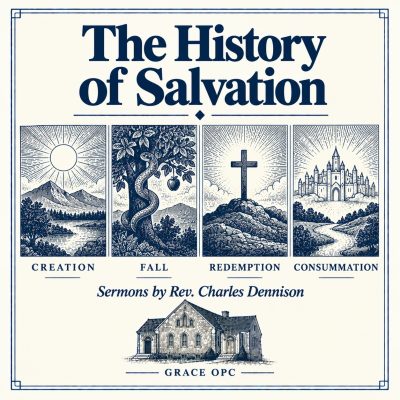
Samuel marks a monumental turning point in redemptive history, citing Acts 3:24’s own estimate of his significance for the structure of Old and New Testament revelation. The covenant is already at work in Jonathan’s friendship with David, all of it anticipating the coming kingdom.
Saul, Jonathan, and David each carry real symbolic weight here, in a sermon that doubles as a case for reading the Old Testament redemptive-historically rather than merely morally. Jonathan’s soul knit to David’s, in the covenant language of chapter 18, pictures a bond that goes beyond ordinary friendship. Christ himself stands behind David in that pattern.