

"Wilderness" Tagged Sermons
Israel’s wilderness journey is the church’s own journey, not a distant history lesson Paul happens to reference in 1 Corinthians 10. These Old Testament stories are events, not illustrations, each one already showing Christ’s redemption at work. The Puritans understood this, and their own worship, in spirit and in truth, took its shape from exactly this conviction.
The Spirit’s descent on Christ is not merely comfort; it is an endowment for ministry, the same Spirit who then drives him into the wilderness to be tested. Abraham’s binding of Isaac supplies an unexpected parallel to God’s own sacrifice of Christ. Peter’s promise that testing itself is a blessing, in 1 Peter 4:12, is read as following directly from this pattern.
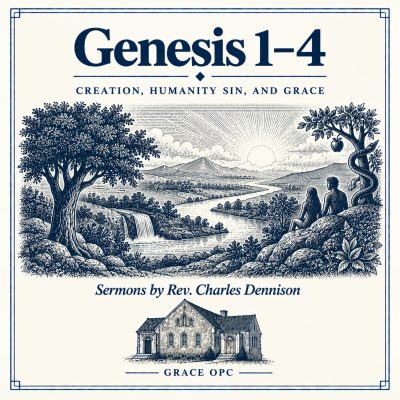
The formlessness of Genesis 1:2 reads as a kind of wilderness, drawing out echoes in Psalm 63 and Jeremiah’s own picture of chaos. Only God can bring order from that chaos, and the same sovereignty at work in creation is at work in his sovereignty over election itself.
Moses meets God at the burning bush only after decades in the wilderness, not from any dramatic religious experience being the qualification for leading God’s people. Church officers today are called to follow God the same way, through perseverance rather than a singular spiritual encounter. The wilderness years turn out to be the real preparation, not an obstacle to it.