

"heaven" Tagged Sermons
1. Notice that our Lord’s accession into heaven was an historical event seen by multiple witnesses (v. 9).
2. Understand that Christ’s ascension marked His heavenly exhalation, coronation, and enthronement at the right hand of God the Father (vv. 10-11).
3. Take to heart that the manner in which our Lord ascended indicates the manner in which He will return (v. 11).
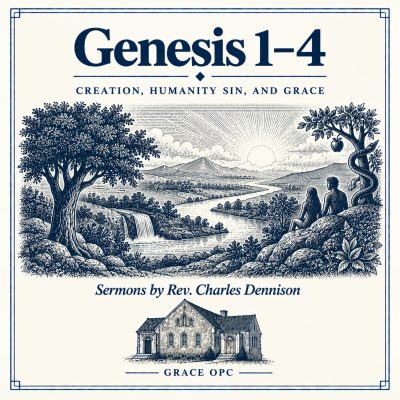
The two special trees of Eden carry real significance, even as Eden itself remains inferior to the new heaven and earth to come. Both trees point past themselves to new creation, to God, and to man, with Christ transforming us to be like himself.
God breathes life into mere dust, and man’s move from wilderness to garden already pictures the move from earth to heaven. Even ‘the east’ points to Christ, a reminder that eschatology must be our first consideration in the history of salvation, not an afterthought.

The series opens in the aftermath of Elijah’s ascension, read as a signpost toward the heavenly kingdom against the existentialist’s flat despair. Elisha’s cleansing of the poisoned spring becomes, in this light, a picture of the living water John sees flowing from the throne in Revelation 22.