
"grace" Tagged Sermons (Page 4)
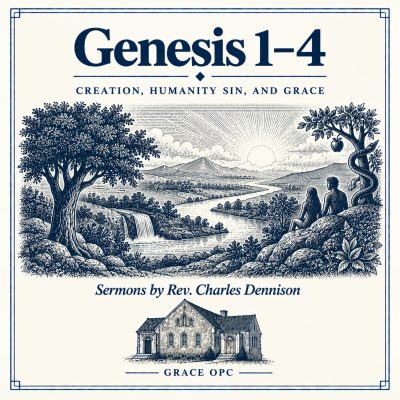
Common grace is traced as extended even to Cain, then a sharp line gets drawn: the work Christians do for the world serves the city of man, not the city of God. Cain’s naming of Enoch is a vain attempt at a memorial that will not last.
Common grace is already at work in Genesis 4:17’s account of marriage, even among Cain’s own line, and its sanctity. Children remain a real blessing even to an unbelieving world, and life itself begins at conception, plainly assumed in this text.
The full magnitude of Adam’s, Eve’s, and Cain’s sinfulness is measured before the point lands: common grace exists finally to serve special grace, not to stand alongside it as an equal. Cain’s exile east of Eden contrasts with the righteous, who dwell eternally in God himself.
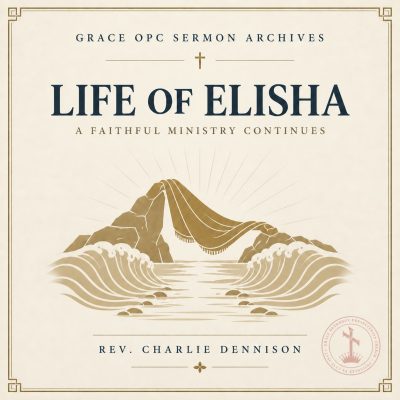
Naaman’s request and Elisha’s answer get worked through in careful positive-and-negative pairs, first in verses 15-16 and then in 17-19. What emerges is a portrait of gratitude still working out its own boundaries.
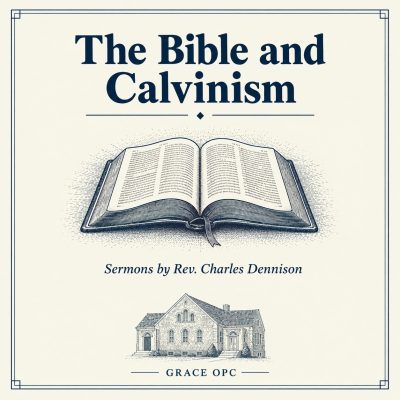
The book of Job frames a contrast between Arminian and Calvinistic views of unconditional election here, explored in both its corporate and individual dimensions. Job’s own view of God is transformed only in light of the cross of Christ that was still to come.