"Christ" Tagged Sermons (Page 4)
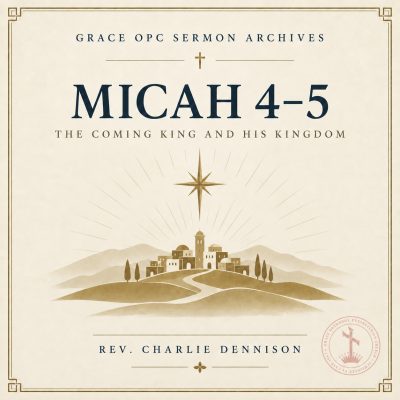
The significance of ‘Ephratah’ in Micah 5:2 is examined, showing how the prophet moves rapidly between scenes of future glory and present anguish centered on Bethlehem. In this alternation, Micah is already preaching Christ centuries before his birth.
The series opens with Jewish leaders clinging to property and power even as Micah pronounces God’s coming judgment against them. Beyond that judgment, Micah’s eschatology points to a transcendent kingdom in which Christ himself is the true temple.
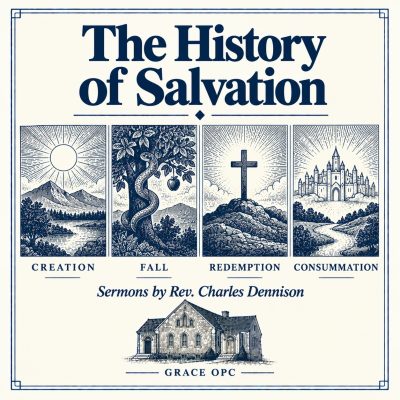
Jesus’ growing alienation from the crowds comes to a head in his use of the sign of Jonah, worked through carefully in Matthew 16:5-20. Peter’s confession right after marks one of the true hinge points in the whole history of salvation.
The Messiah’s portrait gets gathered across Isaiah, Micah, Daniel, Malachi, Genesis, and the Psalms, showing how consistently the Old Testament anticipates him. His actual appearance in the New Testament clears away rather than deepens the Old Testament’s mystery.
Surveying the great action of Genesis 12-50 in the lives of Abraham, Isaac, Jacob, and Joseph, Christ himself turns up anticipated in each patriarch’s story. A specific difficulty in McCarthur’s reading gets taken up along the way, keeping God’s electing purpose at the center throughout.
Recovering the seriousness with which the Puritans approached oath-taking, the doctrinal significance built into the OPC’s own marriage ceremony gets examined. Against today’s unhealthy state of marriage, marriages are held to be made strong only through Christ.
Jesus’ journey ends in Jerusalem, entering as prophet, priest, and king all at once, with an omnipresence and omnipotence the crowd can barely register. Even the ‘lords’ of verse 33 have no choice but to submit to the Lord.
The unnamed village of Luke 17:12 becomes a picture of every sinner: because of the fall, we are the lepers standing at a distance. Christ’s unity with his church in the victory of the cross is what finally saves those who were lost.
Luke’s Gospel keeps returning to journey, and confusion over Christ’s own route in chapter 17 dissolves once the church’s journey is read as an overlay of his. Christ’s victory on the cross, on this reading, already guarantees the church’s own.
Bethel mattered enormously to Israel, a significance traced out before turning to Elisha’s own circuit through the land. Along the way comes a weighing of how Christian fathers answer for their children’s sins, landing on Christ himself as the true house of God that Bethel only pictured.