
"BiblicalTheology" Tagged Sermons
Classical rhetoric cares about ethics and persuasion, and biblical rhetoric exists to proclaim an event more than to illustrate an idea. Fundamentalist and evangelical preaching each fall short of that standard in different ways. Concrete examples of biblical rhetoric close the Lectures series.
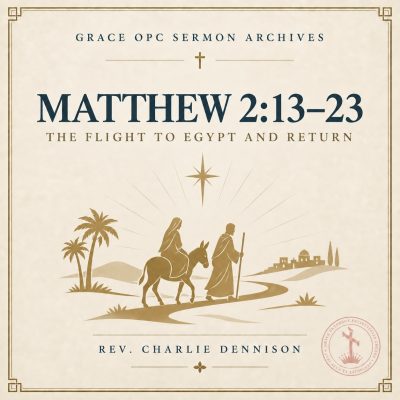
Matthew deliberately ties Joseph of Nazareth to Joseph of Genesis, both moved by dreams under a sovereign hand, and that link answers liberal theology’s rejection of the supernatural. Biblical-theological preaching traces such connections, and it serves the text better than systematic or moralistic preaching. The two Josephs are no coincidence.
Biblical Theology treats history as the category that finally controls interpretation, ahead of logic or language. Mark’s Gospel holds together as one continuous witness from its first verse to its last, and that overall shape is what allows any single story inside it, like the healing in chapter 2, to be read rightly. Structure is not decoration; it is how the text argues.
A single redemptive history joins the Bible’s ‘then’ to the church’s ‘now,’ and that thesis governs the whole series in place of any reading built on timeless abstraction. Vos’s Biblical Theology supplies the discipline, with five implications for how to read. Mark 2:1-12 shows what this approach yields.
Philippians 2:14-18 warns against grumbling, and a string of Old Testament passages shows the Philippians as a wilderness generation facing Israel’s old temptations. Biblical-theological reading makes that connection visible where moralism cannot. Grumbling against God incurs real and just wrath.