
About this sermon
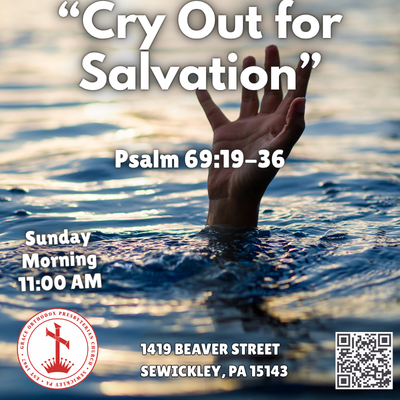
In Psalm 69 David suffers reproach and betrayal, and the Gospels show the psalm fulfilled in Christ, who was given vinegar to drink on the cross. Christ prayed for his enemies’ forgiveness, and the psalm also asks God to judge the unrepentant, as the martyrs under the altar do in Revelation. God’s people may pray both ways, because both glorify his justice and mercy. Even in suffering Christ looked ahead to the salvation of his people, and believers cry to God confident that he will save them.
Sermon transcript
Let us pray upon the reading and the preaching of His word. Heavenly Father, we thank You, O Lord, for the blessing and for the blessing that is to come, for the privilege of coming before You, for worshiping You, and for learning from You. We pray, O Lord, that as we hear Your word, You would work in us, that the Holy Spirit would work in all our hearts, causing us to love You more, and uniting us with one heart in Jesus Christ, so that we may worship and praise You with all our heart, mind, body, and soul. We pray, O Lord, that as we learn from Your word, You would help us to love our neighbors more and more. And we pray, O Lord, that as we read Your word, You would enlighten our minds, that we may learn more about You, and that You would draw us closer to Yourself. I pray, O Lord, that You would work in each one of us, and we pray all of this in Your Son’s name. Amen. You may be seated.
There is one question that has always intrigued me: Can a person truly be thankful and joyful in the hardest moments of life? Without considering our own struggles, if we reflect for a moment on the circumstances of those in the world who suffer far more—those who were trafficked at a young age and held against their will, those who lived their entire lives in slavery, those who are persecuted daily for their faith even today, and who, with joy, give up their lives for the crime of not denying Christ—can these people truly be thankful for the life they are living? Can they truly have joy despite their terrible circumstances?
It is easy in our modern society to believe that difficult situations we face are unfair or somehow abnormal. Yet if we look at the history of humanity and of the church, we see that the average difficulties experienced by a modern American person are quite small in comparison to the hardships faced by the average man or woman in the church.
The stench of death had surrounded believers for hundreds of years. War and disease, when neither of these were killing you, brought birth complications and famine, which were certain to cause the death of loved ones around you. The point of this is to highlight the difficulties in our day and age. There are many circumstances in our time that are similar to those in the past.
Yet it is important to recognize that Christians have faced truly painful lives, marked by almost unbearable suffering, and still they have been able to praise God in the midst of that suffering. In our psalm this morning, we see one such example of suffering. King David, as we read, was suffering persecution from those around him, even from those he considered his friends. We are not told exactly what he faced, but it is clear that David was enduring immense pain and stress. What we also know from the New Testament is that this psalm is not only a psalm of David, but a psalm that is ultimately fulfilled in Jesus Christ. Repeatedly, as you read the Gospels, Psalm 69 is quoted by Jesus in connection with his suffering, most notably referenced at the cross in passages such as Matthew 26, where it is applied to the suffering he endured.
Thus, in our passage this morning, we not only have the prayers that Christ prayed during his time of suffering. We are given great insight into the inner thoughts of our Lord as he prayed during his time of suffering and persecution. I would like to go through the entire psalm this morning, but due to time constraints, I will focus on verse 19 and the following verses.
In the first half of the psalm, David expresses his heart and soul in great detail, revealing the pain and suffering he has endured at the hands of others. This prayer of David, which Christ also prayed, teaches us that in our faithfulness, we should cry out to the Lord for justice and for salvation. Let us consider our passage this morning by examining three aspects of this prayer. First, the suffering of the servant of God, as seen in verses 19–21. Second, the judgment against the enemies of God. Third, the hope of salvation from evildoers. In verses 19–21, we see a glimpse of David’s and Christ’s loneliness and suffering. This provides the context for the message we will focus on this morning. Let us read verses 19–21 again.
Verse 19: You know my reproach and my shame and my dishonor. My foes are all known to you. Reproaches have broken my heart, so that I am in despair. I have looked for pity, but there was none, and for comforters, but I found none. They gave me poison for food, and for my thirst, they gave sour wine to drink.
The God of the universe, by whom all things were created and through whom all things were created, was put on a cross. The creatures he had created scorned him and mocked him. They whipped him and placed him on a tree. As recorded in the gospel accounts, all his disciples had fled from him, fearing for their lives. As Jesus had predicted, Peter denied him three times. Undoubtedly, this was a moment of shame and reproach. There was no one to comfort our Lord and Savior on the cross. The second person of the Trinity, the God-man, was alone on the cross.
And man, whom he had created, put him there. He faced our Lord Jesus, our Savior, the ultimate trial, when his own Heavenly Father would pour out the cup of wrath upon him. Here on the cross, he would take the ultimate pain, the ultimate shame, and the judgment that you and I deserved, so that we could have life in him. The author of Hebrews writes this: Fixing our eyes on Jesus, the author and perfecter of our faith, who for the joy set before him endured the cross and despised the shame. Jesus took on human flesh and truly suffered in our place. Jesus was the only perfect man to ever live, the only man who kept the law of God perfectly, and yet this man was hated by his own people. He was scorned by his kinsmen. He was abandoned by his friends, and even betrayed by his very disciple, who handed him over to the Romans to die. And most devastatingly of all, Jesus would willingly, for the joy set before him, go to the cross and endure the punishment and the wrath that the Father would pour on him, for you and for me. These words in verse 19, the one that we just read, speak of the eyes of the heart of Jesus, which he had come to accomplish. After expressing this deep pain to his Father, Christ then turned against his enemies. Let us read once again verses 22 through 28.
At their own table before them become a snare, and when they are at peace, let it become a trap. Let their eyes be darkened so that they cannot see, and make their loins tremble continually. Pour out your indignation upon them, and let your burning anger overtake them. May their camp be a desolation. Let no one dwell. For they persecute him whom you have struck down, and they recount the pain of those whom you have wounded. Add to them punishment upon punishment. May they have no acquittal from you. Let them be blotted out of the Book of the Living. Let them not be counted.
The Psalms are often quoted by Christians because they contain words of comfort. But the Psalms also include passages known as imprecatory psalms. An imprecatory psalm is a psalm in which the psalmist calls for God to judge his enemies, and these passages often contain harsh language that makes them difficult to read aloud. Our psalm for this morning is both messianic and imprecatory in nature. It foretells the coming of Christ and his suffering, while also calling for judgment against the enemies of God. While Christians universally agree that the imprecatory psalms are the inspired word of God, they often disagree on how to understand them. C.S. Lewis, in his book Reflections on the Psalms, writes about the psalms of imprecation:
He writes, we must not either try to explain them away or yield for one moment to the idea that because they are in the Bible, all this vindictive hatred must somehow be good and pious. We must face both facts squarely. The hatred is present, raw and unhidden. And also, if we should be wicked, and if we have condoned or approved it, or will still do so, we must recognize that this is not the way of God. Lewis wrote many insightful paragraphs in his lifetime and has been a blessing to many believers, even bringing some to faith. But this paragraph is not one of those.
The imprecations in Psalm 61 are not the words of a hateful David. These are the very words and prayers that Jesus spoke during his time of suffering. As you read these verses from 22 to 28, you may find them somewhat confusing. You might wonder how Christ, who said, “Father, forgive them, for they know not what they do,” could also pray for judgment. These two ideas may seem contradictory. After all, Paul writes in Ephesians 6:12, “For our struggle is not against flesh and blood, but against the rulers, against the authorities, against the powers of this dark world and against the spiritual forces of evil in the heavenly realms.” Surely Jesus could not be praying for judgment against anyone. How do we reconcile the fact that Jesus prayed for forgiveness while also praying for judgment?
I believe the answer is not as difficult as it first appears. We must remember why Christ died on the cross in the first place. The first reason is that God is just. God upholds his justice and holiness, and he does not allow any sin or blemish to go unpunished. Our God is not like the Islamic God, who forgives arbitrarily without satisfying justice. God must judge sin. Yet our God is also a merciful and loving Father, which is the second reason why Christ died.
The Father chose some to save them from their sin and from the judgment due to that sin. God commands all people to repent. Therefore, while Christ desired the repentance and forgiveness of all who wronged him, he also desired that those who refused to repent would face the just consequences of their actions. Christ desired the salvation of those whom the Father had given him, while also praying that the wrath of God would rightly be poured out on those who opposed him.
Notice that this judgment is not rooted in his own selfish desire for retribution. It parallels the covenant curses described in Deuteronomy chapter 28. In verse 22, he prays for the reversal of what was promised—peace and prosperity—so that these blessings would be taken away. In verse 24 of our psalm, he prays that they would not receive the blessings associated with the covenant, but that the wrath of God, which was promised if they disobeyed, would be brought upon them. In verse 25, he prays that they would be cut off from the land completely. In verses 27 and 28, he offers devastating prayers, asking that there would be no mercy, and that their names would be blotted out of the Book of Life.
In other words, this judgment would not only mean temporarily losing the benefits of being part of God’s covenant people, but it would also mean losing eternal salvation and being eternally cut off from God’s people. We see that Jesus uses passages to the Jews who reject the Messiah, such as Luke chapter 13. The Jews rejected the Messiah, and therefore they would lose the covenant. They would lose the covenant promises of blessing, of land, of people, and the Almighty God from their lives. But unlike in the Old Testament, when God brought them back from exile, there would be no return from this separation from God. There would be no return if they persisted in their stubbornness.
Their names would be blotted out of the Book of Life. Unless we think that these imprecatory prayers are limited to the Old Testament, let us remember the prayers of the martyred saints in Revelation chapter 6. Let us now turn to Revelation chapter 6. We will read verses 9 through 11. Revelation chapter 6, verses 9 through 11.
And when he had opened his eyes to the world, I saw under the altar the souls of those who had been slain for the Word of God and for the testimony they had borne. They cried out with a loud voice, “O Lord, holy and true, how long before you will judge and avenge our blood on those who dwell on the earth?” Then each was given a white robe and told to rest a little longer until the number of their fellow servants and brothers who were to be killed as they had been was complete. In Revelation, the martyred saints are pleading with the Lord to bring justice against those who had persecuted them, to punish those who opposed the saints and to remove peace from the people of God. To pray for those who persecute us while also praying for the justice of God to be carried out is not mutually exclusive. Both are glorifying to God and are commanded in the scriptures. So what does this mean for you and for me? How do you and I sing these Psalms and pray these prayers? You do so with confidence, knowing that these are the very words of Christ. You do so because, as a believer, you love God’s justice and you hate when His holiness is despised.
While Christ teaches us to pray for those who persecute us and to love our enemies, which is certainly the example He sets, you should also be magnifying God’s name and His justice. We should, of course, not seek our own personal retribution or be consumed with anger toward those who wrong us. We pray for God’s justice. We sing these psalms not to be motivated by hatred or personal hurt, but by a deep love and a desire for God’s holiness to reign and for His righteous justice to be established. We should pray for those who persecute to repent and to come to know Jesus. You must love them and show them love in word and deed. But at the same time, we must pray that God’s ultimate justice be brought to fulfillment in the end. In the end, there will be those who reject Jesus. And God’s justice being carried out against those who do not bow the knee is good and desirable. Therefore, we must cry out to the Lord for justice.
The psalmist does not fall into despair over his enemies. He turns to the hope he has in God. He cries out to the Lord for the hope of salvation. Let us read verses 29 through 36 again. But I am afflicted and in pain. Let Your salvation, O God, set me on high. I will praise the name of God with a song. I will magnify Him with thanksgiving. This will please the Lord more than an ox or a bull with horns and hoofs. When the humble see it, they will be glad. You who seek God, let your hearts revive. For the Lord hears the needy and does not despise His own people who are prisoners. Let heaven and earth praise Him, the seas and everything that moves in them. For God will save Zion and build up the cities of Judah, and the people shall dwell in it and possess it. The offspring of His servants shall inherit it, and those who love His name shall dwell in it. In these verses, from 29 through 36, we see where the heart of the psalmist was, the heart of our Savior was. His heart was full of trust and hope in the God who saves.
In the midst of persecution, in the midst of great pain and suffering, his response is not to complain about God or about how God has allowed this situation. His response is not to complain about God or about how God has allowed this situation. His response is not to complain about God or about how God has allowed this situation.
His response is not to complain about God or about how God has allowed this situation. His response is not to complain about God or about how God has allowed this situation. His response is not to complain about God or about how God has allowed this situation. His response is not to complain about God or about how God has allowed this situation. His response is not to complain about God or about how God has allowed this situation. His response is not to complain about God or about how God has allowed this situation. His response is not to complain about God or about how God has allowed this situation. His response is not to complain about God or about how God has allowed this situation. His response is not to complain about God. By this, he meant that people use religion to deceive themselves into ignoring difficult times in their lives.
It is like taking a drug that helps a person cope with suffering. This is not what the Scriptures teach about faithful suffering. David does not ignore or dismiss his pain. He does not deny his suffering and then offer thanksgiving. No. He acknowledges that he is truly afflicted and in pain. Then he turns to the Lord with confidence and calls for God to save him. Even during this pain and suffering, we see that David praises God. David was able to give praise to God and to give Him glory even in this time of suffering. Why did our Savior, knowing that the cup of wrath was going to be poured out upon Him, give praise to the Father?
What do they know that we do not? It is because they both saw the coming redemption of God’s people. They believed that the suffering was temporary and that the wonderful riches they would gain would be everlasting. David continues in verses 31 through 33. He writes, “This will please the Lord more than an ox or a bull with horns and hoofs. When the humble see it, they will be glad. You who seek God, let your hearts revive, for the Lord hears the needy, and he does not despise his own people who are prisoners.” Here we see where the psalmist puts his trust.
David did not put his trust in his own good works or in his many sacrifices. He did not point to his faithfulness before the Lord as the basis of his salvation. He did not even point to his persecution that he was facing. No, David’s trust was in the Lord with a humble heart. He trusted in the covenant promises of God, because as he said, the Lord hears the needy. We are prisoners. And this is what God has shown them repeatedly throughout their history, and what he has shown indeed to you and to me in our lives. Therefore, David confidently cries out for God to save him with full faith and confidence. David ends the psalm with a confident declaration of the coming salvation in verses 34 through 36. Please look at verses 34 through 36. Notice that he does not end with a request for salvation. It is not an “if” for David, but a confident proclamation of what will happen. David says that God will save Zion. People will dwell there and possess it. The servant will inherit the land, and those who love his name will dwell in it. For the psalmist, the matter was not a matter of blind hope, but of complete and total confidence in what God had promised them.
So where does your heart rest when you are being persecuted for being faithful to your Lord? There will come a day, if it has not already come, when you will face consequences for believing in and professing Jesus Christ. Jesus does not say, “If they persecute you for my name.” He says, “They will persecute you for my name.”
In John 15, Jesus says, “If the world hates you, keep in mind that it hated me first. It would love you as its own. As it is, you do not love the world, but I have chosen you out of the world, and that is why the world hates you. Remember what I told you: a servant is not greater than his master. If they persecuted me, they will persecute you. If they obeyed my teaching, they will obey yours also. They will treat you this way because of my name, for they do not know the one who sent me.”
Suffering for your faith is not a matter of if, but of when. Even in our country, where freedom of religion exists, when it comes, where will your faith stand? Will your faith waver, worrying about what could happen? Will it stand still in fear, gripped by the overwhelming sense that you are not in control? Where will your eyes go? Will they turn inward and seek answers to real problems? You must remember the psalmist, who confessed his weaknesses to the Lord and looked to Him.
Our salvation from this present evil age is not a mere wish. Faith is not wishful thinking. Your salvation is certain if you trust in the promises of God and rest in them. When you pray about your own struggles in life, it is right and good to ask for deliverance from them. But also remember that even if there is no immediate deliverance, God’s salvation is certain in the end.
He will one day deliver all of us, and therefore we will receive the reward of salvation and rest in Him. It is truly an opportunity to reflect on what Christ was thinking about before His death, during His suffering. The end of the psalm is all about the salvation of God’s people.
His mind was looking forward to the gathering of His portion and His inheritance. When He was suffering, His mind was focused on being united with you and me. His prayer did not end in despair or loneliness. It ended with Him looking forward to accomplishing the purpose for which He had come—the purpose that the author of Hebrews speaks about.
What a Savior we have. When faced with the eternal wrath that you and I should have received, when He faced His own Father, who would pour out that wrath on Him for our sake, His mind was set on the joy that was set before Him—namely, saving you and me.
Therefore, come to Christ boldly, knowing that He will save you. Pain and suffering are temporary, but the glory we will receive with Christ Jesus in eternity far surpasses this temporary suffering. So cry out to the Lord with confidence. Pray to Christ with humility. And when you are persecuted for your faithfulness, cry out to the Lord for justice and for salvation, because He will surely accomplish all His good pleasure. Let us pray.
Heavenly Father, we thank You, O Lord, for the relative peace and prosperity You have given Your church in America. O Lord, for many years You have blessed the church with freedom to worship You, freedom to spread the gospel in this land, and O Lord, we praise You and we worship You for this.
And yet, O Lord, in our private lives, in our daily lives, when we interact with the world, you have promised us that we will face persecution for remaining faithful to you. And, O Lord, we trust that in those moments you will give us grace and strength to remain faithful to you. And, O Lord, when we are in the midst of suffering and pain, we pray that you would strengthen us and give us grace to confess you with our words and with our actions. And, O Lord, even in that suffering, help us to remember the joy that was set before Christ, the joy that David saw. O Lord, the joy of eternal life with you. O Lord, they can kill our bodies, but O Lord, we still have life in you. They cannot destroy our souls. Help us, O Lord, to be strong in the faith. Help us, O Lord, that as we go from this place this week and this day, you would help us to bring this good news of Jesus Christ: that if we put our faith in you, you are sure to save us from our sin and from this state of sin and misery. We pray, O Lord, that you would bless the remainder of our service, and we pray all this in your Son’s name. Amen. With hymn 475, please stand as we close our worship.
The sermon text provided above is derived from the sermon audio recording making use of generative tools. It has not been manually edited. While transcription tools have a high degree of accuracy, the output may include generative textual, punctuation, and/or formatting errors.