"Pharisees" Tagged Sermons
Matthew 8’s acceptance of Jesus gives way to Matthew 9’s opposition, a shift this sermon traces carefully rather than treating the two chapters as unrelated episodes. The motives behind John’s disciples’ own question about fasting get real scrutiny alongside the Pharisees’ more obvious hostility. Jesus feasts on the gospel rather than fasting according to the law, a claim about what has actually arrived, not a dietary preference.
The Pharisees reach for the Old Testament itself to accuse the disciples of breaking the Sabbath, and Christ’s response in Mark 2:25-28 uses deliberate hyperbole to assert an authority the Pharisees hadn’t reckoned with. David’s own example foreshadows Christ’s Lordship over both law and Sabbath. What looks like a technical dispute turns out to be a claim about who Christ actually is.
Christ’s authority, set against the Pharisees and scribes, includes references to the Holy Spirit as both a person and as God himself, claims that genuinely shocked his original hearers. The sermon does not let that shock stay safely in the first century; it argues the same Pharisaic spirit has since infected the church. Recognizing Christ’s authority means recognizing where that spirit still operates.
Audience analysis dominates a great deal of modern church strategy, a trend this sermon measures against how Matthew and Luke themselves actually treat their audiences. The Lord’s own denunciation of Pharisaic behavior in Luke 6 offers a different model than market research. Knowing an audience, on Christ’s own terms, is not the same as catering to it.
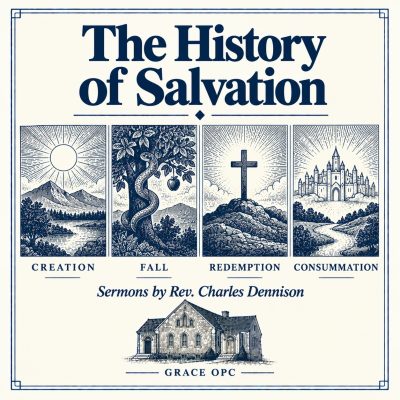
Jesus enjoys what might be called a ‘year of popularity,’ a phenomenon compared pointedly to the modern church’s own cult of popularity. Against the earthly eschatology of Pharisees and Sadducees alike, Jesus keeps preaching the narrow gate rather than the easy crowd.
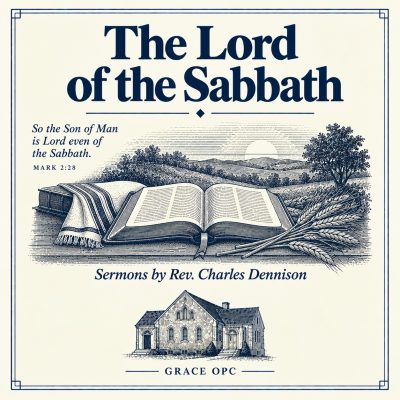
When the Pharisees accuse Jesus of breaking the Sabbath, he answers with the story of David and the showbread, reversing their assumption that man exists to serve the law. A careful exegesis of Mark 2:28 closes things out: the Son of Man is Lord even of the Sabbath.
The parables of Luke 15, the lost sheep, coin, and son, are read here as being about church discipline rather than evangelism, a reversal of how they’re usually preached. Luke 16’s puzzling ‘mammon of unrighteousness’ gets its own careful treatment alongside that shift. A heavenly orientation, weighing earthly riches against heavenly ones, runs through both chapters together.