"covenant" Tagged Sermons (Page 4)
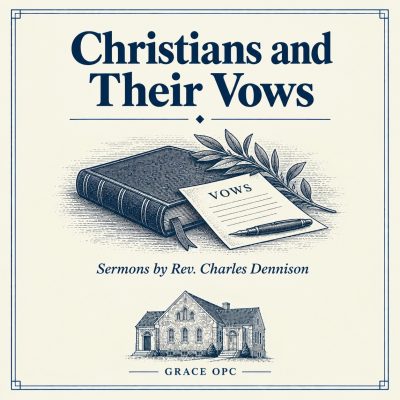
God himself is an oath-making God, which means our whole reality is oath-bound from the start, a pattern traced back to the striking covenant ritual of Genesis 15. This applies directly to the Presbyterian understanding of baptism and the oaths taken there.
Death itself makes plain the oath-bound character of all human life, rooted in the ramifications of God’s covenant with us. Baptism marks our entry into that oath, one which Christ himself ultimately keeps on our behalf.
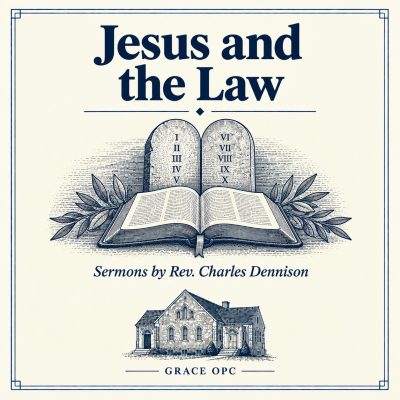
The second commandment is fundamentally about the covenant, not image-making alone, tracing both the continuity and discontinuity between law and gospel. This gets rooted in the preface of Exodus 20:2, drawing out three aspects of that covenant relationship.
The series opens with a claim that shapes everything after it: the Bible is neither a code of ethics nor an abstract theology but the record of God’s historical acts, with the covenant at its center. Read that way, even the law itself is changed by the coming of Christ.
The creation of man and woman is read as fundamentally covenantal, working closely through the nakedness and no shame of Genesis 2:25. Drawing on Matthew 19’s picture of Christ and his bride, marriage carries an eternal intention, with the church itself as the most basic family unit.