"Cain" Tagged Sermons
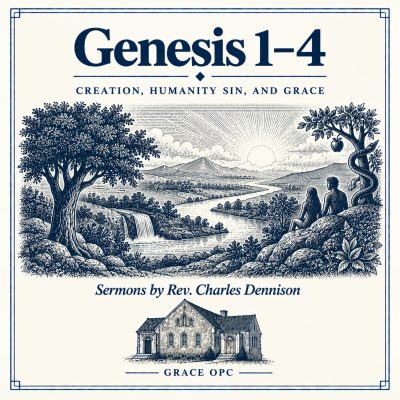
The full magnitude of Adam’s, Eve’s, and Cain’s sinfulness is measured before the point lands: common grace exists finally to serve special grace, not to stand alongside it as an equal. Cain’s exile east of Eden contrasts with the righteous, who dwell eternally in God himself.
The church itself symbolizes a sanctuary, an eternal rest reserved for the elect, against which Cain’s motive for killing Abel stands out starkly: the inheritance. Even so, God’s coming to Cain afterward carries a real eschatology of common grace extended even to the wicked.
The sheer magnitude of Cain’s crime measures the magnitude of the fall itself, rooted in Cain’s rejection of God and his covenant. Christ died for people exactly like the Cain who would have killed him.
Three reasons explain why Abel’s offering is accepted where Cain’s is not, alongside two specific ways Cain’s falls short. Abel’s faith in the unseen world, drawn from Hebrews 11:1, is functionally identical to New Testament faith itself.
Cain and Abel’s occupations, sufferings, and relationship are compared, finding in Abel a genuine faith in the unseen. Cain, by contrast, wants the world in front of him, not the unseen realities faith actually reaches for.
Cain and Abel are read through Genesis 3:15’s promise, Abel as seed of the woman and Cain as seed of the serpent. A warning follows against the idolatry of the family: the church, not the family, is the truly basic family unit, which is exactly why conflicts within families run so deep.