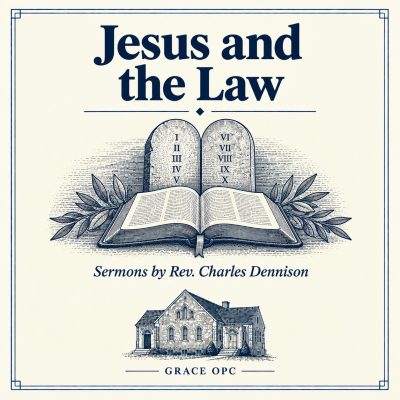
Jesus and the Law
The series closes by tying the tenth commandment back to the covenant itself. Our bond with Christ, who holds the very fullness of God, is what makes us full rather than covetous, and even in Colossians 2:8’s warning about captivity, the fullness of God sustains us through every trial.
Examples of lying since the fall set the stage for the ninth commandment’s distinctly legal tone. That commandment’s own inadequacy is only fulfilled in the coming of Christ and our bond with him.
Three passages in Matthew on marriage and adultery show how God’s coming in Christ reshapes our treatment of adultery in this present age. Strikingly, sexuality itself is not treated as an eternal feature of the life to come.
Looking back to marriage before the law was given at Sinai, marriage itself is traced as reshaped by God’s coming in Christ, including its call to monogamy. The seventh commandment cannot be understood apart from that coming.
Child-rearing has changed a great deal since Paul’s day, even as Paul himself pushed against the household codes of his own society to put the emphasis squarely on the Lord. The relationship of God the Father to the Son is the true pattern for every parent and child.
Three stories about not working on Sunday set up an honest admission: the fourth commandment remains something of an enigma, even a nemesis, in the church today. It gets expounded instead through the twin lenses of creation and Christ’s own resurrection.
Three ways the third commandment gets broken are set against the perfect glorifying of God’s name in Christ: that is the shape of this sermon. We enter into that glory purely by grace.
The second commandment is fundamentally about the covenant, not image-making alone, tracing both the continuity and discontinuity between law and gospel. This gets rooted in the preface of Exodus 20:2, drawing out three aspects of that covenant relationship.
The series opens with a claim that shapes everything after it: the Bible is neither a code of ethics nor an abstract theology but the record of God’s historical acts, with the covenant at its center. Read that way, even the law itself is changed by the coming of Christ.